Small Monsters and Endemic Life#
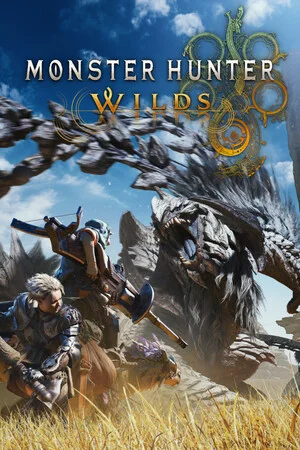
The ecology of the Forbidden Lands isn’t only large monsters as hunting targets: small monsters, endemic life, and Guardians together make the field feel alive. Each of the three has a clearly defined role in-game, and each has its confusing corners — this page puts them side by side to draw the boundaries, so you don’t get lost flipping the guide, farming materials, or chasing achievements. For per-monster analysis of large monsters, see the Monster List page; it won’t be repeated here.
Classification Boundaries of the Three Targets#
Conclusion first: small monsters are not juveniles of large monsters, endemic life is not hostile units that attack hunters, and Guardians are certainly not small monsters. The official comparison of the three:
| Category | Count | Role | Common misconception |
|---|---|---|---|
| Small monsters | 20 at launch, 17 of them new | Small-bodied, mostly active in packs, not main-line hunting targets | Mistaken for juveniles of large monsters or drop trinkets |
| Endemic life | Continuously added with updates | Field creatures that can only be gathered, fished, or caught with the Capture Net | Confused with small monsters — endemic life never attacks on its own |
| Guardians (Constructs) | 6 total | Artificial monsters built by an ancient civilization, powered by Dragontorch energy | The “Guardian” in the name mistaken for a friendly unit or a small target |
Guardians deserve separate emphasis: they rarely fit the first impression of a “hunting target,” but their build is fully large-monster class. Known members include Guardian Doshaguma, Guardian Fulgur Anjanath, Guardian Odogaron, Guardian Rathalos, Guardian Arkveld, and more, with Zoh Shia at the head of the Constructs — the main story turns precisely on the truth of Arkveld and the Ruins of Wyveria. Per-monster analysis is likewise collected on the Monster List page.
Species Classes in the Official Guide#
The official guide classifies monsters by “species,” and the species system runs across large and small monsters — one species may include both large individuals and pack-forming small ones (Congalala and the Conga troop it leads share the Fanged Beast class, for example). The main species and representative monsters of this game, organized per the official guide for cross-checking:
| Species | Representative monsters | Guide notes |
|---|---|---|
| Amphibians | Chatacabra | A new launch monster; tongue attacks and rock armor are its hallmarks |
| Fanged Beasts | Doshaguma, Ajarakan, Congalala | Congalala leads Conga troops along waterside woods; Ajarakan activates during the Firespring |
| Leviathans | Balahara, Uth Duna, Jin Dahaad, Hirabami | Uth Duna and Jin Dahaad sit at the top of the Scarlet Forest and Iceshard Cliffs food chains respectively |
| Brute Wyverns | Quematrice, Rompopolo | Quematrice lives in the Scarlet Forest and steals prey other monsters have caught |
| Temnocerans | Lala Barina, Nerscylla | Lala Barina is a new launch species; Nerscylla is a series returner |
| Flying Wyverns | Rey Dau, Arkveld | Rey Dau tops the Windward Plains; Arkveld is the main story’s final target, the “White Wraith” |
| Cephalopods | Nu Udra, Xu Wu | Nu Udra tops the Oilwell Basin, called the “Black Flame” by the people of Azuz |
The line to draw is that every representative monster under the species above is a large monster — don’t take them for small monsters; Guardians belong to the Constructs, a class of their own. Species info in the Hunter’s Notes helps you quickly locate weaknesses and material leads; for how each region maps to monster communities, see the Regions and Maps page.
What Small Monsters Actually Do in Hunts#
The value of small monsters isn’t “putting up a proper hunt” — it lives in the gaps between ecology and profit. Their practical roles split into four:
| Role | Description |
|---|---|
| Hunt harassment | Small monsters mostly harass hunters in packs, interrupting damage rhythm and positioning plans; some inflict ailments on top |
| Material supplement | Most small monsters don’t provide key upgrade materials, but some drop necessary ones; check sources in the Hunter’s Notes when you’re short a piece |
| Capturable | Traps plus Tranq Bombs can capture small monsters; the capture logic matches large monsters |
| Guide and notes | The Hunter’s Notes records small monster ecology and distribution, part of the medals and achievements line |
The most common practical question is “what if a pack blocks the way?” In a main story hunt, if the small monster pack is just passing through, ignore it; if it’s actively harassing, one area attack usually scatters them — don’t linger. The moment truly worth stopping for is when the Hunter’s Notes marks a material or guide entry — the rule that most small monsters provide no key materials can save you a lot of pointless scuffling time. For the material system’s overall logic, see the Materials and Rarity page.
Uses of Endemic Life#
Endemic life are non-attackable ecological units of the field; their uses cluster in four directions — gathering, fishing, capture, and observation:
| Use | Description |
|---|---|
| Gathering | Herbs, honey, and other basic supplies are raw materials for consumables and crafting — routine pickup once routes are familiar |
| Fishing | Fish in each region double as cooking ingredients, plus dedicated rare fishing targets |
| Capture Net | Used on small endemic life; required for medals and achievements (input entry on the Controls page) |
| Ecological interaction | Interactions between specific endemic life draw in other ecological reactions; worth watching for chains in the field |
| Observation and medals | Rare endemic life spawns depend on the season, weather, and time of day |
The biggest endemic life trap is “assuming the spawn rate is low when it won’t appear”: most of the time it’s an unmet season or weather condition, not bad luck. For each region’s life highlights and spawn conditions, see the Collectibles page; scheduling your sweeps by season is the efficiency key.
Quick Reference for Handling the Three#
The conclusions of the previous three sections, compressed into one quick table — take the row that matches your situation:
| Situation | Response |
|---|---|
| Small monster pack harassment | One area attack scatters them, or one player clears; don’t linger |
| Need small monster materials | Check the Hunter’s Notes for the source first, then decide capture or cull |
| Need endemic life | Verify season, weather, and time of day, then run the route |
| Going for capture achievements | Carry the Capture Net and trap materials, finishing them along the exploration route |
| Mistaking a Guardian for a mob | Guardians are large-monster sized; prepare like any large-monster hunt |
The shared premise of this table is identifying the target’s category first: misjudge the category and every preparation afterward is wasted — the most typical cases are charging a Guardian with a small-monster mindset, or setting traps for endemic life.
Team Hunt Division of Labor#
When hunting large monsters in a group, the community’s long-standing division usually assigns break targets by weapon type: impact weapons favor the head, slashing weapons favor the tail, ranged weapons favor wings and back; against small monster pack harassment, one player usually handles clearing, or items and environmental counterplay scatter them, so the whole team doesn’t stop dealing damage. The value of this approach is less duplicated breaking and less fighting over positions.
It must be said: the above is a direction accumulated by the player community — the game itself grants no extra numeric rewards for role division, and actual material intake depends on party composition, monster state, and execution quality. Treat it as a cooperation habit, not a profit guarantee. For party rules and online mechanics in detail, see the Multiplayer and Co-op page.
Arch-tempered: An Easily Confused Term#
Guides also toss “AT king” around in small-monster conversations, so let’s settle it here too: Arch-tempered (community nickname “AT kings”) are high-difficulty variants of large monsters, unrelated to small monsters or endemic life. There are five in the base game — Rey Dau, Nu Udra, Nu Udra, and Jin Dahaad in sequence, finally capped by Arkveld (HR100); each one’s opening came with a Gamma (γ) armor set. For the mechanical differences between Tempered and Frenzied, unlock conditions, and rewards, see the Endgame System page.
FAQ#
| Question | Answer |
|---|---|
| Do small monsters drop materials? | Most provide no key materials; some drop necessary ones — defer to the Hunter’s Notes source info when you’re short |
| Are endemic life and small monsters the same thing? | No — endemic life can only be gathered, fished, or caught with the Capture Net; small monsters are hostile units that harass hunters |
| Are Guardians small monsters? | No — Guardians are Construct large monsters, six in total, built by an ancient civilization and powered by Dragontorch energy |
| Is “AT king” an official name? | No — the official name is Arch-tempered; “AT king” is a community nickname, and this site’s writing defers to the official name |
| Any reward bonus for team role division? | No — role division is an experiential cooperation habit; the game provides no numeric reward tied to it |
| Is there an official count for small monsters? | 20 at launch, 17 of them new; later versions may add more |
| Do capturing small monsters need special items? | Trap plus Tranq Bombs is enough — same capture logic as large monsters |
| Do endemic life respawn? | Yes, by season and weather; rare life is also affected by time of day |
Summary#
Small monsters and endemic life aren’t the scraps of the hunting loop: the former shape the field’s dynamics and mob rhythm, the latter support supplies, cooking, and the achievement line. Sort them, large monsters, and Guardians into their proper places in the guide, cross-check with the Hunter’s Notes, and both the collection and material lines get much smoother. When you need to go deeper, pick a page by goal: large monsters in the Monster List, the collection line in Collectibles, material flow in Materials and Rarity.
Revision note (2026-10-04): This page was rewritten against official announcements and verified site-wide facts. It clarifies the classification boundaries of small monsters, endemic life, and Guardians (Constructs); “AT king” is unified to the official name Arch-tempered with the nickname noted in parentheses; the team-division section is now framed as experiential, removing numeric reward promises without official basis; material-drop content unrelated to this page’s topic now lives on the Materials and Rarity page.