Multiplayer and Co-op#
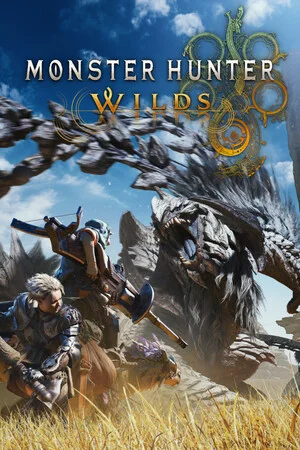
Monster Hunter Wilds supports 1-to-4-player co-op with cross-platform play covering every launched platform: whether your teammates are on PlayStation 5, Xbox Series X|S, or Steam (PC), everyone can join the same party. This page organizes the core multiplayer mechanics by official rules: party sizes and play modes, the Palico’s standby rules, the Seikret’s accompaniment rules, shared progress and save ownership, how to call Support Hunters, and connection troubleshooting. For single-player operation details see the controls guide; for companion growth see the companion system.
Play Modes and Party Size#
| Mode | Players | Notes |
|---|---|---|
| Solo | 1 | Fully playable; the story and nearly all content can be completed solo |
| Friend parties | 2 to 4 | Password lobbies or party invites; the choice for regular groups |
| SOS Flare | 2 to 4 | Open recruitment; anyone may respond and join |
| Support Hunter fill | Fills open slots | Survey team members fill empty slots during solo play |
The multiplayer cap is 4 players: a party can be just two members or a full four; solo players can fire an SOS Flare for help at any time, or respond to others’ flares in turn. For how quest types (main missions, investigations, Event Quests, etc.) are launched solo or multiplayer, see the quest guide.
The joining flow is also greatly streamlined in this game: members meet up directly in the field after joining, the meeting position is confirmable on the map, and there is no renewed wait through cutscenes. In other words, “helping a friend land the final blow” no longer requires returning to a lobby to queue — just ride straight in.
Cross-Platform Play#
Cross-platform play is the foundational capability of this game’s multiplayer experience: PlayStation 5, Xbox Series X|S, and Steam — the three launched platforms — can party up with each other and respond to each other’s SOS Flares, unbounded by platform. A Nintendo Switch 2 version is in development (per Capcom’s June 8, 2026 IR announcement; release date unannounced); when the paid expansion “Ascendance” was announced, its platform scope covered PS5, Xbox Series X|S, Nintendo Switch 2, and Steam with cross-platform play supported — details in title updates.
Console multiplayer requires the corresponding online membership (PS Plus or an Xbox online membership); PC does not. Before cross-platform matchmaking, confirm your teammates’ platform and game version match to avoid matching failures from version differences.
Palico Standby Rules#
Multiplayer has one explicit party-size rule for the Palico — the most easily overlooked multiplayer mechanic in this game:
| Party size | Palico status |
|---|---|
| Two or fewer | Everyone may bring their own Palico into the field |
| Three or four | Palicoes are forced on standby and cannot join the fight |
| Party grows past three mid-quest | Deployed Palicoes immediately return to camp |
Standby does not mean having nothing to do: while on standby, Palicoes train on their own at camp, gaining modest growth. In other words, a three-player team’s Palico may not enter the field, but it still accumulates slowly — it simply rejoins once the party shrinks back to a two-player formation.
Fold this rule into your party decisions: for “bring the cat” playstyles, a two-player party is the ideal formation; a full four-player squad means everyone is Palico-less by default, so healing and control duties all have to be covered by the hunters themselves. For the solo Palico growth route see the companion system.
The Seikret: Constant Company Regardless of Party Size#
The Seikret’s rules are completely different from the Palico’s: it is a non-combat mount that accompanies you throughout at any party size, unaffected by the Palico standby rules. In multiplayer quests, every player can summon and ride their own Seikret — travel, restocking, sharpening, and gathering all proceed as usual.
| Comparison | Palico | Seikret |
|---|---|---|
| Combat role | Fights as support | Non-combat mount |
| Parties of two or fewer | Can fight | Always alongside |
| Parties of three to four | Forced standby | Always alongside |
| Use in multiplayer | On standby or recalled to camp | Each summons and rides their own |
A two-player team is the full formation — hunter plus Palico plus Seikret; a four-player team is four hunters each with a Seikret. The bigger the party, the more the Seikret’s accompaniment stands out, since the party’s field mobility and resupply rest entirely on it. For riding and auto-navigation details see the controls guide.
Shared Progress and Separate Saves#
This game’s multiplayer supports shared progress: the party can advance the current quest objectives together while online — an important change to the multiplayer experience. Paired with shared progress is a clear save rule — every player’s story progress, Hunter Rank, gear, and materials are stored in their own save, and multiplayer never changes save ownership: your Hunter Rank is yours, your teammates’ gear is your teammates'.
There are two consistency points worth noting; confirm them individually before departure:
| Item | Notes |
|---|---|
| Quest objectives | Party members may be at different story points; individual objectives in the same session are not necessarily identical — align before setting out |
| Material ownership | Separate material settlement is series tradition, but this game’s specific material ownership and sharing rules should follow the actual in-game settlement; confirm within your party |
In short: progress and rewards both follow each player’s save; the party is responsible for hunting together, and the books are kept separately. For completion-judgment details (for example, whether a given multiplayer hunt counts toward your own quest completion), this page makes no assertions — defer to the in-game settlement information.
Support Hunters: Call Anytime You’re Stuck#
If you cannot win while playing solo, call a Support Hunter to fill in at any time — this game never forces solo play, and stuck players never have to grind through alone. Support Hunters are drawn from the survey team’s members, such as Olivia with her Hammer; the roster expands with version updates — the current list and update records are in the FAQ.
Support Hunters and SOS Flares are two parallel help channels: call a Support Hunter for an instant fill when you don’t want to wait for a real player, or fire an SOS Flare and wait for company when you want someone to hunt with. For smoothing the solo early game with Support Hunters, see the beginner’s guide.
Efficiency Tips for Co-op Play#
The following tips are independent of the party-size rules — habits that make the party faster and steadier:
| Tip | Why |
|---|---|
| Align objectives before departure | Individual quest objectives may differ; align first to avoid hitting the wrong target |
| Rotate control items | Coordinate traps and Flash Bombs so control windows on the same target don’t overlap and go to waste |
| Don’t put Wide-Range on everyone | One or two healers per party is enough; full-party healing visibly dilutes damage output |
| Read speedrun rooms first | Check the host’s gear requirements and goals before joining to avoid a wasted trip |
| Revive downed teammates first | Rescue is a shared duty; a wipe-and-restart costs far more time than one rescue run |
None of these are hard rules. The SOS ecosystem’s foundation is casual helpfulness: players who respond to flares mostly come with a helping mindset, and basic etiquette keeps the ecosystem healthy; conversely, stuck players need no psychological burden — SOS Flares were designed precisely for “I need help right now.”
Connection and Multiplayer Troubleshooting#
Troubleshoot connection problems in the order below; this page gives no specific latency numbers — actual experience is the only standard:
| Symptom | What to check |
|---|---|
| Can’t match | Check console online membership status, quest requirements, and password lobby settings |
| Cross-platform matching fails | Confirm both platforms, game versions, and quest conditions match |
| Can’t see a friend’s quest | Confirm both players’ progress and quest unlock conditions match |
| Frequent disconnects | Prefer wired connections; check your router and network environment |
| Voice chat fails | Use in-game voice and check each player’s voice settings |
The vast majority of multiplayer problems lie in preconditions: expired membership, version mismatch, unmet quest requirements — all present as “can’t match.” Walking the table top to bottom saves more time than repeatedly retrying.
FAQ#
| Question | Answer |
|---|---|
| How many players does multiplayer support | 1 to 4 players online; fully playable solo throughout |
| Does console multiplayer cost money | Consoles require PS Plus or an Xbox online membership; PC does not |
| Can I play with the Switch 2 version | The Switch 2 version is in development with no release date announced; the expansion’s announced platform scope supports cross-platform play |
| Can a three-player party still bring Palicoes | No — at three or more players Palicoes are forced on standby, and deployed Palicoes return to camp if the party grows past three mid-quest |
| Is the Seikret affected by the standby rules | No — the Seikret accompanies you at any party size |
| What if I can’t win | Call a Support Hunter to fill in, or fire an SOS Flare and wait for real players — neither forces you to solo |
Summary#
This game’s multiplayer framework compresses into three sentences: on party size — 1 to 4 players co-op across platforms, Palicoes stand by at three-plus players, the Seikret always accompanies; on progress — shared advancement with saves kept separate, align objectives and material ownership before departure; on help — Support Hunters and SOS Flares run as parallel channels, and no one ever needs to endure solo pressure alone. Remember the Palico standby rule, align each player’s objectives and expectations before setting out, and what remains is the fun of four hunters chasing the same monster across the same field.