Areas & Maps#
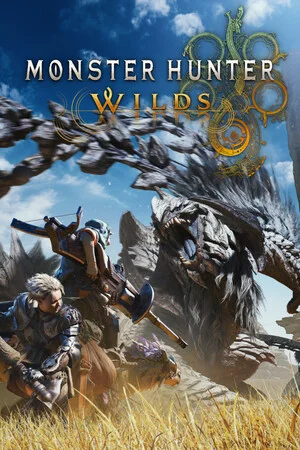
The Forbidden Lands are made of five connected regions: the four regular hunting grounds of Windward Plains, Scarlet Forest, Oilwell Basin and Iceshard Cliffs, plus the story stage Ruins of Wyveria. Regions link seamlessly, and Seikret auto-navigation ties the whole landmass into one continuous hunting ground. The fields of Monster Hunter Wilds change constantly: terrain, seasons and monster populations interact, and this page breaks down terrain, Inclemency, region-exclusive mechanics and resident monsters region by region. The full breakdown of the season cycle is in World & Ecology.
Four Regions at a Glance#
| Region | Terrain | Inclemency | Ecological apex |
|---|---|---|---|
| Windward Plains | Desert, grassland, rock formations | Sandstorm | Rey Dau (Flying Wyvern) |
| Scarlet Forest | Red-water jungle and lake waterways | Downpour | Uth Duna (Leviathan) |
| Oilwell Basin | Oil deposits and lava valleys | Firespring | Nu Udra (Cephalopod) |
| Iceshard Cliffs | Snowy cliffs, ice walls and deep ravines | Frostwind | Jin Dahaad (Leviathan) |
Each of the four regions has one apex large monster: when Inclemency hits, that region’s apex appears and powers up, raising hunt risk and material rewards together. Move-by-move breakdowns for each apex are in Apex Monsters Guide.
Windward Plains#
Windward Plains is the survey team’s first stop into the Forbidden Lands: the terrain runs from open grassland into rolling dunes and up onto bare rock formations, three open, gentle stretches that make it the place to learn this game’s movement, gathering and Seikret navigation. Herbivore herds wander the grassland, Balahara glides just under the sand layer of the dunes building quicksand traps with its body, and the rock formations are where large monster territories overlap most densely.
The Inclemency is the Sandstorm. When it hits, the sky darkens, visibility shrinks, and large-scale lightning strikes follow; the apex Rey Dau appears and powers up in exactly this weather — this Flying Wyvern centers on discharge attacks, and sandstorm plus lightning together put the whole plain on high alert. Dunes can block lightning strikes but also block your line of sight; closing in during the gaps between strikes is basic sand-plain technique.
Region representative monsters include Chatacabra, Doshaguma and Balahara. Chatacabra, an Amphibian, is the first large monster most hunters meet, hardening its forelimbs with stuck-on ore; Doshaguma travels in packs with strong territorial instincts, bunching even tighter in Fallow; Balahara lurks beneath the dunes, so watch for movement under the sand while moving on foot.
Scarlet Forest#
Scarlet Forest’s most striking feature is its red water: rivers and lakes dye the whole jungle crimson, trees layer from bank to canopy, and the paths far outnumber what you can see. This is the game’s richest aquatic ecosystem, with outstanding resource value in aquatic and waterside endemic life and higher fishing yields than any other region.
The Inclemency is the Downpour. Water levels rise sharply during a Downpour, submerging some paths while opening routes that only cross at high water — the same forest plays out in two route sets. The apex Uth Duna appears and powers up during the Downpour; this Leviathan’s surface veil is an adaptation to exactly this environment, and water-elemental threat climbs with the rain.
Region representative monsters include Lala Barina, Anjanath and Congalala. Lala Barina spreads its abdomen like a blooming flower among the trees; Anjanath is the Forest’s Brute Wyvern and steals prey other monsters have caught; Congalala leads Conga troops along the water banks. Certain fish and endemic life also appear only after rain, so schedule gathering by weather — details in Gathering & Endemic Life.
Oilwell Basin#
Oilwell Basin is a huge valley thick with oil deposits, oil-mud layers crossing lava belts, oil seepage visible across the ground, with fire as the core environmental threat of the whole valley. The city of Azuz sits inside it — a trade city unlocked in story Chapter 2 and an important base within the region.
The Inclemency is Firespring. During Firespring, valley-wide oil ignites and fire threat spikes; fire-resistance gear and resistance mantles matter far more here than anywhere else. The apex Nu Udra appears and powers up in Firespring — the people of Azuz call this Cephalopod the “Black Flame”; the Fanged Beast Ajarakan also powers up during Firespring, its molten-metal carapace friction-heated, aggression markedly higher than usual.
Region representative monsters include Rompopolo, the Shuriken Squid and Gravios. Rompopolo lives in the oil-mud layers, injecting gas through its tail to cause poison blasts; the Shuriken Squid is the Basin’s new cephalopod; Gravios is the valley’s heavy-armored monster wrapped head to tail in thick carapace. Oil-mud terrain slows your movement — confirm there are no ignition points underfoot before engaging.
Iceshard Cliffs#
Iceshard Cliffs is a snow-covered, three-dimensional cliff zone where ice walls, deep ravines and caves layer over each other — the strongest vertical structure of the four regions, giving jumps, gliding and ranged weapons the most room to shine. Watch for slipping on ice, while the deep caves hide plenty of gathering points and endemic life.
The Inclemency is Frostwind. Ice fog spreads and temperatures plunge, and the apex Jin Dahaad appears and powers up — this enormous Leviathan is the region’s ice-element apex predator, moving freely between the ice walls, and ice-elemental threat peaks during Frostwind.
Region-Exclusive Mechanic: the Frenzy#
Iceshard Cliffs runs one empowered-individual line no other region has: Frenzied individuals, found nowhere else in the game. The prerequisite is clearing story Chapter 4-2 “A Shadow Lurking in the Dragon Valley” (HR15); before that, even stepping into the Cliffs yields no Frenzied encounters.
| Frenzy essentials | Details |
|---|---|
| Types | 5 Frenzied monsters in total, with Frenzied Yian Kut-Ku and Frenzied Nerscylla the easiest prey |
| Traits | Faster and more aggressive, but with lower HP than normal individuals, and they move zones on their own |
| Frenzy | Some attacks inflict Frenzy, adding an infection gauge above the hunter’s health bar |
| Materials | Frenzy Shards come from any Frenzied monster; Frenzy Crystals drop only from Gore Magala |
How Frenzy works: once a Frenzy-inflicting attack lands, the infection gauge above your health bar starts building; keep landing hits on the monster to steadily drain it. Drain it fully and you are cured, entering a buffed state that moves more smoothly; let the gauge fill and you enter the worsened state — incoming damage increases and temporary health cannot recover until the state clears. Purging Fruit lowers the gauge but cannot zero it directly; the recovery rhythm is yours to fight out.
On the material line, Frenzy Shard is a Rarity 6 material from any Frenzied monster, used to craft Rarity 7 gear; Frenzy Crystal is the key material for Rarity 8 equipment and drops only from Gore Magala — 30% from carving rotted corpses, 24% from Wound destruction. A single-source habitat means endgame builds must schedule Iceshard Cliffs; the full material chain is in Materials & Acquisition. Defeated Frenzied individuals can be saved as investigations, each good for 3 hunts — the stable re-farm entry point.
Region representative monsters include Gore Magala, Blangonga and Nerscylla. Gore Magala carries the Frenzy virus and is the sole source of Frenzy Crystals; Blangonga leads Blango troops across the snowfields; Nerscylla webs ambush sites between caves, with a clone variant joining after the third title update.
Ruins of Wyveria#
The Ruins of Wyveria is the fifth region opened late in the story and the source of the Forbidden Lands’ ecological anomaly: the energy source that sustains the ecosystem, the “Dragon Torch,” lies here, home to the Keeper clan who have guarded it for generations. It is first and foremost the story stage, with the entire main narrative revolving around the Dragon Torch and the Guardians.
Guardians are construct wyverns built by an ancient civilization and driven by Dragon Torch energy, six individuals in all: Guardian Rathalos, Guardian Doshaguma, Guardian Fulgur Anjanath, Guardian Ebony Odogaron, Guardian Arkveld and Guardian Seikret. Zoh Shia is not counted among the Guardian individuals — it was created as Wyveria’s savior, head of the Guardians standing at the apex of the construct ecology, but not counted as a regional apex. The truth of the story’s final target, Arkveld (Flying Wyvern, the “White Phantom,” chain-like wings, once declared extinct), also comes to light in Wyveria. After the credits, Guardian monsters rotate into High Rank hunts in Wyveria, Zoh Shia opens up as a repeatedly challengeable High Rank form, and the Ruins become part of the long-term hunting loop.
Environmental Change: Fallow and Plenty#
The fields shift dynamically between Plenty and Fallow — this game’s most series-defining mechanic: the same region looks completely different by season. Seasons rotate automatically with in-game time, and the field map shows the current season plus a forecast.
| Season | Ecological effect |
|---|---|
| Plenty | Rich vegetation and water, herbivore herds gather, abundant gathering items, monster populations mild and stable |
| Fallow | Resources dry up, carnivores crowd toward water and food sources, fights over resources flare, gathering yields drop |
There is no fixed day count or probability to memorize for the switch — planning runs on the season forecast on the map. Plenty suits route-running, gathering and building camps: mark every gather point in one pass. Fallow concentrates monsters on limited resources — the efficient window for focused hunts and watching territorial fights, and pack monsters like Doshaguma bunch tighter in Fallow, so schedule pack hunts for that season. Beyond the two, Inclemency is a third state: apexes appear and power up only then, while gathering activities are best avoided.
Bases & Settlements#
| Base | Location | Unlock | Key facilities |
|---|---|---|---|
| Base Camp | Windward Plains | From the start | Canteen, Smithy, Shop, Quest Board |
| Azuz | Oilwell Basin | Story Chapter 2 | Trade, tavern, local specialty canteen |
| Suja | — | Around story Chapter 3 | Grand Gathering Hub, Arena Quest counter, dining area |
| Wyveria | Ruins of Wyveria | Opens with the story | Main story base |
Base Camp is the survey team’s main base with the fullest facilities: the Canteen provides the most complete buff meals, the Smithy handles weapon and armor forging and upgrades, the Shop stocks consumables, and the Quest Board takes story, Optional, investigation and other quest types — topping up at base before setting out is standard procedure. Azuz unlocks with story Chapter 2; trade and the tavern are this oil city’s calling card, and its canteen serves local specialties too. Suja opens around story Chapter 3, and the April 2025 major update placed the Grand Gathering Hub there (unlocked at High Rank HR16); festival menus, the Arena Quest counter and the survey team records board make it the social center of the online loop. Wyveria is the story base, with activity around the finale centered on it.
Beyond the bases, every region holds buildable Pop-up Camps: discover a site while exploring, build it, and transfer there directly from the map — completing camp coverage before long treks is basic discipline. More on survey team members and roles in Characters and Dining.
Exploration Tips#
| Tip | Details |
|---|---|
| First visit | Enter new regions during Plenty when possible; run the map and mark gather points first |
| Pop-up Camps | Prioritize building every camp site in each region — transfer efficiency improves dramatically |
| Endemic life | Each region’s signature endemic life are medal and achievement targets; spawns depend heavily on season and weather |
| Inclemency | Camping out for Inclemency is the natural way to meet apexes; keep gathering activities out of it |
FAQ#
| Question | Answer |
|---|---|
| How do I move between regions | Fields connect seamlessly: Seikret auto-navigation or fast travel from the map |
| Can seasons be controlled | Not directly, but resting at bases and choosing the wait time influences them indirectly |
| Can Wyveria be farmed | After the credits, Guardian and Zoh Shia High Rank rotations open, making Wyveria a long-term hunting ground |
| Any hidden maps | Each region has Pop-up Camp sites to discover; built camps enable fast transfers |
Revision note (2026-10-04): terrain, Inclemency and regional mechanics on this page have been re-verified region by region against official ecology information; the unsourced gathering-resource list has been removed, and the Frenzy mechanic now carries its unlock condition, traits and material-line details.