The Last Epoch Mage Builds Guide#

The Mage runs on Intelligence: a long-range caster with high burst and low survivability. Its three masteries — pure casting, melee spellwork and rune mechanics — differ so much they feel like three separate classes.
The Three Masteries at a Glance#
| Mastery | Role | Input Burden | Survival Difficulty |
|---|---|---|---|
| Sorcerer | Fire, ice and lightning bursts | Medium | Medium-high |
| Spellblade | Melee plus weapon enchantment | Medium-high | Medium |
| Runemaster | Rune accumulation and release | High | Medium |
1. Sorcerer#
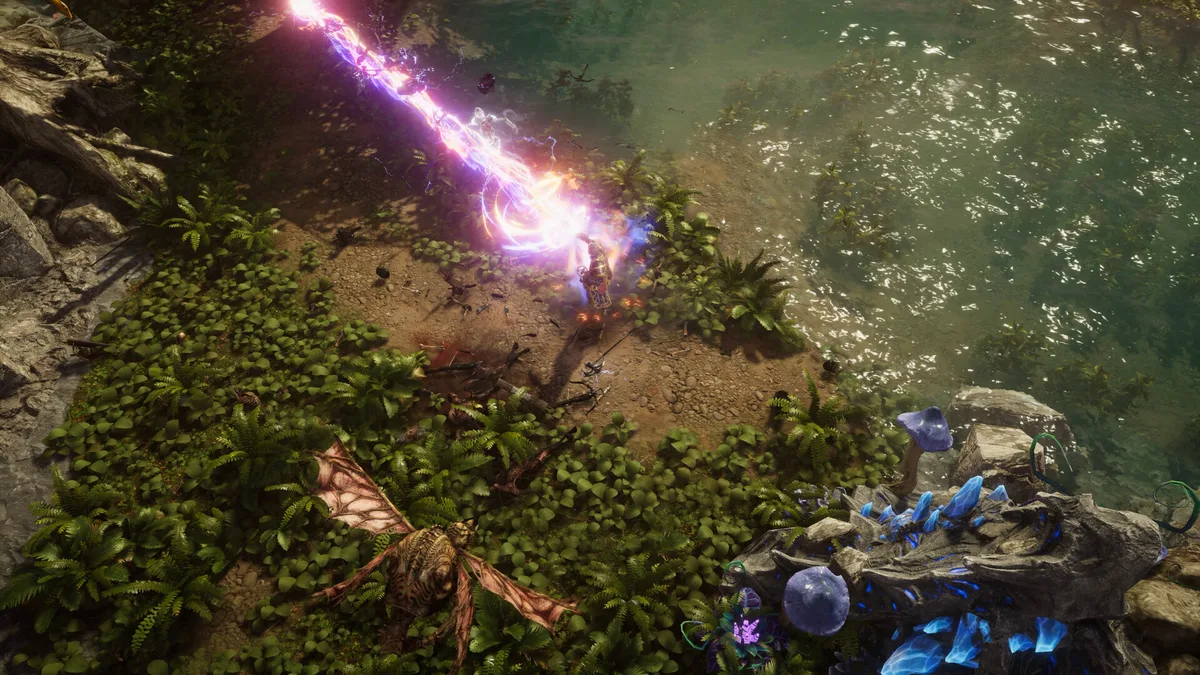
The Sorcerer is the pure casting route, built around fire, frost and lightning.
| Aspect | Details |
|---|---|
| Main damage | Fire, frost and lightning, usually one or two elements deep |
| Typical skills | Fireball, meteor, black hole, frost nova types |
| Strength | Wide screen-clear, top-end late damage |
| Weakness | Fragile body; interrupted casts turn lethal fast |
The key decision on a Sorcerer is which element to main. Each element has a different payoff curve: fire favors sustained area damage, frost favors control, lightning favors bursts and ailment procs. Splitting across all three usually means mastering none — commit to one or two.
2. Spellblade#
The Spellblade turns the Mage into a melee class, dealing damage through weapon enchants and trigger spells.
| Aspect | Details |
|---|---|
| Main damage | Fire or frost, depending on enchant choice |
| Core mechanic | Melee attacks trigger spells, which in turn empower melee |
| Strength | Combines melee attack speed feel with spell area damage |
| Weakness | Must fight at close range; defense requirements exceed the Sorcerer’s |
This route received a round of systematic changes in the current cycle, focused on trigger-spell synergy, defensive options and resource recovery. After the changes, builds depend more on whether the trigger chain flows smoothly than on stacking any single number.
3. Runemaster#
The Runemaster is built around accumulating and releasing runes — the most mechanically complex of the three.
| Aspect | Details |
|---|---|
| Main damage | Varies with rune combinations |
| Core mechanic | Bank different runes, release different effects by combination |
| Strength | Most build variants, highest skill ceiling |
| Weakness | Requires learning the rune loop; awkward early game |
At its heart this is a “combination condition” system: the same skill releases different effects depending on the runes you hold. So the core build question is not “which nodes to take” but which rune states you commit to maintaining.
Gear and Affix Direction#
| Mastery | Priority stats |
|---|---|
| Sorcerer | Intelligence, spell damage, cast speed, matching elemental damage |
| Spellblade | Intelligence, attack speed, melee damage, elemental penetration |
| Runemaster | Intelligence, rune modifiers, mana recovery |
All mages share one defensive problem: no heavy armor — so what keeps you alive. All three routes must pick a primary from among “shield”, “dodge” and “mobility frequency”, or they will not stay standing in high-difficulty content.
Handling Resistances and Survival#
| Stage | Approach |
|---|---|
| Leveling | Bring your main damage type’s resistance to a safe line first |
| Mid game | Fill gaps with idols while adding a shield or dodge source |
| Endgame | Cap all resistances and treat a movement skill as fixed defense |
Common Mistakes in Last Epoch Mage Builds#
| Mistake | Reality |
|---|---|
| Mixing all three elements is stronger | Mixing usually means mastering none; commit to one or two |
| Mages need no defense | Without heavy armor, shields and mobility matter even more |
| Runemaster runes can be pressed freely | It relies on fixed rune states and a learned rotation |
| The Spellblade is a melee class | Its core is still spell triggers; melee is only the delivery vehicle |
| More cast speed is always better | When mana recovery lags, extra cast speed breaks your own loop |
One-Line Summary#
The three Mage masteries map to three completely different inputs: the Sorcerer is aiming and positioning, the Spellblade is rhythm and proximity, the Runemaster is loops and planning. Deciding which burden you can live with matters more than reading stat sheets.
How to Layer Mage Defenses#
With no heavy armor, a mage must pick a primary from a short list.
| Defensive tool | Traits | Fits |
|---|---|---|
| Shield | Builds through mechanics, absorbs bursts | Sorcerer, Runemaster |
| Dodge and mobility | Skill-based avoidance, high ceiling | Spellblade |
| Control and slows | Frost mechanics suppress enemy output | Frost-focused builds |
Unlike the Sentinel, a mage’s defenses usually only work when skills back them up — defense is not a gear problem, it costs skill slots and nodes.
Why the Mana Cycle Matters#
Mage skills are expensive; a poorly built mana loop means output stalls periodically.
| Symptom | Likely cause |
|---|---|
| Out of mana after a short fight | Weak recovery affixes or a too-expensive main skill |
| Nothing left after bursts | Missing a cheap filler skill |
| Gaps while fighting on the move | Mobility skill costs squeezing your output budget |
Fix things in this order: cut costs first, then raise recovery, and only then stack damage.
Choosing an Elemental Route#
| Your preference | Suggested route |
|---|---|
| Fast screen-clear | Fire — area and sustained damage lead |
| Enemy suppression | Frost — slows and control are steadier |
| High burst | Lightning — ailment procs pay off |
| Flexible switching | Main one element, take a few nodes in another |