The Elder Scrolls V: Skyrim — Races & Skills Guide#
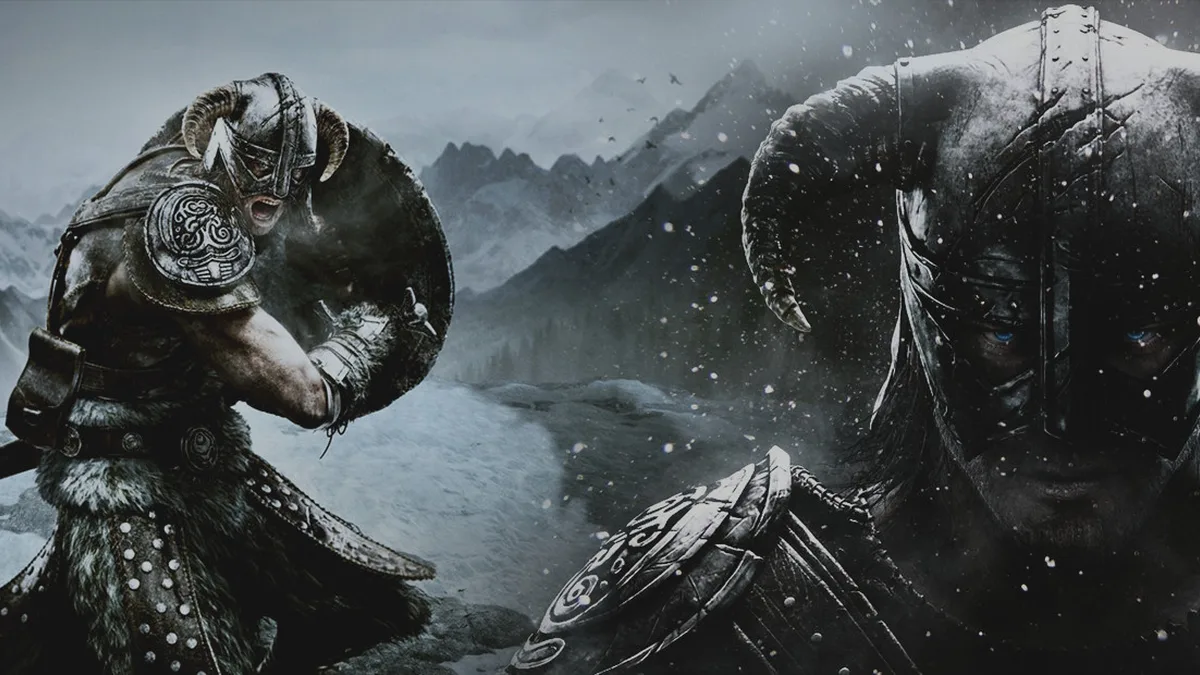
Skyrim’s character growth has no class shackles: 10 races set your starting leanings, and 18 skills grow through use. This page maps the three skill groups, the leveling mechanics and several data-verified build ideas; unverified perk numbers are always attributed to their source — no speculative values.
Playable Races#
Skyrim has 10 playable races (en.uesp.net, checked 2026-10-08):
| Race | Common leanings |
|---|---|
| Nord | Melee, cold-weather resilience |
| Imperial | All-rounder, trading |
| Breton | Casting, magic resistance |
| Redguard | Agile melee, stamina |
| High Elf | Pure mage, magicka pool |
| Wood Elf | Archery, wilderness survival |
| Dark Elf | Battle mage, fire resistance |
| Orc | Heavy armor, two-handed melee |
| Khajiit | Sneaking, theft |
| Argonian | Water activity, survival |
Each race has its own starting skill bonuses and passive gifts; the exact numbers (starting levels per skill, resistance percentages and the like) are not individually verified on this site — defer to UESP’s Races page, no speculation here. The practical rule: racial bonuses shape the early game noticeably but matter little for endgame builds — pick by the playstyle and culture you enjoy.
The Skill Trees#
The 18 skills split into warrior, mage and thief groups (en.uesp.net, skyrim.wiki.fextralife.com):
Warrior Skills#
| Skill | Role |
|---|---|
| One-handed | One-handed weapon damage — swords, axes and maces each hit differently; dual-wielding builds on this |
| Two-handed | Two-handed damage — the high-burst line of greatswords, battleaxes and warhammers |
| Archery | Ranged damage — sneaking plus bowwork is the game’s classic combo |
| Block | Shield and weapon blocking — damage reduction, shield bashes and counters |
| Smithing | Crafting and improving gear — the backbone of equipment progression |
| Heavy Armor | Heavy-armor defense — high armor ratings and mitigation |
Mage Skills#
| Skill | Role |
|---|---|
| Destruction | Fire, frost and shock damage — each element brings its own suppression |
| Restoration | Healing and wards — sustain and anti-undead work |
| Alteration | Armor spells and utilities — flesh spells, detection, telekinesis |
| Illusion | Calm, fear and frenzy — rewriting who enemies think you are |
| Conjuration | Summoned creatures and weapons — the mage’s frontline and damage proxy |
| Enchanting | Adding magic effects to gear — the universal boost every build uses |
Thief Skills#
| Skill | Role |
|---|---|
| Sneak | Stealth movement and backstab multipliers — the assassin’s foundation |
| Lockpicking | Opening locks of every tier — the passport through dungeons and homes |
| Pickpocket | Lifting items from NPCs — high-value theft depends on this skill |
| Light Armor | Light-armor defense — friendlier to sneaking and mobility |
| Alchemy | Brewing potions and poisons — turning ingredients into power and income |
| Speech | Buy-sell prices and persuasion — the economic backbone |
Leveling and Perk Points#
- Any skill increase feeds total leveling progress; fill the bar and the character gains a level.
- Each level: 10 points into health, magicka or stamina (pick one) plus 1 perk point.
- Perk points are finite — you can never light every tree in full. Choose a build first, invest deeply.
- Skills grow through use: whatever you practice is what gets stronger.
The Legendary Mechanic#
Once a skill hits 100, you can make it Legendary: the skill resets to 15 and grows from scratch (per UESP’s Skills page). Legendaries keep your character level climbing indefinitely, and they mean perk points can be earned over and over — the road to grand-mastering every skill.
| Common question | Answer |
|---|---|
| What is a skill’s cap? | 100 — after that, make it Legendary to reset to 15 and regrow |
| Should I max every skill to 100? | No — focus on the six to eight skills your build needs; let Legendaries handle the rest |
| What if I level too fast? | Character level drives enemy strength — if support skills push your level while combat skills lag, fights get harder |
| What should I train first? | Survival first (armor skills, main weapon), then round out damage and crafting |
Sneak-Attack Multipliers (verified data)#
Sneak is the game’s strongest damage amplifier; these multipliers are verified via UESP’s Backstab page (checked 2026-10-08):
| Attack | Multiplier | Condition |
|---|---|---|
| Melee weapon (base) | 2x | Undetected strike |
| One-handed + Backstab perk | 6x | Sneak perk tree |
| Dagger + Assassin’s Blade perk | 15x | Deep in the Sneak tree |
| Bow + Deadly Aim perk | 3x | Sneak perk tree |
| Stacking the Dark Brotherhood gloves’ backstab enchant | Doubles again (daggers reach 30x) | Dark Brotherhood line gear |
This number set is where assassin and stealth-archer builds find their damage ceiling.
Build Ideas#
The builds below are editorial suggestions built on the verified mechanics above; perk names with unverified translations are described qualitatively.
Stealth Archer#
The game’s most popular build — a sneaking bow attack starts at 3x with Deadly Aim, giving a huge first-strike edge.
| Item | Recommendation |
|---|---|
| Primary | Archery, Sneak, Light Armor |
| Secondary | Smithing, Enchanting, Alchemy |
| Standing Stone | The Thief |
| Notes | The stealth archer’s window is before detection — retreat to cover and reset once spotted; mid game, lean on enchanting and smithing for damage |
Dagger Assassin#
The ceiling of the sneak multiplier — 15x dagger backstabs, 30x with the Brotherhood gloves.
| Item | Recommendation |
|---|---|
| Primary | Sneak, One-handed (daggers), Light Armor |
| Secondary | Illusion, Alchemy |
| Notes | Assassin’s Blade is the core perk; Illusion’s Calm and invisibility spells manufacture the backstab window |
Sword-and-Board Warrior#
The most reliable melee route — tanky, steady, high on forgiveness.
| Item | Recommendation |
|---|---|
| Primary | One-handed, Block, Heavy Armor |
| Secondary | Smithing, Enchanting, Restoration |
| Standing Stone | The Warrior |
| Notes | Shield damage reduction and bash interrupts are the precondition for safe damage; Smithing sets your pace to maturity |
Destruction Mage#
A pure casting route with elemental damage as the spine.
| Item | Recommendation |
|---|---|
| Primary | Destruction, Restoration, Alteration |
| Secondary | Enchanting, Conjuration |
| Standing Stone | The Mage |
| Notes | Magicka sustain is a pure mage’s lifeline — enchanting for cost reduction plus Restoration; rotate elements by situation (fire burns, frost slows, shock punishes casters) |
Conjuration Battlemage#
Summons hold the front line while you cast from range — a hybrid route.
| Item | Recommendation |
|---|---|
| Primary | Conjuration, Destruction |
| Secondary | Alteration, Restoration, Enchanting |
| Notes | Summons plus elemental spells form a melee-and-ranged double line; Alteration armor spells patch the cloth-robe defense gap |
Skill Growth Advice#
- Smithing, Enchanting and Alchemy are the universal growth engines for every build: smithing raises gear baselines, enchanting adds effects, alchemy supplies potions. The three-line loop is the classic equipment path (per-verity numbers are unverified here; the flow lives on the Equipment & Items page).
- Trainers: each city has skill trainers who raise a skill for gold — with spare coin, this is the legitimate time-saver.
- Do not grind lifestyle skills just to level: rising levels strengthen enemies; when combat power lags the level curve, the game feels worse (see the Tips guide’s level-trap section).
- Perk planning: fix your six to eight primary skills first and spend perks only in those trees; cross-tree perks can wait until the build matures.
Skyrim FAQ#
| Question | Answer |
|---|---|
| How do skills level? | Through use: swinging swords raises One-handed, shooting raises Archery, casting raises its school; lockpicking, theft and sneaking work the same way |
| Not enough perk points? | Normal — focus them in your primary trees; Legendary resets let you earn more by re-leveling |
| Why do Smithing and Enchanting matter? | They set the gear ceiling directly: Smithing fixes base stats, Enchanting fixes extra effects — every strong build leans on both |
| Picked the wrong race? | It matters little — skills have no class gates; any race can train any skill, only the starting speed differs |