Lore and Ecology#
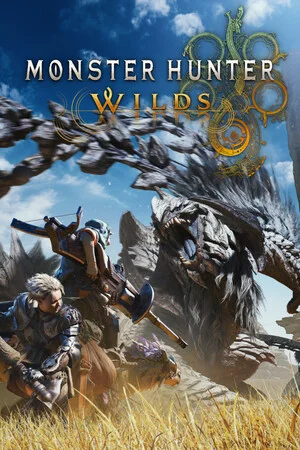
The setting of Monster Hunter Wilds, the “Forbidden Lands,” is a self-consistent system of lore and ecology: the Guild’s ban, each region’s apex monster, the seasonal cycle, artificial monsters, and the Frenzy together form the rules by which this world runs. This page collects only hard lore and ecology facts; for chapter flow and story twists see the main story, and for how the seasons and weather concretely affect hunting see world and ecology.
The Forbidden Lands and the Guild’s Ban#
| Setting | Details |
|---|---|
| Nature | A border region the Guild has never surveyed — uncharted, unvisited territory not yet on any map |
| Name origin | An area once sealed off; “Forbidden” means entry requires Guild permission |
| Ecological trait | A unique energy cycle centered on the Dragon Torch, with ecological rhythms from the source itself |
| Inhabitants | The Keepers, a clan who have guarded the Dragon Torch for generations and long severed contact with the Guild |
| Reason for the ban | Ecological information is a total blank — monster composition and danger level cannot be assessed |
| Authorization | After a Keeper boy escaped an attack alone and gave the Guild clues, the Guild formed a survey team and granted entry permits |
The Guild’s reason for banning entry is purely practical: never surveyed means no intelligence, and without intelligence there can be no risk management, support logistics, or ecological protection — anyone who sneaks in gets no rescue and may disturb the local ecological balance. Forming the survey team is the official procedure for turning “unknown territory” into “a subject of investigation”: every hunt by team members is folded into the Guild’s research framework, and gathered materials and slayings feed back into ecological study.
Ecological Niches and Apex Monsters#
Every region of the Forbidden Lands is ruled at the top of its food chain by one superpredator; this “apex monster” structure is the core ecological setting of each area. When Inclemency strikes, the apex appears and enters an active state, becoming the top link of that region’s food chain.
| Region | Inclemency | Apex monster | Class | Lore traits |
|---|---|---|---|---|
| Windward Plains | Sandstorms with massive lightning strikes | Rey Dau | Flying Wyvern | Known for discharge attacks; sits atop the niche during thunderstorms |
| Scarlet Forest | Torrential rain | Uth Duna | Leviathan | Body covered in liquid veils; sighted only during heavy rain |
| Oilwell Basin | Firespring | Nu Udra | Cephalopod | Called the “Black Flame” by the local Azuz people |
| Iceshard Cliffs | Deep cold | Jin Dahaad | Leviathan | A colossal ice-type apex predator |
Apex monsters only appear under their corresponding Inclemency — this “weather-triggered niche activation” setting binds the climate system to the food chain: the Plains’ thunderstorms, the Forest’s torrential rain, the Basin’s firespring, the Cliffs’ deep cold, each tied to one superpredator that can only be confirmed to exist in extreme conditions. Conversely, once the weather calms these monsters retreat beyond their normal ecology, and routine surveys struggle to track their traces.
Arkveld is another ecological thread: this Flying Wyvern, nicknamed the “White Shadow,” has chain-like wings and was declared extinct by the Guild — and it is the survey team’s final objective. Sighting reports of an “extinct monster” are themselves direct evidence that the Forbidden Lands’ ecology exceeds the Guild’s existing catalog, and one of the ecological justifications for why the ban must exist.
Fallow and Plenty#
The regions of the Forbidden Lands shift dynamically between two faces. The seasonal cycle is an ecological rhythm native to this land, not an anomaly caused by outside forces; on top of the two phases, Inclemency adds a third state.
| Phase | Ecological face |
|---|---|
| Plenty | Abundant resources; herbivore herds gather and breed; the food chain runs stable |
| Fallow | Resources dry up; herbivores disperse; carnivorous monsters intensify activity fighting over food |
| Inclemency | Extreme weather layered on top of the two phases, triggering apex appearances and activation |
The phases rotate automatically and can be forecast; the same region’s creature distribution, monster behavior, and resource yields differ dramatically between the two phases. Fallow brings noticeably more territorial fights over resources, with monster activity concentrating around water and food; Plenty showcases the stable, complete food chain in its normal face. This rhythm and the Dragon Torch’s energy cycle together form the setting basis of the Forbidden Lands’ “living ecology”; for the phases’ impact on gathering and hunting yields see world and ecology.
Guardians (Constructs)#
Guardians are artificial monsters classified as “Constructs,” made by an ancient civilization and powered by Dragon Torch energy. They neither eat nor breed; their activity depends entirely on energy supplied by the Dragon Torch, and their niche was set by design rather than shaped by natural evolution — which is why the Guild deems them “monsters that cannot exist within an ecology.” Guardians’ behavior maps strictly onto natural monsters in one respect: designed to neither eat nor tire, they correspondingly never enter a fatigue state in combat.
| Guardian | Lore role |
|---|---|
| Zoh Shia | A Construct, head of the Guardians |
| Guardian Doshaguma | A guardian modeled on the pack-hunting Doshaguma |
| Guardian Fulgur Anjanath | A guardian modeled on Fulgur Anjanath |
| Guardian Ebony Odogaron | A guardian modeled on Ebony Odogaron |
| Guardian Rathalos | A guardian modeled on Rathalos |
| Guardian Arkveld | A guardian modeled on Arkveld |
The fact that there are exactly six Guardians shows the ancient civilization had a systematic monster-making technology, not one-off creations. Zoh Shia, head of the Guardians, is classified outside the Elder Dragons: Constructs and the series’ traditional Elders belong to separate classification systems — “artificial creations of an ancient civilization” and “naturally evolved disaster-class monsters” are two non-overlapping lineages in this game’s lore.
The Frenzy System: Frenzied Monsters and Hunter Infection#
The Frenzy Virus acts on both monsters and hunters: infected monsters enter the Frenzied state, while infection in hunters manifests as the Frenzy. The two are the same pathogen expressed in different hosts — understand one side’s mechanics and you understand the other side’s countermeasures.
Frenzied: The Monster Side#
| Setting | Details |
|---|---|
| Where they appear | Confirmed only in the Iceshard Cliffs |
| Unlock condition | Complete main story Chapter 4-2 “The Shadow Lurking in the Dragon Vale” (from Hunter Rank 15) |
| Variety | 5 Frenzied monsters in total |
| Traits | Lower health than regular individuals but more aggressive; some attacks inflict the Frenzy; capable of moving on their own |
After slaying a Frenzied individual, its data can be saved as an investigation; each investigation can be accepted up to 3 times — a stable route for continuously collecting Frenzy materials.
The Frenzy: The Hunter Side#
An infection gauge appears above the hunter’s health bar, accumulating when attacks from Frenzied monsters connect. While infected, damage taken increases, and health lost to damage cannot recover naturally — only recovery methods restore it. Continuously attacking a Frenzied monster drains the infection gauge; emptying it puts the hunter into a recovered state with an attack buff for a while; failing to empty it in time means a worsened state and further raised combat risk. The Warding Fruit item lowers the gauge but cannot zero it directly — sustained offense remains the key.
Frenzy Materials and Gear#
| Material | Source | Use |
|---|---|---|
| Frenzy Shard | Any Frenzied monster | A Rarity 6 material for forging Rarity 7 gear |
| Frenzy Crystal | Only from Gore Magala — 30% from carving rotted corpses, 24% from breaking wounds | For forging Rarity 8 gear |
The acquisition structure of Frenzy materials matches their ecology: Shards come from any Frenzied individual — stable output; Crystals come only from the specific virus-origin monster — scarce output, matching the higher-rarity gear line.
FAQ#
| Question | Answer |
|---|---|
| Is the Forbidden Lands connected to the New World of Monster Hunter: World | No direct connection — an independent stage on a different continent |
| Is Zoh Shia an Elder Dragon | No — it is classified as a Construct; the base roster contains no Elder Dragons, and the added Gogmazios is the only Elder Dragon in the base game |
| Do Frenzied monsters appear in other regions | No — only in the Iceshard Cliffs |
| Do Guardians eat or breed | No — their activity depends entirely on Dragon Torch energy, and their niche is set by design |
| Is Inclemency part of the seasonal cycle | No — Inclemency is a third state layered on top of Fallow and Plenty |
Related Pages#
- Main story: the survey team’s chapter flow and plot twists
- World and ecology: the practical hunting impact of the seasonal cycle and Inclemency
- Monster compendium: a region-by-region monster list with ecological notes