Kill Block and Gunfight#
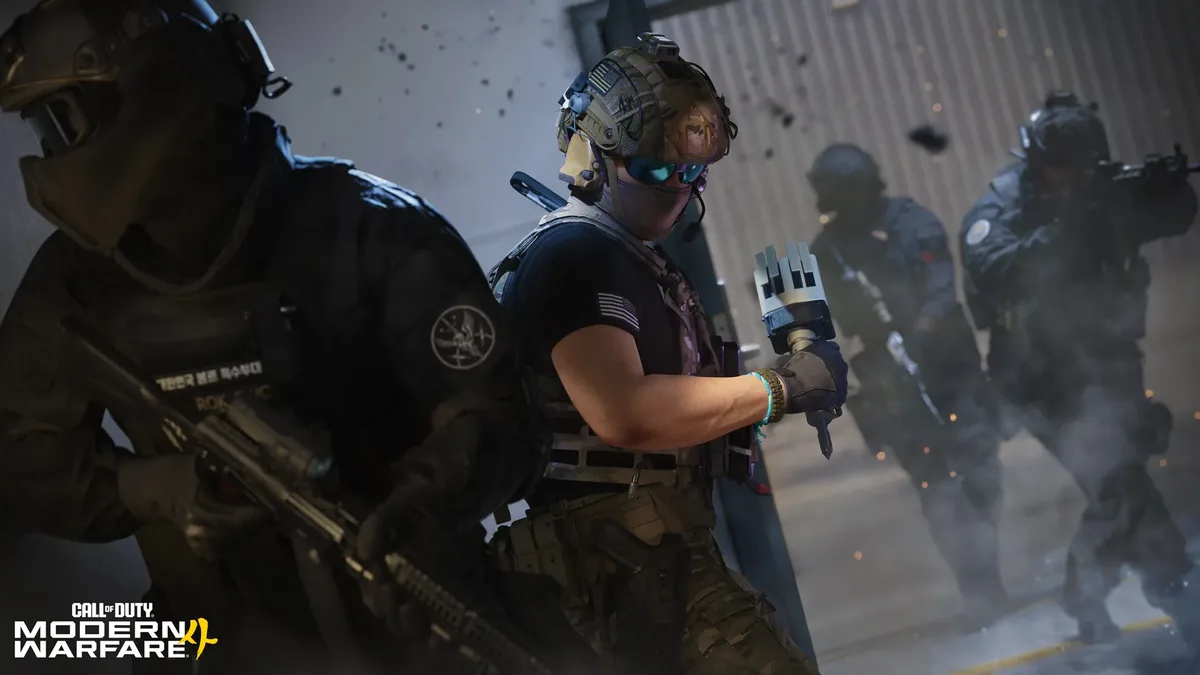
Kill Block is the boldest map experiment in Modern Warfare 4’s launch lineup: a dynamic map assembled from randomly stitched blocks, supporting 3v3 and 10v10 Gunfight rules with 500+ layout combinations and weather that shifts between clear, rain and snow. Gunfight, meanwhile, continues the 2v2 ultra-small-format duel with four dedicated launch maps. This page breaks down the rules and tactics of both small-format modes.
Kill Block: A Dynamic Map with 500+ Layouts#
Kill Block’s official facts, all listed:
| Feature | Detail |
|---|---|
| Layout combinations | 500+ |
| Supported rules | 3v3 and 10v10 Gunfight |
| Weather system | Dynamic clear / rain / snow |
| Random blocks | Include classic map elements from Crash, Highrise, Shoot House and more |
| Later plans | 6v6 modes to be added after launch |
The design intent is blunt: classic small-map landmarks become building blocks, randomly assembled into terrain combos you have most likely never seen. Four practical impacts:
- Map memorization loses most of its value; map reading gains. On traditional small maps half the fight is memorized spawns and pre-aimed lanes; in Kill Block the terrain can change every entry, so your first skill is quickly identifying which classic blocks you got this round.
- Classic-element muscle memory transfers directly. Crash’s helicopter wreck, Highrise’s rooftop atrium, Shoot House’s range corridors — veterans carry an inventory at the block level; the key is rewiring it to random combinations.
- Weather changes rewrite tactics for the same layout. Rain and snow differ in visibility, footstep feedback and visual contrast: high-visibility reticles pay off on snow, while rain further devalues long-range dueling.
- 3v3 and 10v10 are two different games. 3v3 Kill Block is close to an enlarged Gunfight about individual duels and coordinated movement; 10v10 is a mid-scale area brawl where throwables and field upgrades regain control value.
Weapon Picks for Kill Block#
| Ruleset | Recommended setup |
|---|---|
| 3v3 Gunfight rules | SMG + emergency pistol (tiny scale, first shot wins) |
| 10v10 brawl | SMG or AR + control field upgrades (smoke, trip wire) |
Random layouts mean re-judging every entry — “is this a shelf-corridor round or an open-courtyard round”. On the gear side, keep control field upgrades fixed in the loadout for 10v10; the list is in Killstreaks and Equipment. In small-format fights, the tactical-sprint-versus-Blood-Rush trade-off also differs from fixed small maps — details in Controls and Aim Settings.
Gunfight: Four 2v2 Launch Maps#
Gunfight launches with four dedicated maps at 2v2:
| Map | Scene impression |
|---|---|
| Cafe | Cafe interior and street |
| Library | Library stacks |
| NYC | New York street fragment |
| Smuggler | Smuggler’s den |
All four share the tiny-scale “one round decides it” structure — in 2v2 no single mistake has a safety net. Specific round-rule details follow in-game reality; this page does not invent unverified numbers or round parameters.
A General Framework for 2v2 Gunfight#
- Never split, but layer up. Two players cross-holding upper and lower levels of the same area far outperforms side-by-side pushing — in tiny formats crossed fire is everything.
- Re-rate opening throwables. Flash and stun lost range and duration this year, so 2v2 opening throws are less reliable than before; they force movement more often than they enable blind pushes.
- Secondaries and melee are the clutch answer. In end-of-mag clutch rounds, fast pistol swaps and FSS Carbon Edge 1095 melee proficiency directly decide the round (see Pistols, Launchers and Melee).
- Zero out streak expectations. The round structure leaves almost no room for streaks — commit all resources to loadout and throwables.
Where These Small Maps Sit#
| Mode | Maps | Scale | Core skill |
|---|---|---|---|
| Kill Block | Dynamic random (500+ combos) | 3v3 / 10v10 | Map reading and adaptation |
| Gunfight | Cafe / Library / NYC / Smuggler | 2v2 | Extreme duels and clutch play |
| Shipment | Russian docks version (returns 10-27) | Regular rotation | Spawn warfare and fast TTK |
| Core 6v6 twelve maps | Fixed layouts | 6v6 | Map knowledge and control |
Further Reading#
- Shipment and the core 6v6 breakdowns in Multiplayer Maps Part 2.
- The first six core maps in Multiplayer Maps Part 1.
- Mode list, progression and ranking in Multiplayer Modes and Ranking Up.
- Large-scale play in Ground War and Combat Outposts.
The Three-Step Map Reading Flow#
Kill Block’s core skill is fast map reading. Run this flow on entry:
- Step 1: identify blocks. Within the first 10 seconds, spot the random classic elements — Crash’s helicopter wreck, Highrise’s rooftop atrium, Shoot House’s range corridors. Name the blocks and your veteran inventory reactivates.
- Step 2: fix your lanes. Random assembly means the spawn-to-objective line differs every round; first count how many paths connect the two spawn zones, then choose ground level or through-building.
- Step 3: read the weather. Clear / rain / snow rewrites engagement distance and throwable value for the same layout — the opening weather call decides whether this round is a close-range or mid-range game.
Weather Cheat Sheet#
| Weather | Duel distance | Visual note | Play tendency |
|---|---|---|---|
| Clear | All ranges normal | Normal contrast | Standard play |
| Rain | Mid-long compressed | More visual noise | Close-mid pressure; throwables pay less |
| Snow | Sightline contrast changes | High-visibility reticles pay more | Pair with reticle customization (see Arsenal Overview) |
3v3 vs 10v10 Compared#
Although both rulesets share one dynamic map, the play differs almost completely:
| Dimension | 3v3 Gunfight rules | 10v10 brawl |
|---|---|---|
| Duel density | Extreme; one mistake costs the round | Moderate; room to recover |
| Throwable value | Low (nerfed openers + few targets) | High (control value returns) |
| Field upgrade picks | Mobility and emergency | Control (smoke, trip wire) |
| Streak expectations | Near zero | Builds normally |
FAQ#
| Question | Answer |
|---|---|
| Will Kill Block get 6v6? | Yes — official wording says 6v6 modes will be added later; launch ships 3v3 and 10v10 first |
| Are classic blocks full map remakes? | No — they are random blocks containing elements from Crash, Highrise, Shoot House and other classics |
| Gunfight round-rule details? | Follow in-game reality; official per-item parameters are not within our sourced scope |
| Does Kill Block count for camo progress? | Yes — the multiplayer camo journey covers all multiplayer play, with challenges shared across the three modes |