Ground War and Combat Outposts#
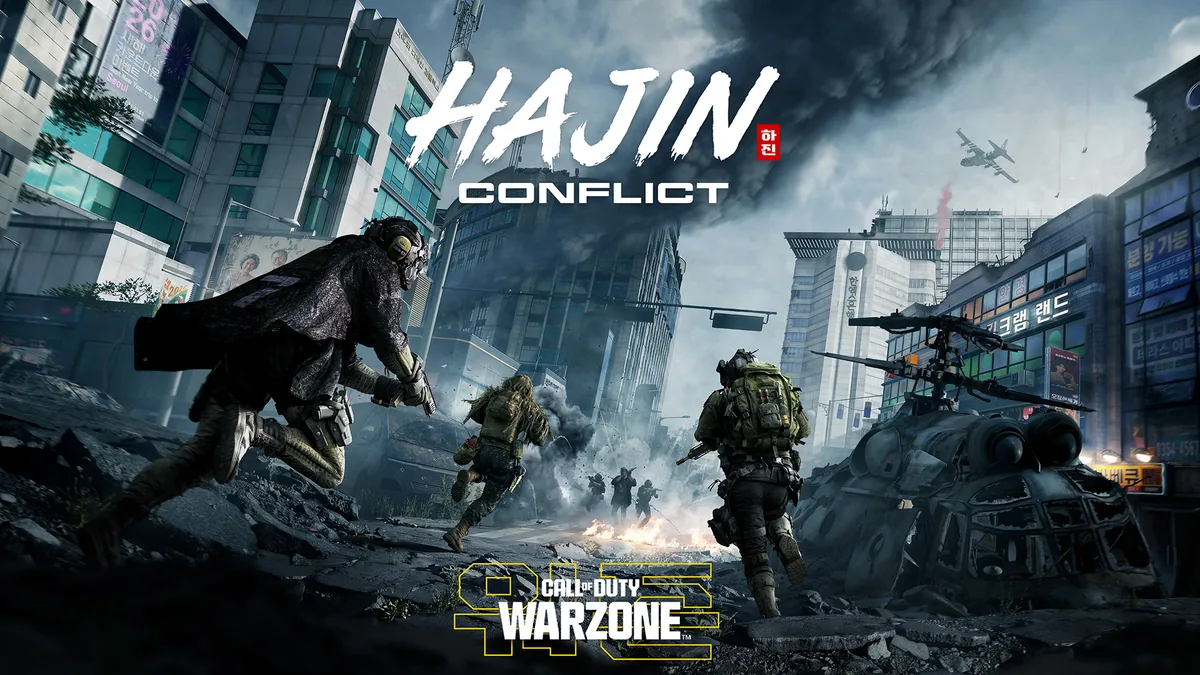
Ground War launches in Call of Duty: Modern Warfare 4 with 3 big maps at 32v32 scale, and more importantly adds the new-rule mode Combat Outpost — turning base construction into the core of Ground War play. This page breaks down the three maps and the new mode.
The Three Launch Big Maps#
| Map | Scene | Location setting |
|---|---|---|
| Imjin Farmland | Rural farmland | Countryside outside the fictional city Hajin |
| Wolves Stadium | Urban stadium | Central Hajin |
| Forest | Woodland | The third Ground War map per the official blog |
Naming note: official localized names for Imjin Farmland and Wolves Stadium have not been published; the site uses common renderings — Imjin from the Imjin River, Wolves Stadium as-is — and Forest keeps its original name.
All three maps sit inside the geographic frame of Hajin, the campaign’s main battlefield: Imjin Farmland is open rural terrain, Wolves Stadium turns a city landmark into a vertical battlefield, and Forest offers the most enclosed natural sightlines in the game. Campaign missions 1 (Mayhem) and the Hajin city sections of missions 5, 12 and 14 provide exactly this narrative backdrop — campaign players will build map sense noticeably faster.
Combat Outpost: Base Building Is the New Core#
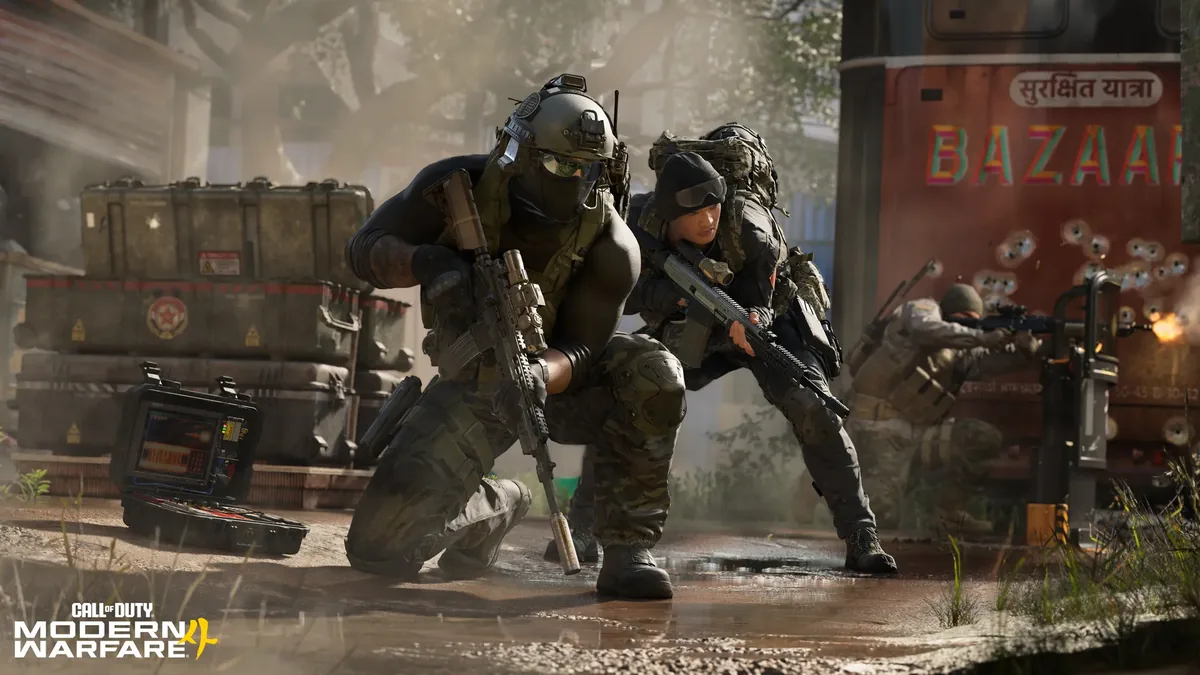
Combat Outpost is Ground War’s new-rule mode, and its core change upgrades “capturing” into “constructing”: teams build and hold outpost positions across the big map instead of standing in a circle for points.
This design restructures Ground War’s play loop on three levels:
- Base building turns attack and defense from turn-taking circle stands into running a position. Construction itself becomes the objective, and teams must rotate people across building, defense and mobile roles.
- LMGs and defensive field upgrades rise in priority. Of the 12 launch field upgrades, area-control gear like Razor Wire, Trip Wire and the Riot Shield becomes hard currency in outpost fights (list in Killstreaks and Equipment).
- Smart Streaks’ objective counting directly feeds the outpost loop — building and holding count toward streak progress, so outpost players accumulate streaks far faster on big maps.
How to Play the Three Big Maps#
Imjin Farmland#
The rural terrain has the most extreme long sightlines of the three: field ridges, farmhouses and open fields form the baseline of cross-field duels. Direction:
- Marksman and bolt-action rifles own the comfort zone; for the post-flinch gunfight environment see Sniper Rifles and Marksman Rifles.
- Farmhouse interiors are infantry safe islands — SMG players should hug buildings when rotating.
- During the building phase, place outposts on the farmhouse side first — an outpost in open farmland is just a target.
Wolves Stadium#
The urban stadium’s core is its bowl structure: a sunken pitch ringed by elevated stands. Points:
- Anything moving on the pitch is naturally exposed to stand fire; attackers must clear the stands before entering the bowl.
- The stand-ring hold points favor one-shot weapons, but recalibrate expectations around the new 150 HP and flinch adjustments.
- Build outposts in the stand entrance mezzanines — the choke of the ring line, convenient for both attack and defense.
Forest#
The third Ground War map per the official blog, where woodland sightline cover is everything: trees, terrain rises and low-visibility sections all compress engagement distance. Points:
- The most SMG-friendly of the three — woodland encounter ranges are naturally close.
- Launcher and anti-vehicle gear priority follows actual vehicle density on the map; see Pistols, Launchers and Melee.
- Smoke and trip-wire field upgrades have excellent area-control value in woodland.
Big-Map Loadouts and Streaks#
| Role | Recommended setup |
|---|---|
| Sniper / marksman | Imjin Farmland and stadium stands, long-sightline holds |
| Infantry push | AR + launcher secondary, anti-vehicle with mid-range |
| Outpost defense | LMG + defensive field upgrades (Razor Wire, Trip Wire) |
| Woodland mobility | SMG + Blood Rush, pressure rotations |
Plan streaks along Smart Streaks’ objective route: building and holding feed progress directly; after UAV (5 kills, 4 with Hardline) pivot to support and heavy-firepower lines. Wheelson’s pathing was reworked at launch — worth trying when pushing outposts on big maps.
Switching Costs vs Core 6v6#
32v32 and 6v6 are two different muscle memories: after the spawn-logic rework, big-map squad spawning behaves nothing like small maps, and loadouts need re-tuning for engagement distances. Treat Ground War as its own schedule and keep a separate loadout template; switching details in Multiplayer Modes and Ranking Up.
Further Reading#
- Core 6v6 twelve-map breakdowns: Multiplayer Maps Part 1 and Multiplayer Maps Part 2.
- Kill Block’s dynamic map and 2v2 Gunfight: Kill Block and Gunfight.
- Mode list and progression systems: Multiplayer Modes and Ranking Up.
Combat Outpost Role Assignments#
The base-building loop splits a 32-player team into four roles — claim yours before deploying:
| Role | Loadout | Duty |
|---|---|---|
| Builder | AR (mobility first) | Push forward, build outposts, contest build windows |
| Garrison | LMG + defensive field upgrades | Hold the outpost, farm the Razor Wire / Trip Wire zone |
| Rover | SMG + Blood Rush | Ring-line support, fill gaps, counter flanks |
| Fire support | Marksman / bolt-action + launcher secondary | Long-sightline suppression and anti-vehicle |
Under Smart Streaks, the builder and garrison roles feed streak progress directly — UAV (5 kills, 4 with Hardline) accumulates fastest on those two seats, and ground-robot streaks like Wheelson (pathing and target logic reworked at launch) clear lanes for builders.
Four Switching Notes Between Ground War and 6v6#
The scale difference is bigger than it looks. When switching, mind four points:
- Keep loadout templates separate. Big-map and 6v6 engagement distances differ completely; save a dedicated template per the loadout advice above.
- Reset spawn expectations. The reworked spawn logic shows up on big maps as changed squad-spawn predictability — 6v6 instincts do not transfer directly.
- Reprice your throwables. Open big-map stretches shrink flash and stun value further (their range and duration were already nerfed).
- Streak pacing stretches out. Streaks build slower on big maps but carry more weight; objective counting is the bridge.