War Thunder Complete Guide: Three Fronts and Six System Layers#
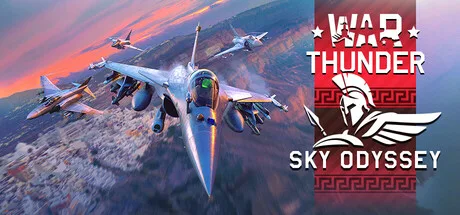
War Thunder, developed and operated by Gaijin Entertainment, is a vehicle-centered military combat game. The official position is a first release in 2013 with continuous iteration since, a free-to-play model, and “thousands” of high-fidelity tanks, ground vehicles, aircraft and warships. The November 2026 window adds a concrete reason to revisit: on November 3, Gaijin announced the Eagle’s Shadow update, bringing fifth-generation neural rendering (DLSS 5 support), dozens of new vehicles, and cluster bombs for aircraft — with NVIDIA’s official post giving a mid-November window rather than a fixed date.
This hub covers the launch-era facts and the framework every question hangs on. The English section answers the three questions new and returning players actually ask; the 24-page Chinese deep-dive tree covers every mechanic in depth.
The Read First: Ground, Air, Naval — Over Six Layers#
War Thunder’s content splits along two axes: three parallel fronts (ground, air, naval) horizontally, and six system layers pressing down on each front vertically. Cross them and you get the coordinate system for every decision in the game. The front and layer breakdowns come from third-party guide sites and app-description sites — community consensus, not official spec text.
| Front | Vehicle tier (community framing) | Front-specific mechanics | Chinese deep-dive |
|---|---|---|---|
| Ground | Tanks and armored ground vehicles | Terrain use, hull-down, side-scrape, positioning; modular damage by hit location | Ground Forces, Module Damage |
| Air | Aircraft | Energy fighting, zoom-and-dive, formations; cluster bombs arrive with Eagle’s Shadow | Air Forces |
| Naval | From motorboats to destroyers and cruisers | Engine, turret and torpedo-tube subsystems must be managed | Naval Forces |
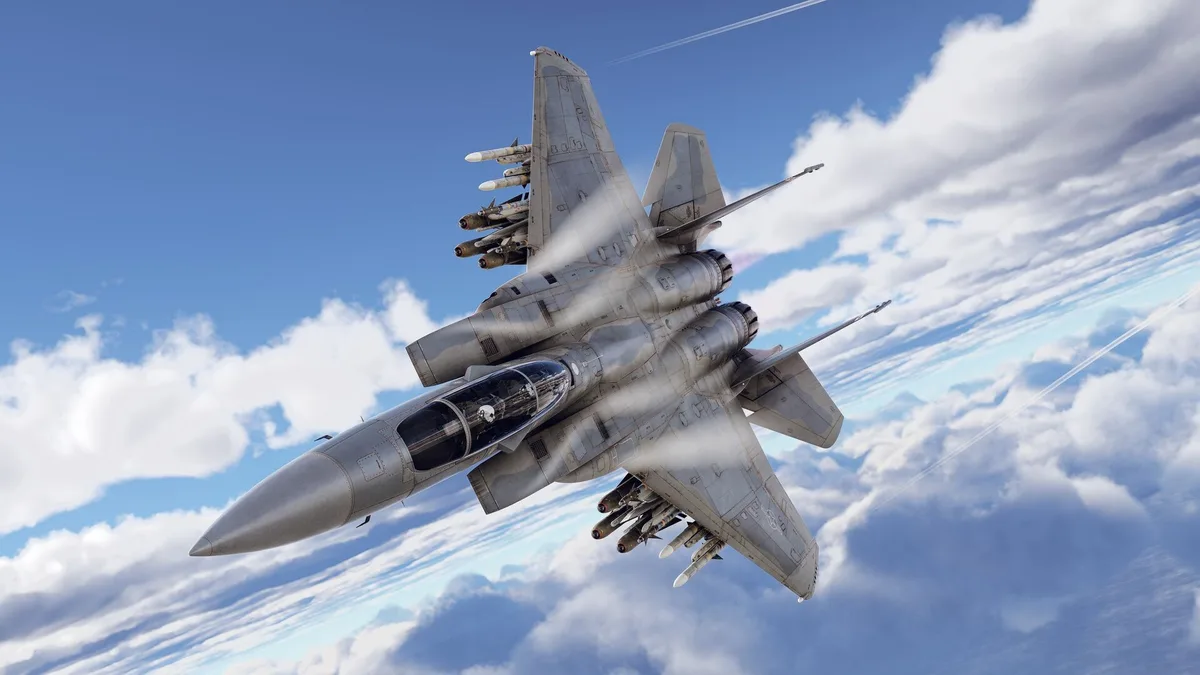
The six shared layers land differently on each front, and that is where most beginner confusion lives:
- Tech tree — progression mirrors real national military trees; research points unlock vehicles along a chosen line (tech tree and research).
- Modifications — tanks prioritize spares and fire extinguishers; aircraft prioritize engine injection and new guns. Same layer, different parts.
- Crews — vehicles need crews, and switching a crew to an unfamiliar vehicle triggers retraining; frequent line-hopping re-triggers it constantly.
- Ammunition and armor — six common shell families (AP, APCBC, APCR, HEAT, HEAT-FS, APFSDS) behave differently against sloped, composite and spaced armor (ground forces guide).
- Economy — Silver Lions, Research Points and Golden Eagles do not substitute for each other (details below).
- Modes and matchmaking — Arcade/Realistic/Simulator tiers are community shorthand; matchmaking groups vehicles by Battle Rating.
Two interface rules that save the most pain: Research Points only unlock vehicles while Silver Lions pay for purchase, repairs and crew training — treating Silver Lions as “generic points” is the classic misuse. And modular damage spans all three fronts: killing an engine on ground, crew in the air, or a turret underwater all produce position-specific outcomes, so no single health-bar mental model transfers.
The same six layers, with the mechanism names each one actually contains:
| Layer | System | Mechanism names to remember | Chinese deep-dive |
|---|---|---|---|
| 1 | Tech tree | Real national military trees, research-point unlocks | Tech Tree and Research |
| 2 | Modifications | Spares, fire extinguishers, engine injection, new guns, full tech | Modifications |
| 3 | Crews | Retraining on vehicle swap, Basic/Expert/Ace qualifications | Crew System |
| 4 | Ammunition and armor | The six shell families; sloped, composite and spaced armor | Ammunition Families, Weak Spots |
| 5 | Economy | Silver Lions, Golden Eagles, repair costs, auto-repair, squadron research | Economy Overview |
| 6 | Modes and matchmaking | Battle Rating grouping, combined-arms maps | Battle Rating and Matchmaking |
November 2026: Eagle’s Shadow, DLSS 5, and the Mid-Month Window#
The version coordinate for this entire hub is early November 2026. Only verified timestamps are listed; windows are marked as windows.
| Date | Event | Source tier |
|---|---|---|
| 2013 | First release, continuous live iteration since | Official interview |
| Since “New Power” update | Dagor Engine upgraded to 6.0, second-generation supersampling on NVIDIA GPUs | Official dev blog |
| Current | Frame generation, super resolution, ray reconstruction, DLSS, low-latency tech, plus ray-traced and path-traced global illumination | Official interview |
| Nov 3, 2026 | Gaijin posts store-platform announcement: fifth-gen neural rendering arrives with Eagle’s Shadow | Official announcement (relayed) |
| Mid-November 2026 | NVIDIA China’s official post gives the update window; no exact date from Gaijin | NVIDIA official post |
| Pending | Exact launch date and patch number for Eagle’s Shadow | Unverified — left blank |
The announced Eagle’s Shadow contents, all verified items: DLSS 5 3D-guided neural rendering support; dozens of new aircraft, ships and tanks; cluster bombs added for aircraft; a visual-effects overhaul assessed separately across air, ground and naval scenes. One hardware caveat from the dev blog: the full presentation including path-traced effects requires an NVIDIA GeForce RTX 50 series card or an RTX Spark device, and the update enables fifth-gen neural rendering for that hardware first. We do not write “launched on day X” — the official window is mid-November and the patch number is unverified.
Steam concurrency needs the same discipline. Two trackers recorded November 8, 2026 figures that disagree, and must be read as third-party samples at specific moments, not official data: one site logged a 24-hour average near 68.6k with a latest sample of 81,165; the mirror of the same tracking system logged a 68.4k average with a 56,051 latest sample. The averages agree on magnitude (~68k); the “latest” values differ because they are instantaneous. We note the sampling and draw no trend claims.
Source Discipline: Official Facts vs Community Practice#
Every page in this section grades its claims. Official interviews, dev blogs and relayed announcements can be written as fact; tech-tree behavior, resource roles, crew mechanics, modification priorities, ammo families, mode tiers and Battle Rating logic come from third-party guide and wiki sites and must carry “community practice” qualifiers.
| Tier | Covers | Allowed phrasing |
|---|---|---|
| Official | Game identity, 2013 first release, free-to-play, “thousands” of vehicles, Dagor Engine and graphics tech, November 3 announcement, framerate benchmarks | Write as fact |
| Community | Resource roles, national lines, specialize-first advice, crew retraining, mod priorities, ammo behavior, three-mode tiers, Battle Rating, auto-repair off, squadron research | Mark as “community practice” |
The boundary matters more than the slogan: “first released in 2013” is official; “August 15, 2013” is a media relay of a store page. “Thousands of vehicles” is official; an exact vehicle count is unverified and stays blank, along with Battle Rating brackets, penetration values, armor thicknesses, crew-slot prices and modification costs. Each English page keeps an explicit unverified-values table instead of filling gaps with wiki estimates.
This hub’s own blank list, consolidated so later updates can fill it in one place:
| Unverified item | Why no number is written |
|---|---|
| Exact vehicle count | Official wording is “thousands”; no precise figure obtained |
| Full nation list and per-nation tree branches | No item-by-item list obtained; no enumeration |
| Battle Rating bracket ranges | Ranges unverified; only the grouping-by-performance logic is written |
| Combined-arms map names | Known only that “some maps” support it; no map names |
| Penetration, armor thickness, reload times | Uniformly unverified; needs official data |
| Crew-slot prices and qualification bonuses | Community-wiki sourced, patch-variable |
| Modification research costs | Specific costs unverified |
| Eagle’s Shadow launch date and patch number | Official wording is a mid-November window only |
| Squadron level and membership numbers | Unverified |
How to Read This Section#
- Beginner’s guide — the free-to-play reality, the three-resource split, and a step-by-step decision chain for your first battle.
- Ground forces guide — terrain use, hull-down, side-scrape, positioning, and reading armor slope before you shoot.
- Tech tree and research — national lines, research-point flow, and why specialize-first is community-consensus advice.
For everything deeper, the Chinese section of this game carries 24 subpages covering modes and matchmaking, module damage, all six ammo families, weak spots, the economy in detail, the Eagle’s Shadow update timeline, DLSS 5 graphics tech, and framerate benchmarks — browse from the War Thunder Chinese hub.
Recommended order if you are new: the beginner’s guide first, because the three-resource split explains every purchase decision downstream; then the ground forces guide, since most first battles happen on ground; the tech tree page last, once you know which national line you want to commit to. Returning players after a long break can start with the November 2026 table above and judge for themselves how much has changed.
Related Games#
- Best shooters ranking — where vehicle-combat games sit against the arcade shooters
- Best RPGs ranking — the other half of our long-lived live-service coverage