Darkest Dungeon II Party Composition: The Four-Check Framework#
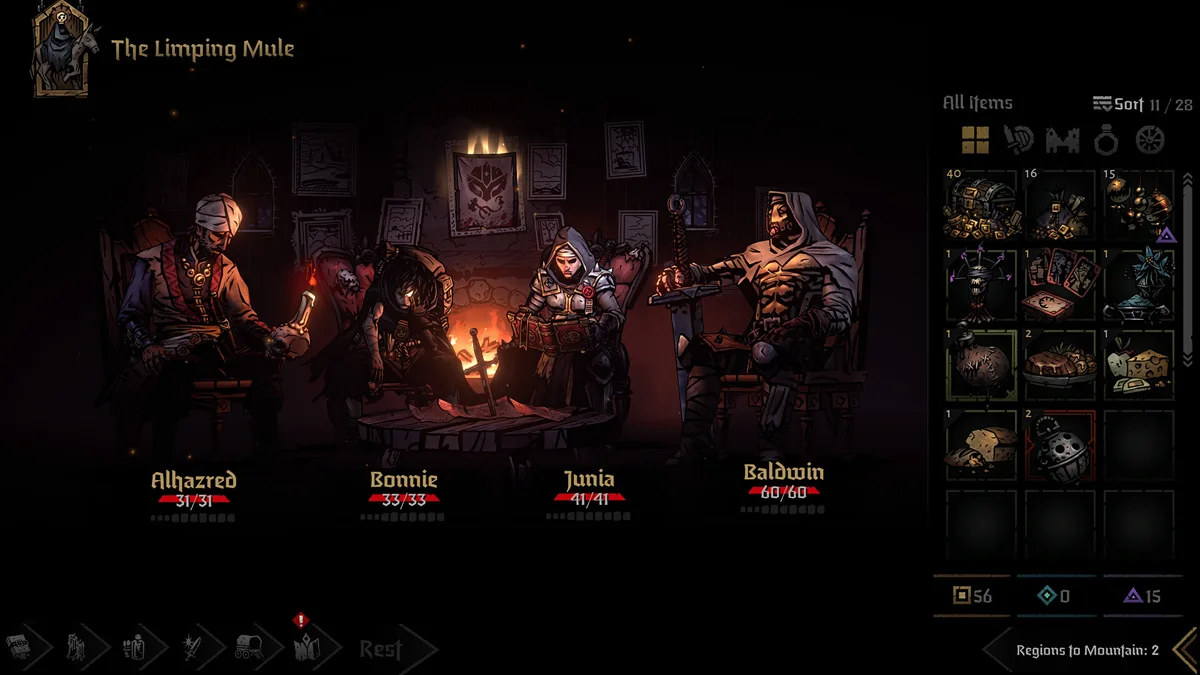
An expedition in Darkest Dungeon II begins the moment you build the team: the roster slot count is fixed at four heroes and a coach, and what varies is who you put into those four seats. This game has no standalone hero strength divorced from the convoy — the same roster assembled to reinforce itself becomes an ace team; assembled to crowd itself becomes a rolling accident. This page gives a composition methodology: how to cover roles, close positions, and reconcile relationships, plus a pre-departure decision flow.
The Four Checks#
| Check | Core question | Failure consequence |
|---|---|---|
| Role coverage | Are strike, heal and utility all present? | One duty unstaffed; whole structure tilts |
| Position closure | Do the four kits close within the intended rank order? | Key skills permanently out of reach |
| Stress structure | Who generates vent, who tanks pressure, who absorbs? | Stress runaway detonates relationships |
| Relationship compatibility | Any high-friction pair inside the group? | Synergy inverts; the journey ends |
Role coverage: build the skeleton first#
The three role families: strike, heal and utility. Skeleton principles:
- At least two strikers — the front line needs rotation on damage absorption; a single-striker convoy wears down brutally over long roads.
- Never without a healer — both the HP and stress repair lines lean on this seat.
- Utility patches structure — displacement, control and buffs are the fuses against positioning collapse and tempo loss.
- Flexibility beats extremes — heroes who double-cover two roles are the most valuable lubricant in a four-seat frame.
Position closure: then check the pipelines#
Coverage answers “do we have it”; closure answers “can we use it all at once.” Run each of the four kits through your intended rank order:
- Do the striker’s front-rank skills all have a rank to fire from?
- Do heal skills cover the whole lineup, including extreme ranks after a push or pull?
- Skills that depend on adjacent ranks — are their partners actually seated adjacent?
Any skill that is “permanently dead on paper” means the team already lost half the game on paper.
Stress structure and relationship compatibility: finally, the human math#
After skeleton and pipelines come the game’s signature people-check. What the stress-affinity core loop demands of composition:
- Vent capability on the team — inns are the main repair shop, but mid-run vent skills are scarce insurance.
- The tank has a backstop — the front seat drinks the most pressure and needs directed care from the healer or utility.
- High-friction pairs have a plan — if two heroes carry cohabitation risk, either separate their ranks or schedule directed inn repair for them.
A Reusable Selection Flow#
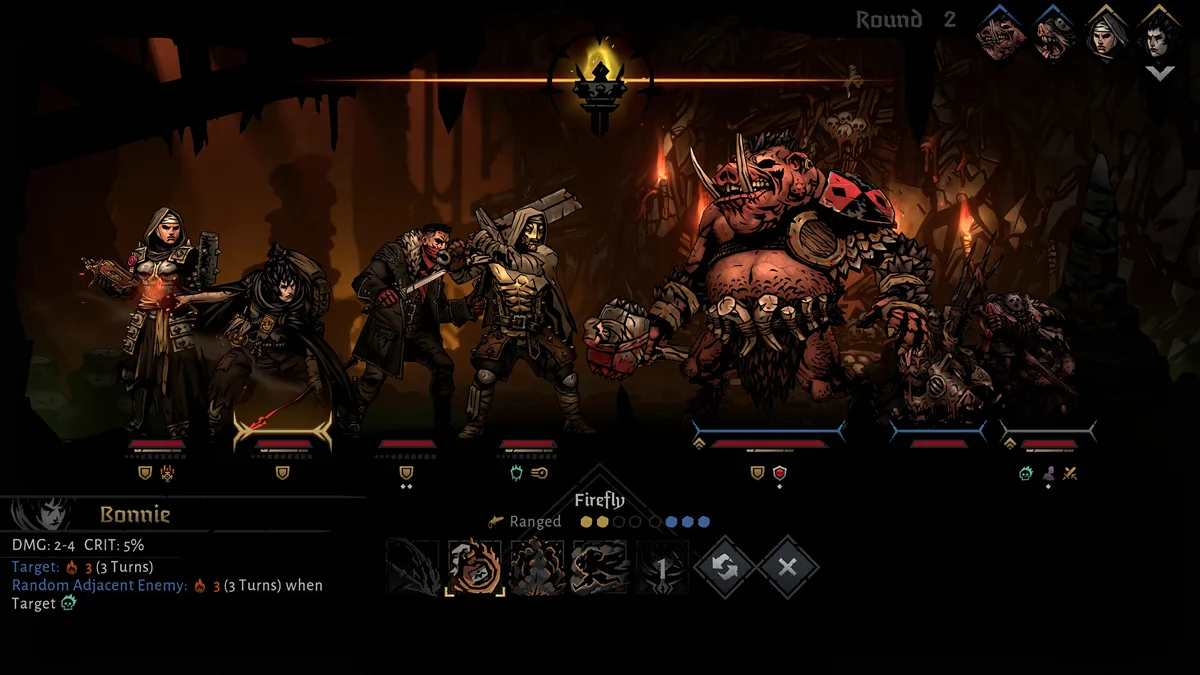
Collapse the four checks into fixed pre-departure actions:
- Write the seats — list four roles: main striker, secondary/rotating striker, healer, utility.
- Fill the seats — assign heroes by seat; flex-types plug structural gaps first.
- Set the rank order — lay out the intended queue and check skill-position closure one kit at a time.
- Run the stress pass — confirm the team’s built-in vent sources and tank backstop.
- Grade relationships — flag risky pairs inside the group and pre-set inn repair priority.
- Leave a contingency — if the first fight exposes a structural flaw, know which seat gets swapped at the next stop.
Choosing a Team Style#
Above methodology, players grow into one of three leanings. None is objectively best; all must still pass the four checks:
| Style | Construction | Strength | Risk |
|---|---|---|---|
| Tempo | Two strikers plus utility speed-ups | Fights end fast, net stress accumulation stays low | Thin error margin; attrition wars hurt |
| Steady | Balanced, heavy on heal and vent | Low long-road wear, healthy relationships | Burn drags fights when under-lethaled |
| Control | Displacement and crowd control as core | Holds initiative in the position game | Punishes players weak on rank-order play |
Styles are really different solutions to the same stress budget: tempo saves stress by ending fights, steady offsets stress with recovery, control avoids stress through structure. Which you pick depends on whether you trust offense more than you fear surprises.
Composition Mistakes#
- Copying tier lists — tier lists carry none of your position and relationship context; transplanted rosters often have dead pipelines.
- Four seats, one answer — duplicated roles guarantee a skewed stress structure.
- No bench depth — long expeditions need a “what if a seat falls” plan.
- Treating origin stories as garnish — fully-unlocked heroes are composition resources; plan them while composing.
- Refusing to adjust after departure — rosters are dynamic; use the inn and settlement swap windows bravely.
The 12-Point Pre-Run Scorecard#
Grade the team once before departure; below the line, rebuild:
| Check | Passing standard | Points |
|---|---|---|
| Role coverage | Two-striker depth + healer present + utility patching structure | 3 |
| Position closure | No permanently unusable skills in the intended order | 3 |
| Displacement insurance | Team carries at least one position-recovery tool | 2 |
| Vent capability | At least one mid-run active vent source | 2 |
| Relationship plan | High-friction pairs have separation or a repair schedule | 2 |
Twelve full, nine recommended before rolling. The scorecard’s value is not the number — it forces all four checks through your brain before departure. Most wrecked rosters lost in the five minutes before setting out.
Reading Defeats Back as Composition Errors#
When you do fall, translate the death into composition language and the next draft gets evidence:
- Died to broken relationships → skipped the compatibility check, or vent capability was absent.
- Died to position collapse → no displacement insurance; rebuild by adding utility or second-striker depth.
- Died to attrition wars → insufficient striker output; long fights bleed stress and supplies together.
- Died to supply gaps → a too-frail comp forced detours for resupply, or duplicated roles wasted flex seats.
Summary#
- Four checks: role coverage, position closure, stress structure, relationship compatibility.
- Two strikers rotate, healer mandatory, utility patches structure; flex seats are gold.
- Verify skill-position closure in the intended rank order; anything failing on paper never leaves town.
- The three styles are different stress-budget solutions with no standard answer.
- Composition is dynamic: plan contingencies before departure, adjust bravely after.
Next Steps#
- Getting started — first-run priorities and the defeat-as-investment mindset.
- Stress system and inner demons — the shadow line your composition is built to manage.
- Darkest Dungeon II Chinese hub — hero roles, positioning mechanics, affinity deep-dives and the difficulty loop across 22 pages.