Darkest Dungeon II Beginner’s Guide: First-Run Priorities#
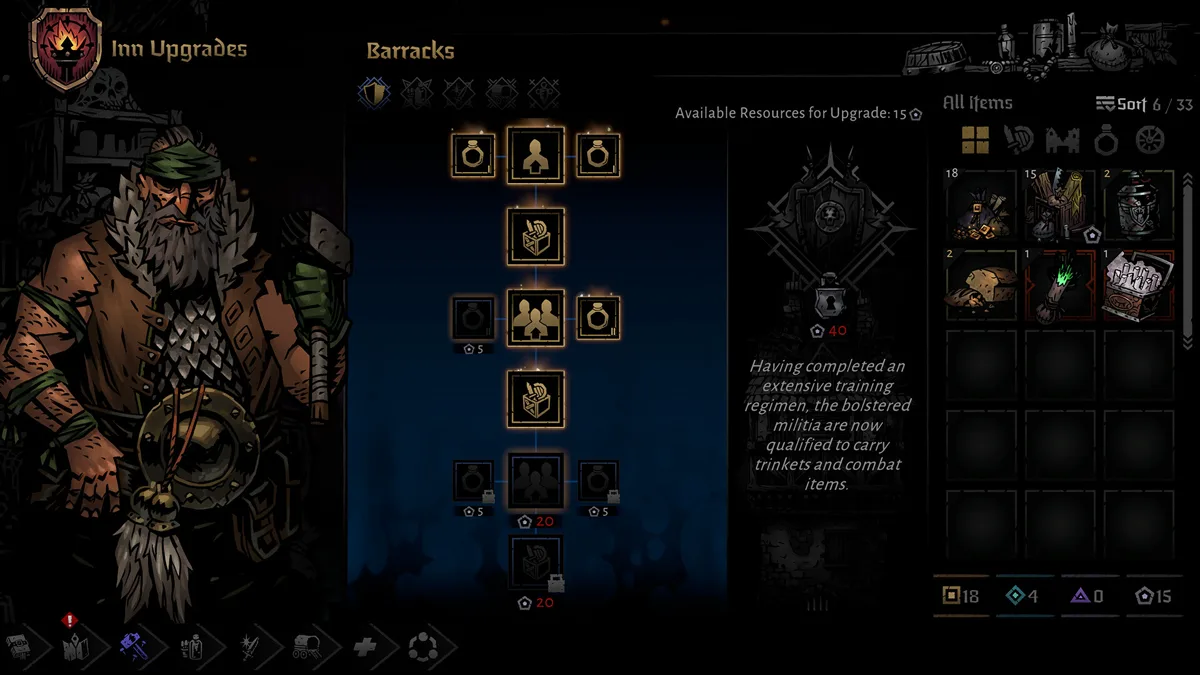
The first time you open Darkest Dungeon II, you are not looking at a map but at a survival philosophy you need to relearn: damage you can absorb, stress you must manage, and teammate relationships more fragile than gear. This guide does not rush into tactics. It sorts the decisions you make before your first expedition — which mode, which team, how to think about resources — because those judgments run through every expedition you will ever take.
The Three Opening Questions#
| Question | Answer |
|---|---|
| Which mode first? | Confessions — the game’s core roguelike experience |
| How long is a run? | Roughly 30 minutes to a few hours per expedition; calling it early is normal |
| Does dying waste the run? | No — mid-run defeat still yields resources that strengthen the next journey |
Start in Confessions mode#
Confessions is the core roguelike loop: four heroes and a coach crossing a failing world to stop the end. Two structural gifts for beginners: every expedition has a clean beginning-middle-end arc of 30 minutes to a few hours, ideal for building system intuition; and failure pays out — a wrecked run still banks resources for the next attempt, so your first expedition can be treated as tuition.
Kingdoms mode is a separate strategic campaign with a persistent hero roster, resource collection and a hunt for the source of evil. Its systems are larger; enter it once the core loop feels natural.
Your team is four people, and a society#
Each expedition fields four heroes who ride the whole road together. When selecting, weigh three things above any single hero’s raw power:
- Role coverage — are strike, heal and utility functions all present?
- Position compatibility — who stands front, who stands back, and does that make skills usable?
- Relationship endurance — stress and friction ferment on long roads; the team needs someone who can vent pressure.
All three are developed on the stress system page and the party composition page.
Treat defeat as investment#
The game’s friendliest design decision: a mid-run defeat still produces resources that upgrade future runs. “Try not to die” is a goal, but “die informatively” is also a strategy. The classic beginner mindset error is treating every defeat as a wasted save, which leads to refusing to cut losses while a run rots. The correct habit is recognizing a lost run early, settling it, and returning richer.
First-Run Priority Checklist#
Once on the road, build your rhythm in this order:
- Know the loop — travel → encounter → combat → inn rest → settlement. The five-stage skeleton underneath every decision.
- Watch the two bars — HP is the visible line; stress and relationships are the shadow line. When the shadow line collapses, the visible one follows.
- Spend inn pastimes — on reaching an inn, fix stress and relationships first; do not hoard them overnight.
- Read forks by team needs — route choices follow your weakest link; take what you lack.
- Fight for positioning — when the rank order scrambles, skills lock out and output becomes decoration.
Traps New Players Fall Into#
| Trap | Consequence | Avoidance |
|---|---|---|
| Watching HP but not stress | Relationships sour, combat synergy inverts | Manage stress as a second health bar |
| Auto-picking combat at forks | Team overextends, stress snowballs | Inventory team state before every fork |
| Random inn pastimes | Rest gains below losses | Choose pastimes against the stress/relationship gap |
| Refusing to let a lost run die | Wasted time and morale | Learn to recognize lost runs and settle them |
| Ignoring hero origin stories | Team potential stays locked | Push origin stories whenever they appear |
Do You Need to Have Played the First Game?#
No. The sequel shares lineage but rebuilt combat significantly and re-founded the core loop around the road trip; mechanically it stands alone. First-game veterans arrive with stress-management intuition and onboard faster; newcomers carry no old habits and accept the new rules more easily.
If you come from Slay the Spire or similar deckbuilders, read this game as that single-run resource-management discipline applied to a four-person convoy that sulks, breaks down, and reconciles. Same skeleton, completely different flesh.
Three Mindset Principles#
- Accept attrition — the world is designed for you to lose more than you win; losses are part of the itinerary.
- Respect randomness — routes, encounters and events are procedural; guides give judgment frameworks, not answer keys.
- Aim at the next run — an expedition’s value is paid at settlement; defeat is never wasted play.
The First-Expedition Goal Ladder#
Do not set your first goal as “finish the game” — that is a dozens-of-runs problem. Use this ladder:
| Run | Goal | Success standard |
|---|---|---|
| 1 | Learn the loop | Complete one full depart-travel-fight-inn-settlement cycle |
| 2-3 | Learn the shadow line | Can state the party’s live stress and relationship levels |
| 4-5 | Positioning awareness | After being displaced, know what to restore first |
| 6+ | Structural awareness | After a defeat, can name which of five root causes killed you |
Each stage only asks you to learn to see one thing. The ladder’s end is a player who can read an expedition unaided — at which point the rest of the system pages become reference, not required reading.
A Platform Note: Picking the Switch 2 Edition#
The Switch 2 version surprise-launched October 22, 2026 — the official Nintendo listing carries that date, and press coverage uniformly called it a surprise release. Official specs with beginner relevance:
| Item | Official spec | What it means for a beginner |
|---|---|---|
| Resolution | 1080p handheld / 1440p docked | The gothic hand-drawn style renders fully at both |
| Frame rate | 60fps target | A store-page target, not a measured verdict |
| Input | Joy-Con 2 mouse support | Drag-based team management gets PC-grade precision |
| Pacing options | Quick Drive / Quick Combat | Options, not mandates — beginners should keep them off |
| Price | $42.98 full / $2.99 upgrade from Switch | Upgrade path for existing Switch owners |
Two notes matter most: the mouse support lands exactly on this game’s input bottleneck — half of all time goes to roster, positioning and pastime dragging, where the Joy-Con 2 mouse approaches PC efficiency; and the quick options are not a beginner’s friend, since travel atmosphere and combat process information (enemy behavior patterns, stress sources) are your learning material. Turn them on after your intuition forms.
One purchase caveat worth stating: whether Kingdoms mode is included in the Switch 2 edition or its upgrade pack is not clearly stated on official pages — verify the eShop listing content before buying. That is the one thing not to guess in a purchase decision.
Origin Stories: The Long-Range Assignment#
Red Hook’s official description notes every hero carries a tragic origin story through which their full potential can be unlocked. For new players: treat this as long-range homework, not a first-run task. Opportunities appear along the journey; the first expedition’s syllabus is the loop and positioning. Origin stories share the same logic as defeat compensation — both are investments in your next run. In Kingdoms mode, with persistent rosters spanning campaigns, “which hero’s story next” becomes campaign-level scheduling.
Summary#
- Start in Confessions; its 30-minute-to-few-hours runs are the best intuition builders.
- Select teams for role coverage, position compatibility and relationship endurance, not raw power.
- Treat defeat as investment: recognize lost runs and settle them early.
- First-run order: know the loop → watch stress and relationships → use the inn → choose routes → hold positions.