COD6 Story & World Explained#
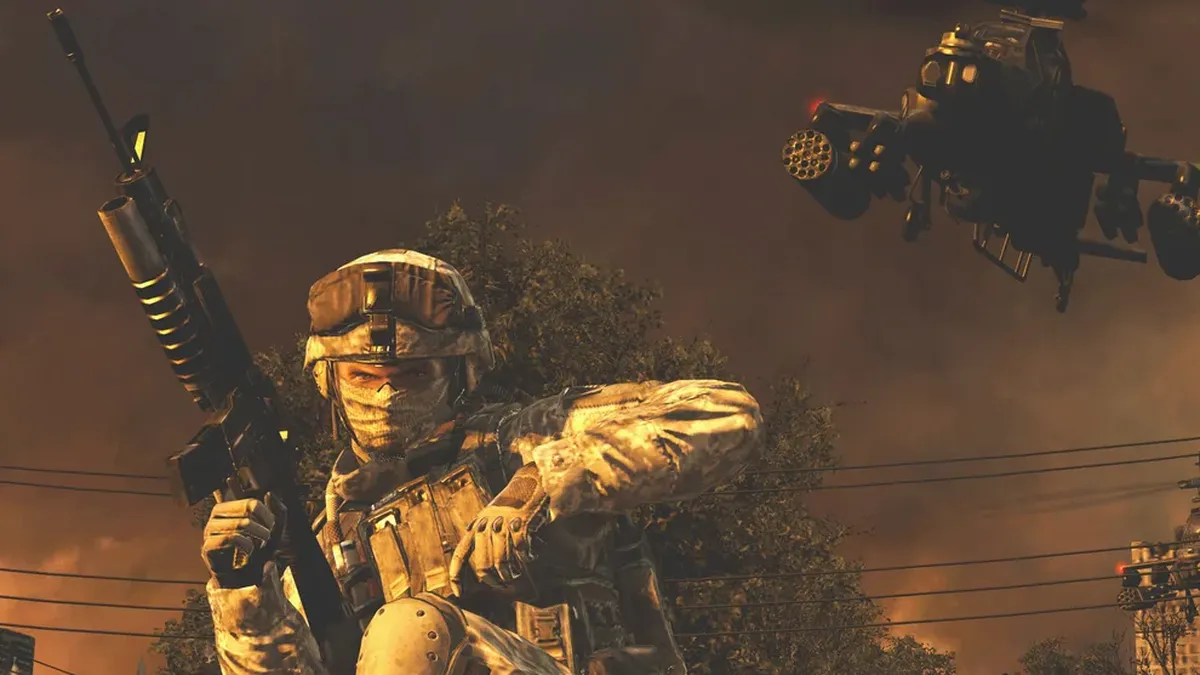
Call of Duty: Modern Warfare 2 (COD6) is the sequel in the Modern Warfare trilogy and the one with the sharpest plot twists. It tears apart the “surface peace” left at the end of the first game, using a staged terror attack to drive the US and Russia into full-scale war. The key to following the story is one question: who is stirring the war, and who profits? This is not a clean good-versus-evil war plot — it walks the player step by step into an elaborate trap.
This page lays out the campaign’s three narrative threads, every faction’s real position, and the characters and turning points that string the plot together, so that on a second look after the credits, the motive behind every “accident” is visible.
The Three Narrative Threads#
The campaign does not follow one protagonist linearly. It alternates three parallel threads, each with a different identity and objective.
| Thread | Player view | Faction | Main regions | Narrative role |
|---|---|---|---|---|
| Ranger thread | Pvt. Ramirez | US Army Rangers | Washington D.C., East Coast | The home front after the Russian invasion |
| Task Force 141 thread | Ghost / Roach | Multinational special unit | Afghanistan, Rio, Georgia, Siberia | Hunting Makarov, uncovering the betrayal |
| Undercover thread | Pvt. Allen | Embedded in a terror group | Russian airport, the Caucasus | The spark that ignites the war |
The threads are not independent — one hidden hand strings them together: the undercover thread creates the war’s opening, the Ranger thread pays its visible cost, and the 141 thread uncovers a conspiracy far deeper than the terror attack.
Factions and Their Real Positions#
The key to the worldbuilding: do not equate “enemy” with the label on the faction. This table lists each faction’s surface identity versus its actual role in the plot.
| Faction | Surface identity | Leader/face | Real role in the plot |
|---|---|---|---|
| Task Force 141 | Multinational counter-terror elite | Price, Shepherd | The protagonists — betrayed by their own commander |
| US Rangers | Homeland defense force | Shepherd (nominally) | The victims swept into the war |
| Russian Ultranationalists | Hardline nationalist movement | Makarov | The true hidden hand, using terror to spark the war |
| Shadow Company | A PMC nominally under US command | Shepherd | Shepherd’s rogue private army, the cleanup crew |
| Russian Federation military | Conventional military | Various commanders | Invades the US in force, enraged by the attack |
Shadow Company is the special case: it operates under an American flag but answers to no legitimate command chain — Shepherd’s “shadow army” bypassing Congress. In the back half of the story it becomes the enemy Task Force 141 must face.
Core Characters and Their Roles#
| Character | Codename/role | Affiliation | Narrative role |
|---|---|---|---|
| John Price | Captain Price | Task Force 141 | The series’ soul; exposes and settles the traitor |
| John MacTavish | Soap | Task Force 141 | The player’s main avatar, Price’s protégé |
| Simon Riley | Ghost | Task Force 141 | Interrogation and infiltration expert; tragic death |
| Gary Sanderson | Roach | Task Force 141 | Young operator, killed on the key mission |
| Joseph Allen | Alexei Borodin | Undercover | Sacrificed as the war’s spark |
| Herschel Shepherd | Four-star general | JSOC / Shadow Company | The true villain who orchestrated the war |
| Vladimir Makarov | Ultranationalist leader | Russian Ultranationalists | The airport massacre’s executor, an independent evil beyond Shepherd |
Key Plot Turning Points#
The story pivots hard at several nodes — miss them and the late game feels abrupt. Listed in story order:
| Turning point | Campaign mission | What happens | Impact on the world |
|---|---|---|---|
| Airport massacre | “No Russian” | Makarov and his “accomplices” fire on civilians | Blamed on the US; war becomes imminent |
| Undercover silenced | End of the same mission | Allen’s cover is blown; Makarov kills him | Key evidence points at America, justifying war |
| Russian invasion | From “Unexpected Guest” on | Russian forces assault the US East Coast | The player faces the war’s front-line consequences |
| White House battle | “Whiskey Hotel” | The US military retakes the capital’s core | The homeland defense reaches its peak |
| Shepherd’s betrayal | “Loose Ends” | Shepherd kills Ghost and Roach | The story flips from external war to internal reckoning |
| The desert hunt | “The Eye of the Storm,” “Endgame” | Price and Soap hunt Shepherd | The war’s true author is revealed |
Shepherd’s Motive and the “Big Picture”#
Shepherd is the key to the entire plot. His logic is not simple lust for power — it is coherent and warped:
- He lost scores of men in a nuclear blast, and concluded that a world that keeps the status quo will keep sacrificing soldiers.
- He wanted a war that would “reunite America” — which required a manufactured external enemy.
- He used the undercover Allen to “play” an American in the airport massacre, manufacturing the justification that Russia attacked.
- Once war broke out and Congress authorized expansion, he had the capital to grow Shadow Company and hold more power.
With that in place, the other threads snap into focus: the entire US-Russia war is a board he lit on purpose. Makarov, meanwhile, took the stage Shepherd built and pursued his own agenda — the series’ “villain nested inside villain” structure.
Makarov and the Ultranationalists#
Makarov is a threat on another level, never fully aligned with Shepherd:
| Dimension | Trait |
|---|---|
| Methods | Extreme cruelty; terror staged for maximum spectacle |
| Position | Grows his ultranationalist movement out of the US-Russia conflict |
| Relation to Shepherd | Mutual use, not subordination — each fishing in the other’s fire |
| Aftermath | Remains the through-line villain of the sequel |
Makarov’s existence is the reminder: even after Shepherd’s plot is exposed, another hand is behind the war — the hook for the whole series.
Theme Reading#
| Theme | In-game expression | Reading |
|---|---|---|
| The cost of war | Rangers fighting in Washington, civilian casualties | Shifts the player from “win/lose” to “victims” |
| Moral blur | The general who claims to defend order is the greatest evil | Interrogates the “fighting for justice” narrative |
| Loyalty and betrayal | Ghost and Roach follow Shepherd’s orders to their deaths | The disillusion of trust sold out |
| Control and sacrifice | Allen used as an expendable piece | The individual’s helplessness in a grand board |
Details to Notice on a Second Run#
- Watch every Shepherd appearance in the first half — his tone toward 141 is always “use and discard”; the foreshadowing is visible in hindsight.
- Note the framing around “No Russian” — the game warns and allows skipping; it blocks no achievements, and the narrative intent rewards a second look.
- The “Loose Ends” ending is the plot’s watershed — from there, the battlefield switches from fighting Russia to hunting an ally.
- The final stairwell fight is the symbol — Price versus Shepherd is the series’ internal-reckoning emotion detonating.
With this frame in mind, a second playthrough reveals that every seemingly random firefight hangs on one thread: who lit the fire, and who profits. That is why this campaign stands above the typical FPS plot.