War Thunder Art Fidelity: Markings, Wear Traces and Overcast-Scene Fidelity#
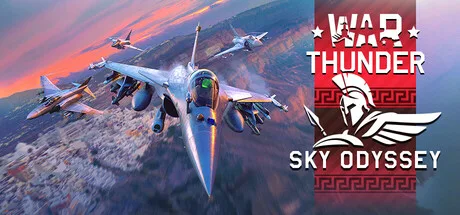
When fifth-generation deep learning super sampling (DLSS 5) three-dimensionally guided neural rendering was wired into War Thunder, the question that mattered to Gaijin Entertainment’s art team was not “can the image get brighter” but whether the vehicle markings and surface wear traces players know by heart would be altered. That perspective comes from NVIDIA China’s official interview with Gaijin art director Kirill Stupin.
The interview’s conclusions are concrete: the technology delivers micro-contrast and more natural, lifelike highlights and shadows that were previously impossible, and with many subtle improvements stacked up, some art team members on first sight even mistook it for the team having swapped rendering engines; the on/off contrast is most visible in overcast and rainy scenes. Officials also stress that the team iterated parameters repeatedly to keep markings, surface wear traces and material traits consistent with the original assets.
This page splits the art-fidelity line into seven parts — interview source, the ~95% integration, the engine-swap impression, overcast and rain, original-asset consistency, the three-scene assessment and source grading — labeling each item’s source nature and listing assets and parameters officials never gave in the pending table.
The Interview Source and Its Speaker#
The art caliber has a clear origin and interviewee; label the source nature and never promote interview content into store-page design.
| Item | Content | Source nature |
|---|---|---|
| Interviewee | Gaijin Entertainment art director Kirill Stupin | NVIDIA China official interview |
| Interview vehicle | NVIDIA China official interview (November 3, 2026, by Phil Singh) | NVIDIA China official interview |
| Documentation support | NVIDIA provided exhaustive documentation | NVIDIA China official interview |
| Related official material | The official dev blog (German site) also records the markings and wear-trace consistency requirement | Official dev blog (German site) |
| Related announcement | Gaijin’s official announcement stresses the underlying 3D scene and artistic intent stay unchanged | Gaijin official announcement, third-party relayed |
The interview’s gist in three points:
- The interview centers on image-quality changes after fifth-gen neural rendering was integrated into the Dagor Engine.
- The art team’s concern is whether original assets were altered — not simply pursuing brightness or sharpness.
- All art caliber on this page comes from the NVIDIA China official interview and the official dev blog — official hard facts.
What “About 95% of the Integration” Means#
The art director gave an approximate figure in the interview: NVIDIA’s exhaustive documentation helped the team complete about 95% of the integration work. The number has a clear caliber boundary.
| Item | Official statement | Source nature |
|---|---|---|
| Documentation provider | NVIDIA provided exhaustive documentation | NVIDIA China official interview |
| Completion share | Helped Gaijin’s team complete about 95% of the integration work | NVIDIA China official interview |
| Remaining share | Officials did not itemize the remaining work | Not filled in on this page |
| Caliber nature | An approximation, not a precise engineering statistic | NVIDIA China official interview |
Three boundaries when reading the percentage:
- “About 95%” is an interview approximation, not an official engineering statistics report.
- The figure describes how much the documentation helped the integration work — not an image-quality gain — and the two cannot be converted into each other.
- Officials gave no specifics for the remaining ~5%; this page does not speculate.
Micro-Contrast, Highlights and Shadows: Why It Looked Like an Engine Swap#
“Mistaking it for a rendering-engine swap” is the interview line most easily taken out of context — it must be written together with the engine facts.
| Improvement | Official statement | Source nature |
|---|---|---|
| Micro-contrast | Delivers micro-contrast not previously achievable | NVIDIA China official interview |
| Highlights and shadows | More natural, lifelike highlights and shadows | NVIDIA China official interview |
| Stacked effect | With many subtle improvements stacked up, some art team members on first sight mistook it for an engine swap | NVIDIA China official interview |
| Engine fact | The game still runs the Dagor Engine; the technology was wired into its color pipeline — no engine was replaced | NVIDIA China official interview; official dev blog (German site) |
Hold three points when relaying the quote:
- Stupin’s wording is “mistook it for a rendering-engine swap” — a team’s subjective impression, not an official announcement of an engine change.
- The impression came from “many subtle improvements stacked up,” not a single-effects sea change.
- As the color-pipeline page shows, the technology is the final-stage processing of the graphics pipeline; the underlying 3D scene stays unchanged and the engine was not replaced.
Overcast and Rain: Where the On/Off Contrast Is Most Visible#
Officials single out overcast and rainy scenes as where the on/off contrast of the technology is most visible, listing three concrete manifestations.
| Scene element | Official description | Source nature |
|---|---|---|
| Soft diffuse lighting | One of the most visible on/off contrasts in overcast and rainy scenes | NVIDIA China official interview |
| Wet-surface texture | One of the most visible on/off contrasts in overcast and rainy scenes | NVIDIA China official interview |
| Fine material detail | One of the most visible on/off contrasts in overcast and rainy scenes | NVIDIA China official interview |
| Comparison method | On/off image comparison with the technology enabled and disabled | NVIDIA China official interview |
Why these two scene types — three readings:
- Overcast and rainy scenes are dominated by soft diffuse lighting with no strong direct highlights, so micro-contrast changes are easier to notice.
- Wet surfaces amplify lighting and material detail simultaneously, making natural-vs-artificial highlights and shadows most apparent there.
- Officials bound “most visible contrast” to overcast and rainy scenes and ranked no other weather conditions; this page does not extrapolate.
Markings, Wear Traces and Original-Asset Consistency#
This is the page’s core: image enhancement must not alter assets the developers already built. Officials iterated parameters repeatedly for exactly this.
| Fidelity element | Official requirement | Source nature |
|---|---|---|
| Vehicle markings | Stay consistent with original assets | NVIDIA China official interview; official dev blog (German site) |
| Surface wear traces | Stay consistent with original assets | NVIDIA China official interview; official dev blog (German site) |
| Material traits | Stay consistent with original assets | NVIDIA China official interview; official dev blog (German site) |
| Underlying 3D scene | Unchanged | Gaijin official announcement, third-party relayed |
| Developers’ artistic intent | Unchanged | Gaijin official announcement, third-party relayed |
The officials’ “iterated parameters repeatedly” organizes into a four-step flow:
- Step 1: tune against the game’s baseline images — the same first step as the color-pipeline page’s integration path.
- Step 2: for contrast-prominent scenes such as overcast and rain, check whether markings and wear traces were altered.
- Step 3: iterate parameters repeatedly until material traits match the original assets.
- Step 4: assess graphics and performance separately for the air, ground and naval scenes.
The Three-Scene Assessment#
Assessing air, ground and naval separately is both an art-fidelity check and a performance check — from NVIDIA China’s official interview.
| Scene | Assessment dimensions | Vehicles | Source nature |
|---|---|---|---|
| Air battles | Graphics and performance | Aircraft | NVIDIA China official interview |
| Ground battles | Graphics and performance | Tanks and ground vehicles | NVIDIA China official interview |
| Naval battles | Graphics and performance | Ships | NVIDIA China official interview |
How the three scenes relate to art fidelity:
- Separate assessment confirms that markings, wear traces and material traits survive intact on every front’s vehicles.
- The dimensions are fixed at graphics and performance; officials gave no pass thresholds or scores per scene, so no numbers here.
- The Eagle’s Shadow update’s announced dozens of aircraft, ships and tanks map to the same three fronts, but the update list belongs to the version-timing page’s caliber.
Source Grading and the Pending Table#
Grading this page’s facts by source nature, with assets and parameters officials never given collected in the pending table.
| Fact item | Writable as | Source |
|---|---|---|
| Art director identity, exhaustive documentation, ~95% integration | Official hard fact (interview approximation) | NVIDIA China official interview |
| Micro-contrast, highlights and shadows, engine-swap impression | Official hard fact (relayed subjective impression) | NVIDIA China official interview |
| Overcast/rain on/off contrast, the three scene elements | Official hard fact | NVIDIA China official interview |
| Markings, wear traces consistent with original assets | Official hard fact | NVIDIA China official interview; official dev blog (German site) |
| Underlying scene and artistic intent unchanged | Official announcement, third-party relayed | Gaijin official announcement (third-party relay) |
| Three-scene separate assessment | Official hard fact | NVIDIA China official interview |
| Pending item | Official status | Treatment |
|---|---|---|
| Composition of the remaining ~5% of work | Not itemized | No detail list |
| Iteration rounds and specific parameter values | Not given | No numbers |
| Specific asset list for markings and wear traces | Not listed | Nothing invented |
| Weather-scene ranking beyond overcast/rain | Not given | No extrapolation |
| Per-vehicle material parameters | Not given | No numbers |
| Eagle’s Shadow launch date and patch number | Not given | Pending |
Related Reading#
- Eagle’s Shadow Update: the November 3 announcement and the mid-November window.
- DLSS 5 Neural Rendering: why the Dagor Engine color pipeline stays reversible.
- Framerate Benchmarks and Hardware: the four official datasets and their conditions.
- Version Facts FAQ: what can be numbered, community caliber and pending lists.