Game Modes Explained#
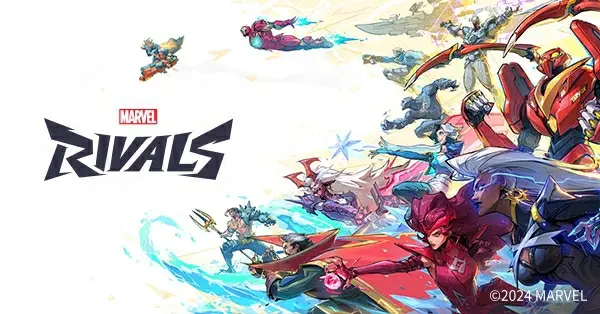
Gameplay in Marvel Rivals is organized in three layers: first, the three standard modes shared by Quick Match, Competitive, Custom Games and AI matches, which decide how a game is won; second, the arcade and limited-time modes that rotate with each season and provide variety; third, training and social content that serve onboarding and casual play.
Marvel Rivals is an ongoing live-service game, and the arcade lineup, limited-time events and some rule details change with each season. This page was compiled as of October 2026; treat the current in-game season as the source of truth for what is actually playable.
Standard Modes#
The three standard modes carry the game’s core competition; every matchmaking type (Quick Match, Competitive, Custom Games, AI matches) draws its maps and rules from them:
| Mode | Gameplay | Win condition |
|---|---|---|
| Domination | Rotating point capture: fight over the objective area; the controlling side accumulates progress over time | Rounds alternate between two sub-maps; the first side to win two rounds wins |
| Convoy | The attackers escort a rocket carrier along a route while the defenders block them with everything they have | Each side plays one round on attack and defense; the side with better escort progress wins |
| Convergence | A hybrid mode: capture a point first, then escort | Each side plays one round; overall performance across both rounds decides the winner |
Domination#
Domination is pure point-capture combat. Both sides fight over the objective area; standing inside the control zone accumulates progress, and the first side to fill its progress bar wins the round. Matches rotate between two sub-maps, each sub-map counting as one round, and the first side to take two rounds wins the match.
Key points:
- Progress comes from “holding the point,” and kills are only a means of keeping it; chasing enemies away from the point is a common mistake
- After losing a teammate, do not stubbornly hold the point at low health; fall back to the edge of the zone, wait for respawns, and regroup before re-entering
- The high ground and flank routes around the control zone decide who can hold it long-term; layered positioning matters more than piling bodies on the point
- The two sub-maps have different terrain and hotspots; after round one, do not carry your positioning habits from the previous map into the new one
Convoy#
Convoy is the classic payload mode: the attackers push a rocket carrier along a fixed route to the endpoint while the defenders set up ambushes along the way. The attackers have a total time limit, and reaching each checkpoint adds time; in overtime, the match continues as long as the vehicle keeps moving.
Key points:
- Attackers should hug the payload but spread out their positioning, avoiding being wiped out by a single area-of-effect control or damage combo
- Defenders should hold the choke points and corners the vehicle must pass through, using crowd control to break the attackers’ rhythm
- The stretches before and after checkpoints see the fiercest swings; after reaching a checkpoint, regroup before forcing the next segment
- In overtime, defenders must track key cooldowns precisely and use one full burst to stop the final push
Convergence#
Convergence strings point capture and escort together on the same route: both sides first fight over the control zone, and once captured it becomes the escort starting point, after which the attackers push the payload forward. Each side plays one round, and overall performance across both rounds decides the winner.
Key points:
- The advantage secured during the capture phase converts directly into time margin during the escort phase, so do not build your opening lineup around single-target burst only
- The handoff from capture to escort is where comebacks happen most often; the capturing side should immediately split people off to set up defense near the payload
- The escort route is longer, so the cost of replacing a fallen teammate is higher than in pure capture; decide who fills each spot before entering
- After sides swap, map knowledge directly decides your ceiling; practice both attack and defense on the same map in Quick Match
Quick Match#
Quick Match uses the same three standard modes and map pool as Competitive, but results do not affect your rank, making it the place to practice new heroes, learn maps and test compositions. Matchmaking is based on hidden player skill, so opponents will not be noticeably weaker; treating this mode as a “bot lobby” will get you exposed quickly.
Competitive#
Competitive uses only Domination, Convoy and Convergence, with stricter timing rules and less room for error than Quick Match. It unlocks at a certain account level; see the Ranked page for the rank system, placement process and ban rules.
AI Matches#
AI matches follow the same objectives and rules as the standard modes, with empty slots filled by AI teammates and AI opponents. AI behavior is fairly predictable, which makes this mode good for testing ability ranges, learning map routes and finishing the onboarding transition, but it will not teach positioning mind games or team coordination; the sooner you move to Quick Match, the better.
Arcade Mode#
The arcade collects modes with modified rules, and its lineup rotates with seasons and events. As of October 2026, the main types that have appeared historically are:
| Arcade mode | Rule highlights |
|---|---|
| Conquest | A brawl mode where kills accumulate points |
| Doom Match | A free-for-all with no fixed teams |
| Clone Rumble | Limited-time mode built around everyone cloning the same hero |
| Annihilation | Large-scale 18v18 combat, added in November 2025, with an additional mixed-human-and-AI variant |
| Free Fight | Any-pick mode with no restriction on duplicate heroes |
The table above summarizes arcade types that have appeared historically; it is not a permanent list. For what is actually in rotation this season, check the in-game arcade tab.
Limited-Time PvE Modes#
The game has no permanent PvE, but two limited-time PvE events have launched so far, both retired after their events ended (some modes may return in later seasons):
- Marvel Zombies: a 4-player co-op PvE added in the second half of Season 4, with five playable heroes — Blade, Punisher, Thor, Mystique and Jeff — where players fight off endless zombie hordes and finally challenge the undead queen boss.
- Blood Hunt: the second limited-time PvE, added in the second half of Season 7, also played in 4-player teams, expanding the hero pool to six and swapping the enemies for the vampire army under Dracula.
The hero pools and gameplay details of both events followed their in-game event pages at the time, and may be adjusted if they return.
Past Event Modes#
Some modes came from one-off limited-time events and clearly borrowed proven formulas from other genres:
- Jeff’s Winter Splash: a zone-painting event similar to Splatoon
- Clash of Dancing Lions: a ball game similar to Rocket League, starring Iron Fist, Star-Lord and Black Widow
- Ultron’s Battle Protocol: auto-battler (Auto Chess) style automatic combat
These modes went offline when their respective events ended; whether they return depends on official plans.
Social Hub#
The social hub is a walkable, themed space set in Times Square. It does not handle matchmaking; it is a social and casual space outside of real matches, with several built-in activities:
- 1v1 Duel Zone (Clobberin’ Club): challenge other players in the hub to a one-on-one fight
- Transformation Spot: try out transformation effects at the Pym Kitchen interactive point
- Dance Floor: dance together with other players in the hub
Training Content#
| Type | Purpose |
|---|---|
| Practice Range | Test damage, ability ranges and combos |
| Basic Tutorial | Learn movement, shooting, ability use and other fundamentals |
| Hero Tutorials | Learn each hero’s kit and role one by one |
| Mode Tutorials | Objectives and routes for the Convoy and Domination modes |
Training content has no time limit and can be entered anytime. New players are advised to go through the basic and mode tutorials before entering Quick Match; it saves a lot of tuition paid in live matches.
Which Mode to Choose#
| Your goal | Where to go |
|---|---|
| First time playing | Basic tutorial, then AI matches or Quick Match |
| Practicing a new hero | Quick Match |
| Chasing rank | Competitive |
| Testing ability ranges and combos | Practice Range |
| Playing casually with friends | Custom rooms or Arcade |
| Looking for a 1v1 | The 1v1 Duel Zone in the social hub |
FAQ#
| Question | Answer |
|---|---|
| How long is a match | A standard-mode round runs about 10-15 minutes; Convoy and Convergence matches with both attack and defense rounds run longer |
| Are Quick Match and Competitive rules the same | Same modes, but Competitive uses stricter timers and results affect your rank |
| Is there a permanent PvE | No. Marvel Zombies and Blood Hunt were limited-time events and are currently retired |
| Is the arcade lineup fixed | No, it rotates with seasons and events |
| Can I still play missed limited-time modes | They are offline with their events; some may return in later seasons |
| Can I create my own room | Yes. Custom rooms support custom team sizes and match rules |