Roles and Team Composition#
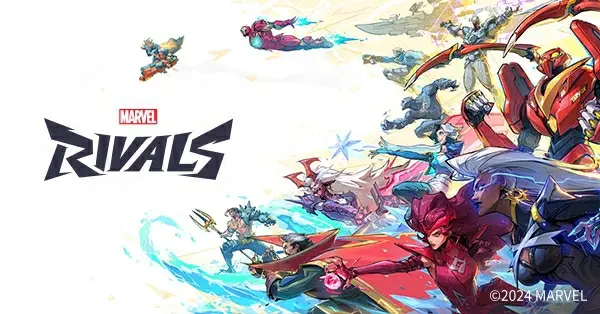
Marvel Rivals’ three-role division and team composition are the foundation of winning. This page clarifies what each role is supposed to do, how to play it better, and how to build a lineup.
The official role names are Vanguard, Duelist, and Strategist. Third-party fan sites often render Vanguard as “the vanguard” or “the tank”; this guide sticks to the official terms throughout.
Vanguard#
Core Duties#
The Vanguard is the frontline, usually with the highest health. The job is to hold key terrain, absorb fire, and open fights for the team. A Vanguard’s value shows not on the damage board, but in whether teammates can output safely.
- Stand at the very front of the team, but never beyond your healers’ range
- Use your body to block the key routes to the objective
- Check teammates’ ultimate status before committing; don’t dive in alone
- In positional fights, protect the ground first instead of chasing low-health kills
Playstyle Tips#
The universal Vanguard rhythm is “engage—hold—fall back.” Use a dash or shield when entering the objective, chip opponents with primaries and skills once established, and pull back decisively when your health runs low or a teammate gets jumped. Repeatedly tanking at half health is the most common way Vanguards die.
Some Vanguards lean toward pushing, such as Hulk and Venom; some lean toward holding ground, such as Groot and Doctor Strange; others excel at throws and ranged suppression, such as Thor and Magneto. Read whether the team needs a pusher or an anchor before locking your pick.
Duelist#
Core Duties#
The Duelist is responsible for kills and suppression. Its three subtypes play very differently:
| Subtype | Playstyle | Example Heroes |
|---|---|---|
| Frontline pressure | Push with the frontline and output steadily | The Punisher, Iron Man |
| Assassin flank | Circle behind to cut down healers and backline | Spider-Man, Black Panther, Magik |
| Ranged sniping | Control long corridors from high ground | Hawkeye, Black Widow, Hela |
Playstyle Tips#
Duelist health pools generally sit between 250 and 300, and a single positioning mistake can be fatal. The test for entering a fight is not “can I kill him,” but “can I get out alive after I commit.”
Assassins should wait for the team fight to start and the enemy’s attention to lock onto the frontline before diving; snipers should claim high ground early, reposition after each volley, and never camp one spot too long—it will get answered.
Strategist#
Core Duties#
The Strategist provides healing, buffs, and control. It decides how long a team fight lasts and is the position most in need of self-preservation awareness.
- Healing priority: the frontline tanking damage > the Duelist in a firefight > full-health teammates
- Track enemy assassin movements; when dived, use a mobility skill to create distance first
- Save crowd control for the enemy’s engagement tools or dives
- Your position matters more than healing output: a dead Strategist heals for zero
Playstyle Tips#
Strategists should stand where they can see both their teammates and the enemy’s dive routes, usually beside cover in the team’s mid-to-back line rather than hugging the spawn. When healing is scarce, give it to the teammate who can create immediate value, not evenly.
Team Composition#
Role Ratios#
| Comp Type | Vanguard | Duelist | Strategist | Use Case |
|---|---|---|---|---|
| Standard balanced | 2 | 2 | 2 | Most matches |
| Frontline-heavy | 3 | 2 | 1 | Pushing and anchoring |
| Damage-heavy | 1 | 4 | 1 | Suppressing enemy healing |
| Double healer | 2 | 1 | 3 | Against strong enemy divers |
There is no absolute best comp. The test is: can someone absorb pressure, can someone heal, and is the remaining damage enough.
Three Principles of Team Composition#
- Fill the roles first, then talk about tier lists: a Season S-tier hero can’t fill the slot your team is missing
- Team-Ups are valuable: picking two heroes who share a Team-Up grants both the enhanced effect
- Keep one player willing to flex: ideally someone on the team will swap heroes when the game goes sideways
Common Composition Problems#
| Symptom | Cause | Fix |
|---|---|---|
| Frontline melts instantly | Healing can’t keep up, or the frontline overextends | Add a Strategist, or have the frontline advance using cover |
| Can’t break through | All damage is being healed through | Swap to an assassin Duelist and dive the backline |
| Backline dived repeatedly | Nobody is watching the flanks | Strategist switches to a self-sufficient hero, Vanguard falls back to peel |
| Damage never lands | Scattered positioning, no focus target | Call a focus target and push behind the frontline |
Communication Tips#
Marvel Rivals has no forced voice chat; quick commands convey most information:
- Ping enemy positions so teammates know which route is occupied
- Call your ultimate status so teammates can plan engagement timing
- Announce hero swaps in advance to avoid two players flexing into the same role
Role Quick Reference#
| Role | Core Tasks | Positioning | Key Awareness |
|---|---|---|---|
| Vanguard | Hold objectives, absorb pressure, open fights | Front of the team | Engage and disengage rhythm |
| Duelist | Kills, suppression, flanking | Flanks or high ground | Entry timing |
| Strategist | Healing, buffs, control | Mid-to-back line | Self-preservation and healing priority |
FAQ#
| Question | Answer |
|---|---|
| Must the comp be 2-2-2 | No, 3-2-1 and 1-4-1 both work; what matters is full role coverage |
| Is there a cap per role | No hard cap, but more than four in one role usually means a missing function |
| Which role is Deadpool | Deadpool is a multi-role hero who can switch among all three roles |
| What if nobody wants to play Strategist | Fill it yourself. Comps missing healing win noticeably less than comps missing damage |