Ranked#
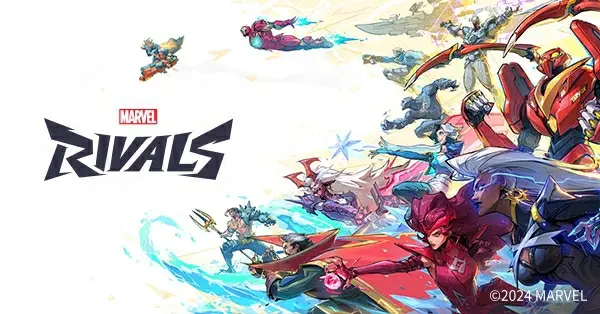
This page covers the current rules of Marvel Rivals’ Competitive mode and the concrete practices for climbing. For combat mechanics and system-level details, see the Systems page.
Competitive is season content under continuous adjustment: rank details, ban counts, protection mechanics and rewards can all change with a new season. This page reflects public information from around Season 9 (S9); once a new season begins, treat in-game announcements as authoritative.
Unlock Requirements and Placement Matches#
- Your account must reach level 15 to enter Competitive (it was level 10 at launch and was later raised to 15)
- Each season starts with 10 placement matches, whose results determine your starting rank
- Party size is capped at 3 during placement matches
- Since Season 5 (S5), placement matches are a fixed process, replacing the older “too many losses demotes you” rule; any guide still describing loss-based demotion is outdated
Placement results only set your starting point. Your rank’s movement during the season is decided by the matches afterward, so an average placement run is no reason to despair — a later win streak can pull the rank right back up.
The Nine Ranks#
Competitive ranks run across nine tiers from lowest to highest, with the whole ladder totaling 23 divisions: Bronze through Celestial each contain three subdivisions, while Eternity and One Above All have no subdivisions and are instead ordered by points.
| Rank | Original English name | Subdivisions | Ordering method |
|---|---|---|---|
| Bronze | Bronze | Three subdivisions | Point-based promotion |
| Silver | Silver | Three subdivisions | Point-based promotion |
| Gold | Gold | Three subdivisions | Point-based promotion; season skin reward available |
| Platinum | Platinum | Three subdivisions | Point-based promotion; no rank protection |
| Diamond | Diamond | Three subdivisions | Point-based promotion |
| Grandmaster | Grandmaster | Three subdivisions | Point-based promotion |
| Celestial | Celestial | Three subdivisions | Point-based promotion; decay begins here |
| Eternity | Eternity | No subdivisions | Ordered by points |
| One Above All | One Above All | No subdivisions | Top 500 of each region’s leaderboard per season |
Two points deserve special attention:
- One Above All is not a title you keep forever once earned. It settles against each season’s regional leaderboard; only players finishing a season in their region’s top 500 hold the rank, and it is re-earned next season.
- Rank distribution shifts by season, so this page does not provide a fixed percentage table. Qualitatively, most players sit between Bronze and Platinum, and One Above All players make up less than 0.1% of the population.
Points, Gains and Losses#
- Adjacent subdivisions are 100 points apart; crossing a full rank (for example, from Gold I into Platinum III) is a 300-point gap
- A single match’s gain or loss is decided by both the result and your performance; the official formula has never been published, and any claim quoting fixed point values is not trustworthy
- Win streaks amplify gains — in good form, a single match can sometimes jump a whole subdivision; losing streaks work the same way in reverse, accelerating point loss
Because performance affects point swings, “how you win” matters more than “whether you won.” The climbing logic in the next sections all builds on this rule.
Rank Protection: Chrono Shield#
Chrono Shield is the protection that prevents point loss:
- It applies only to Bronze, Silver and Gold; from Platinum up there is no protection at all — a loss is a point loss
- On a defeat, one shield charge is consumed to cancel that loss, and the shield recharges gradually as you play
- Some seasonal events also hand out refill items
Low-rank players can safely practice unfamiliar heroes, but do not treat Chrono Shield as a free pass — from Platinum onward, every defeat lands squarely on your points.
Hero Bans#
Matches at Gold III and above enable hero bans, with both sides taking turns to exclude heroes before picking. Since Season 7 (S7), each team has 3 bans (previously 2 per team), so up to 6 heroes can be banned in one match.
How to approach bans:
- Ban the core hero the enemy is most likely to pick, not the hero you personally dislike
- Protect the hero you want: if your main is a meta favorite, consider locking early or preparing a backup
- Watch teammates’ pre-selections: never ban a hero a teammate has highlighted
- Do not waste bans: a hero nobody plays in the current meta is not worth a ban slot
Matches below Gold III have no ban phase; picking starts immediately.
Party Restrictions and Decay#
Party rules are tiered by rank:
| Rank range | Party rule |
|---|---|
| Bronze to Grandmaster | Up to 5 players |
| Celestial and above | Solo or duo only |
| During placement matches | Up to 3 players |
Additionally, Celestial and above have a decay mechanic: skipping Competitive for a while gradually deducts points. High-rank players who want to keep their standing must keep playing.
Season Settlement and Rewards#
- Season rewards are based on the highest rank reached during the season; dropping later does not matter
- Gold and above earn exclusive ranked skins and other rewards, and each season’s skins and rewards differ; this page does not maintain a fixed comparison table
- In Season 9, for example, the Gold reward was Jubilee’s “Crimson Crown” skin
- One Above All rewards settle against the end-of-season leaderboard, separate from regular rank rewards
The practical takeaway for reward hunting: if you only want the season’s ranked skin, stop once you hit Gold; if you are chasing One Above All, what matters is your region-wide ranking trend across the whole season, not the outcome of any few matches.
The Core Logic of Climbing#
Competitive point swings reflect both results and personal performance. So the key to raising your win rate is not pretty personal stats, but reducing the factors that make your team lose:
- Do not feed: deaths are the easiest metric to improve
- Fill the gap: pick healer when the team lacks one; the value of this is badly underestimated
- Hold the objective: kill counts correlate far less with winning than objective time
- Do not waste ultimates: fire at least one ultimate per match at genuinely valuable moment
Building a Hero Pool#
| Layer | Count | Notes |
|---|---|---|
| Main | 1 | Practiced to the point of consistently reliable performance |
| Same-role backup | 1 | Complements your main; for example, a ranged main keeps a diver as backup |
| Cross-role backup | 1 | Used to fill in when the team is missing a function |
Three heroes are enough to climb. A pool too shallow gets locked out by bans and counters; one too wide means mastery of none. After Gold III, bans come online and the value of a backup grows sharply.
Common Walls at Each Rank#
| Rank | Common wall | How to break through |
|---|---|---|
| Bronze | Scattered positioning, everyone plays alone | Stay with the team; do not charge in solo |
| Silver | Shallow hero pool; cannot adapt when countered | Practice one backup hero and learn to swap |
| Gold | No communication; ultimates fired independently | Use quick commands to call ultimate status; adapt to the ban phase |
| Platinum | Rigid compositions; no adaptation | Swap heroes against the enemy lineup; keep your composure once protection is gone |
| Diamond | Detail and decision mistakes | Review your own death replays |
| Grandmaster and above | Opponents rarely make mistakes | Team coordination and ban-phase mind games; keep playing regularly to counter decay |
Solo Queue vs. Parties#
Solo queue’s advantage is more evenly matched opponents; its disadvantage is no agreed-upon coordination. The keys in solo queue are filling gaps and staying consistent; do not expect teammates to execute complex tactics. Celestial and above allows only solo or duo, so the higher you climb, the more solo and duo queue becomes the norm.
Parties can do what solo queue cannot:
- Agree on team-up hero combos in advance
- Decide who engages and who cleans up
- Swap heroes together to counter the enemy composition
Bronze through Grandmaster allows up to 5 in a party, and a fixed stack climbs faster than solo queue, but parties also face tougher opponents because matchmaking accounts for partying.
Climbing Points by Role#
| Role | Climbing points |
|---|---|
| Vanguard | Cut pointless deaths; disengage earlier |
| Duelist | Disengage after each burst window; do not get greedy for kills |
| Strategist | Positioning matters more than healing volume; stay alive first, heal second |
How to Review a Match#
After a match, spend two minutes answering three questions:
- When I died, was it a positioning problem or an ability-timing problem
- Was there a fight where I died when I did not have to, and cost us the objective
- If I could replay the match, which ability would I save for a different moment
No spreadsheet needed — just find one thing to improve. Performance directly affects point swings, and the point of reviewing is turning that one thing into next match’s gain.
Tilt Management#
| Situation | Response |
|---|---|
| Two losses in a row | Take a break, do something else, come back |
| Teammates playing poorly | Focus on what you can change |
| Stuck at a rank | Play a different role for a few dozen matches; a fresh perspective often breaks the wall |
| Climbing stalled | Watch your death count, not your kill count |
FAQ#
| Question | Answer |
|---|---|
| When can I play Competitive | Unlocks at account level 15; learn one hero in each of the three roles first |
| How many placement matches | 10 per season, with parties capped at 3 during them |
| Is my rank permanent | No. One Above All settles against the end-of-season regional leaderboard, and other ranks reset with each new season |
| Do I lose rank on a loss | Bronze through Gold have Chrono Shield protection; from Platinum on, a loss costs points |
| Where do hero bans start | Gold III; since Season 7 each team has 3 bans |
| Why am I losing points in high ranks | Celestial and above have decay; not playing Competitive for a while deducts points |
| Can solo queue reach high ranks | Yes — Celestial and above only allows solo or duo anyway, leaning on willingness to fill and steadier play |
| What if teammates refuse to swap heroes | Fill the most critical missing role yourself |