Systems Guide#
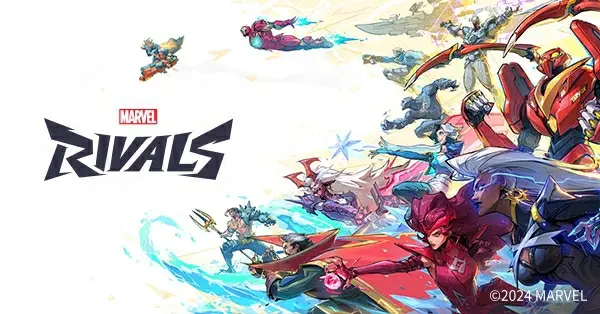
This page takes Marvel Rivals’ core systems apart one by one, explaining what problem each solves and how they interlock.
System Overview#
| System | The Problem It Solves |
|---|---|
| Role system | How six players divide the work |
| Skills and ultimates | Where each player’s combat power comes from |
| Team-Up system | Why a lineup is more than headcount |
| Map objective system | What actually decides the match |
| Resource loop | How health and ultimates get sustained |
| Respawn system | Why death keeps getting more expensive |
Role System#
Six-player teams are divided into three functions: Vanguard, Duelist, and Strategist.
| Role | Count | Core Function |
|---|---|---|
| Vanguard | 14 | Absorb pressure, hold ground, open fights |
| Duelist | 27 | Kills, suppression, flanking |
| Strategist | 12 | Healing, buffs, counters |
Deadpool is the only hero not bound to a single category and can switch among all three roles.
Composition Criteria#
There is no single correct ratio. The test is three questions: is someone absorbing pressure, is someone healing, and is there enough damage to secure kills. If all three are covered, the composition works.
Ultimate Energy System#
Ultimate energy builds through damage dealt, damage taken, and kills. The design intent is to give every role the ability to open a fight, not to let damage dealers alone dictate tempo.
Season 10 reduced the ultimate charge rate of all Strategists, making support ultimates scarcer and slowing engagement tempo across the board.
Team-Up System#
Team-Ups are the design that sets this game apart from other hero shooters. The reworked rules are:
| Tier | Condition | Effect |
|---|---|---|
| Base effect | Any lineup | Grants the hero one extra ability |
| Enhanced effect | Designated partner on the same team | Upgrades further on top of the base effect |
Every hero has two Team-Ups. This means no hero ever needs a partner to gain value, while completing a pair in the lineup makes it clearly stronger.
Build Philosophy#
Team-Ups add a dimension to lineup building: you are no longer just filling functions, you are also checking whether heroes pair with each other. But its weight is lower than full role coverage—a lineup with no healer built just to complete Team-Ups still loses.
Map Objective System#
The three core modes differ in their objective mechanics, but they all point to the same thing: controlling space.
| Mode | Spatial Requirement |
|---|---|
| Convergence | Hold the area first, then push along the route |
| Convoy | Contest along the payload’s moving path |
| Domination | Stay inside the fixed control zone long-term |
Objective design makes “holding” worth more than “killing,” which is exactly why you should retreat after losing a player instead of continuing the firefight.
Resource Loop System#
| Resource | How It Cycles |
|---|---|
| Health | Damage taken > restored by Strategist healing or map health packs |
| Ultimate energy | Output and damage taken > charging > released |
| Respawn time | Death > waiting > return; wait time lengthens as the match progresses |
| Team-Ups | Partner present > enhanced effect activates |
What all four resources share is that they regenerate. A match is therefore a continuous exchange of resources, not a one-shot decider.
Respawn System#
You respawn at your team’s spawn point after dying, and the wait grows longer as the match goes on. This design makes every death in the late game extremely expensive.
Practical impact:
- Early deaths are cheap and can be spent on probing
- One late-game team wipe often decides objective ownership outright
- In overtime, the margin for error is nearly zero
Team Communication System#
At the system level there are quick commands, pings, and voice chat. Their value is moving moment-to-moment information—“when to engage,” “who’s getting dived”—without typing.
System Synergy#
The systems interlock:
- Roles determine what resources you can provide
- Team-Ups determine whether the lineup gains extra value
- Map objectives determine where resources should go
- Respawn time caps how much risk you can afford
Once you understand this interlocking layer, “should we take this fight” stops being a gut feeling and becomes something you can calculate.
FAQ#
| Question | Answer |
|---|---|
| Is there hero growth or leveling | Heroes have no levels or skill unlocks |
| Is there gear or a loadout system | No, the game has no equipment or stat items |
| Are Team-Ups mandatory | No, but completing a pair clearly raises a lineup’s strength |
| Why does death keep getting costlier | Respawn wait time lengthens as the match progresses |
| Do systems change by season | Yes, ultimate charging, Team-Up rosters, and map rotations can all be adjusted |