Class System Overview#
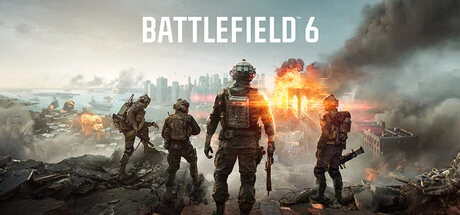
The single most important sentence about Battlefield 6’s class design is: it abandons the specialist system of Battlefield 2042 and returns to the four classic classes. This is not simple nostalgia — the game gives every class two Training Paths for role differentiation, turning “picking a class” back into a genuinely deep tactical decision.
The Four Classes at a Glance#
| Class | English | Core equipment | Team role | Best for |
|---|---|---|---|---|
| Assault | Assault | Optional second primary, adrenaline injector, flashbangs / underbarrel grenade launcher | The tip of the spear, the main force in close firefights | Players who like leading from the front |
| Engineer | Engineer | Rocket launcher, mines, repair tool | Anti-vehicle specialist, the only class that can repair vehicles | Big-picture thinkers who calculate threats |
| Support | Support | Ammo box, healing device, deployable cover, LMG | The core of resupply and sustainment | Team players who play it steady |
| Recon | Recon | Sniper rifle, drone, C4, laser target designator | Intel, long-range suppression, target marking | Patient players who read the map |
Two Training Paths per Class#
Training Paths are the differentiation core of this game’s class system — the same class can choose different upgrade directions and end up with completely different roles. A confirmed example: Assault can choose between Frontliner (sustained frontal combat) and Breacher (room-clearing entries), one leaning toward prolonged frontal firefights and the other toward indoor and close-range breaching.
The other three classes each have two Training Paths with the same selection logic: first be clear about the specific job you fill in the squad, then pick the matching path.
| Decision question | Which to lean toward |
|---|---|
| Is my main output scenario frontal firefights or indoor breaching? | Assault: Frontliner for frontal fights, Breacher for rooms |
| Do I want to kill vehicles or keep them alive? | Engineer: anti-vehicle equipment first, repair route second |
| Am I the squad’s ammo-and-healing source or a frontline firepower position? | Support: choose between the resupply route and the suppression route |
| Am I a long-range intel position or an infiltration-and-sabotage position? | Recon: the sniper-and-drone side, or the C4-raider side |
Class Equipment in Detail#
Assault#
- Optional second primary: a dual-primary loadout unique to this class; run one for close range and one for mid range to cover different engagement radii
- Adrenaline injector: a self-rescue tool for critical moments — your margin of error in a firefight
- Flashbang / underbarrel grenade launcher: blind-and-breach tools and through-wall firepower before an entry
Assault is the only class that can “carry two guns” at the class level, which makes it extremely valuable in Conquest — the mode with the most unpredictable encounters — because you always have a gun suited to the current distance.
Engineer#
- Rocket launcher: the main source of damage against armored vehicles
- Mines: area denial that seals the routes vehicles must take
- Repair tool: the game’s only vehicle-repair tool — which means a competent engineer is the lifeline of the squad’s vehicle players
The engineer has the highest decision density: which launcher to bring, which road to mine, whether to shadow your own tank — every choice directly shapes how the vehicle war plays out.
Support#
- Ammo box: the whole team’s ammo supply; where you place it is itself a tactic
- Healing device: continuous healing that pulls wounded teammates back into the fight
- Deployable cover: conjures cover out of thin air — in a game with destruction, this is the power to “redefine terrain”
- LMG: suppression fire; belt capacity sustains long engagements
Support is the class beginners most often underrate. Ammo box placement and cover deployment timing directly decide whether an objective holds.
Recon#
- Sniper rifle: long-range fire that controls open ground and long sightlines
- Drone: low-cost map revealing that marks enemy positions
- C4: close-range demolition — vehicles, walls, campers
- Laser target designator: guides teammates’ precision-strike weapons onto targets
Recon is the information position. One drone pass over the enemy’s back line changes the entire squad’s attack plan.
Class Counters and Threat Relationships#
| You play | What you fear | Your counter |
|---|---|---|
| Assault | Engineer mines and rocket launchers, Recon’s long-range suppression | Flashblind them and close in, or swap to your second primary to change the distance |
| Engineer | Infantry in your face (rocket launchers are inefficient up close) | Mine denial plus timely weapon swap |
| Support | Highly mobile Assault players rushing you | Deployable cover to shape the fight, LMG belt suppression |
| Recon | Being counter-reconned by drones, being rushed | C4 for self-defense; repositioning beats dying on one sniper spot |
Squad Composition Principles#
The ideal four-player squad is one of each class:
- At least one Support — a squad without ammo cannot fight a war of attrition
- At least one Engineer — enemy vehicles need a counter, and your own vehicles need repairs
- Assault handles close-range entries, Recon handles map revealing
- In class-lock mode this division is hard-enforced: each class can only use its own weapon types
If matchmaking leaves your squad incomplete, prioritize filling the Support slot — the ammo box and healing are the things teammates most often “assume you are bringing”.
How Training Paths Fit Progression#
Class growth has three layers:
| Layer | Content | Notes |
|---|---|---|
| Class level | Earn XP by playing the class | Unlocks weapons and gadgets |
| Training Paths | Two per class, diverging once chosen | Defines your upgraded role |
| Weapon mastery | Attachment unlocks for specific weapons | Modding depth under the 100-point attachment budget |
For the full progression plan, see Progression and Training Paths.
Beginner Decision Tree#
- Do you want to deal with vehicles? Counter enemy armor and save friendly tanks → Engineer; no → next question
- Do you prefer frontal brawling or picking shots? Brawl → Assault; picking shots → Recon
- That leaves Support. If the squad already has two Assaults and a Recon, do not hesitate — switch to Support; this slot is always understaffed.
Common Misconceptions#
- “Recon is just an AFK sniper”: this game’s Recon drone and laser designator are the team’s information engine; a Recon who only shoots and never marks delivers half his value.
- “Support is a medic who does not kill”: LMG belt suppression plus deployable cover make Support the firepower core of objective fights.
- “Engineers only need a rocket launcher”: the repair tool decides whether vehicle players will team up with you — a tank without an engineer escort will be ground down by mid-game.
- “Training Paths do not matter”: the wrong path leaves your squad function misaligned with expectations; check the decision table above before choosing.
Further Reading#
- Assault and Support loadout details: Assault and Support Classes in Depth
- Engineer and Recon equipment choices: Engineer and Recon Classes in Depth
- How the four classes work together: Squad Play Mechanics