ACNH Flowers & Island Ecology: Watering, Weeds and Crops#
Your island’s ecology is not something you set up once and it stays fixed. The game runs on real time, with weather and seasons adjusted to the hemisphere you live in — the first game in the series to split Northern and Southern Hemisphere seasons by real-world geography. Weeds, crops, flowers and gyroids all follow that clock. This page only covers what the fact sheet can support, and carves flower hybridization out into a verification boundary rather than passing speculation off as rules.
2.0 added several verifiable new variables to the island: plantable new crops such as tomatoes, wheat, sugarcane, potatoes and carrots; gyroid fragments that sprout overnight when buried and watered, and can be customized; and among the returning ordinances, the Beautiful Island ordinance that suppresses weed growth. Meanwhile Happy Home Paradise lets you pick the weather and season yourself — handy as a fixed-condition design control. These are the certainties that can go straight into your notes.
As for the specific rules of flower hybridization, color and gene combination tables — unverified on this site, and this page lists no probabilities or combination tables. The alternative is a “water — observe — record — compare” self-run ecology notebook: record only what actually happens on your island, and let readers advance through reproducible actions instead of copying combination tables of unknown origin.
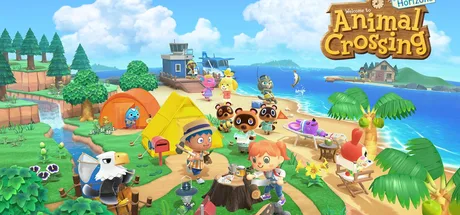
The Verifiable Variables in Island Ecology#
| System / ordinance | Verified content | Notebook column |
|---|---|---|
| Beautiful Island ordinance | One of the 2.0-returning ordinances; suppresses weed growth | Current ordinance & weed count |
| Night Owl ordinance | One of the 2.0-returning ordinances; shops and villagers stay active later | Observable hours |
| New crops | From 2.0: tomatoes, wheat, sugarcane, potatoes, carrots and more | Crop column |
| Gyroid fragments | Bury, water, wait one night — a complete gyroid emerges and can be customized | Waiting & result |
| Weather & seasons | Adjusted to your real hemisphere; series-first split by real-world geography | Environmental baseline |
| Happy Home Paradise | Choose island, weather, time and season | Control-experiment conditions |
Ordinances are a 2.0-returning system, and Beautiful Island and Night Owl are only two of them. An ordinance changes the environmental baseline, not an output recipe, so your notes should record “which ordinance is currently active,” not “what this ordinance produces.”
The five new crops deserve their own list, as one of the few firm rosters on this page:
- Tomatoes: one of the crops plantable from 2.0.
- Wheat: one of the crops plantable from 2.0.
- Sugarcane: one of the crops plantable from 2.0.
- Potatoes: one of the crops plantable from 2.0.
- Carrots: one of the crops plantable from 2.0.
How many days crops take to grow and how much each harvest yields are unverified on this site; this page records only the fact that they are plantable — no invented grow times or yields.
Where Watering Sits in Two Systems#
| Target | Verified result after watering | Waiting rhythm | Notebook fields |
|---|---|---|---|
| Gyroid fragment | Bury, water, wait one night — a complete, customizable gyroid | One night; rhythm is explicit | Bury date, watered, emergence date, customization |
| Flowers | Rules between watering and color changes unverified on this site | Unverified on this site | Watering action and date only |
| New crops | Plantable; growth rhythm unverified on this site | Unverified on this site | Planting date and observation date |
The gyroid fragment is one of the few samples on the island whose wait is spelled out: bury it, water it, leave it overnight, dig up a complete gyroid, customize it. It makes the ideal metronome for your notes — check the gyroid’s state every time you log on, then jot down the other plots while you’re at it, and your recording frequency gets a fixed reference.
The flower and crop columns demand extra restraint. Record “watering” only as a reproducible action you performed — no “water N times to change color” or “watering raises result X” style causality, because those rules are unverified on this site. Record the action, the date, the phenomenon; leave inference blank.
How Weather and Seasons Enter Daily Records#
| Verified mechanic | Effect on ecology notes | How to record |
|---|---|---|
| Real-time life simulation | Every observation needs a real date and in-game time of day | Date first on every entry |
| Weather & seasons keyed to your real hemisphere | Northern and Southern Hemisphere seasons are opposite | Hemisphere field always filled |
| Series-first split of hemispheres by real geography | Hemisphere setting is the premise of any comparison | Start a new group if you ever switch it |
| Seasonal events remain after 2.0 | Event-period phenomena may differ from the norm | Give event periods their own group |
| HHP lets you choose island, weather, time, season | Environmental variables can be pinned temporarily | Number your control designs |
Writing your real-world hemisphere into the notes has three practical reasons:
- The same plot behaves differently in different months on the two hemispheres; without the hemisphere field, nothing is comparable.
- Weather can be read off the screen, but it must be recorded together with hemisphere and month — a lone weather entry means nothing.
- Weather and season chosen in Happy Home Paradise are “design conditions,” not your island’s “real-time conditions”; keep the two groups separately numbered.
The Verification Boundary on Flower Hybridization#
| Item | How this page handles it | Reason |
|---|---|---|
| Specific hybridization rules | Unverified; no rules stated | Listed as a gap in the fact sheet |
| Color and gene combination tables | Unverified; no tables listed | Listed as a gap in the fact sheet |
| Appearance probabilities and output ratios | Unverified; no probabilities stated | No citable source obtained |
| Fixed recipes for specific colors | Unverified | No citable source obtained |
“Unverified on this site” does not mean “hybridization is not in the game.” Such combination tables circulate widely in player communities, but this section only writes what the fact sheet and official re-verification support — unverifiable specifics are never stated. If you find guide-site compilations yourself, judge the nature of the source on your own, and don’t back-fill a re-posted table as settled rules.
What players can observe themselves, with no gene table needed, comes down to three kinds of phenomena:
- What is currently on a given plot and how it looks — write it exactly as the screen shows.
- On which day, in what weather, under which ordinance, the plot changed.
- Observation results with clear actions attached: gyroid emergence and customization, crop growth.
Recording phenomena without deriving rules is the fundamental difference between this notebook and the circulating combination tables.
The Four-Step Self-Run Notebook: Water, Observe, Record, Compare#
Each step’s job, in order — don’t skip:
- Water: fix watering as a same-time-every-session action, your reproducible starting point; the gyroid fragment’s one-night rhythm is the only fully explicit cadence on the island, so use it to calibrate how often you log in.
- Observe: record only what you see — location, appearance, date, weather, current ordinance. No “because rule X says so.”
- Record: fill in the field table row by row, one action per row — no merging, no reconstructing from memory.
- Compare: place entries that differ in exactly one condition side by side; compare the phenomenon difference before drawing any conclusion.
A suggested field table:
| Field | What to fill in | Purpose |
|---|---|---|
| Real date | The date of the entry | Aligns with the real-time clock |
| In-game month & time of day | Read from the screen | Window dimension |
| Hemisphere | North / South | Sets the season direction |
| Weather | Read from the screen | Environmental baseline |
| Current island ordinance | Beautiful Island / Night Owl / other | Flags whether the environment was modified |
| Plot ID | Your own named areas | No borrowed online location tables |
| Target | Flower / crop / gyroid / weeds | Aligns with the four observation targets |
| Action this session | Watered / buried / planted / observation only | Keeps it reproducible |
| Phenomenon description | Only what you saw | Kept separate from inference |
| Comparison ID | HHP or on-island comparison number | Enables side-by-side comparison |
With fields in place, the notebook starts producing information through these comparisons:
| Comparison | Method | What it can show |
|---|---|---|
| Same ordinance, different weather | Let only weather differ; all else equal | Whether weather accompanies a phenomenon difference |
| Same weather, different ordinance | Record one set before and after switching to Beautiful Island | Whether weed-related phenomena differ |
| Own island vs Happy Home Paradise | Use HHP to pin weather and season for one set | Isolates the environmental variables |
| Gyroid, before and after the night | Record burial and emergence separately | Calibrates waiting rhythm and recording frequency |
Keeping the Ecology Notebook Going Long-Term#
- Don’t back-fill online combination tables as rules; this page has already marked flower hybridization rules and color/gene combination tables as unverified on this site.
- Ordinance switches, hemisphere switches and cross-month changes each start a new group — never compare across groups in one record set.
- Record gyroid customization and planting of the five new crops as “one action, one row” — no guessing yields or grow times.
- Seasonal events continue after 2.0; give event periods their own group so seasonal phenomena don’t get treated as the year-round baseline.
- What happens in game is the final word; the notebook is only a process record, and the last judgment belongs on your own island’s screen.
This notebook promises no particular color and gives no probabilities. What it gives is a method that stably records “what I saw after watering” and can be re-checked later — far better for running an island long-term than a combination table of unknown origin.