ACNH Island Start Guide: Getaway Package, Tent and House Upgrades#
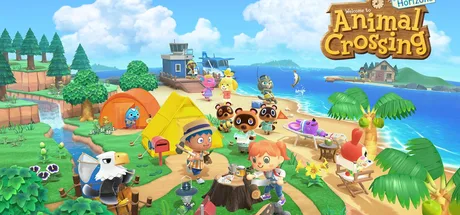
This game doesn’t open with “move into a village” — it opens with “buy a package to a deserted island”: you sign Tom Nook’s Deserted Island Getaway Package and land on an island where, besides yourself, only two villagers live, and everything starts from the tasks Nook assigns. It is a completely different opening from earlier entries that dropped you into a ready-made village.
The questions the start raises most often: when does the tent become a house, how much does it cost, and how many days until the next stage. This page lays out the mechanical chain that can be verified and flags every unverified number as “unverified on this site” — no recycled guide numbers standing in for what the game actually displays.
This page covers the span from landing to a finished house. Earning money and spending miles belong to the bells and miles pages; seasons and events belong to the real-time clock page; villager interactions and move-ins belong to the villagers page.
The Precondition: The Getaway Package and Two Starter Villagers#
The entire opening rests on three things — the package, the two villagers, the assigned tasks. The ledger first:
| Element | This game’s approach | Notes |
|---|---|---|
| Ticket to the island | Tom Nook’s Deserted Island Getaway Package | Buy the package, move to the deserted island |
| Handler | Tom Nook | Assigns starter tasks and handles later housing paperwork |
| Starting company | Two villagers besides you | Initial residents landing alongside the player |
| How it starts | Completing assigned tasks | Development is task-driven, not free-roam |
| The island’s goal | Develop at will into a community of anthropomorphic animal residents | Where the opening setup leads |
You are not inheriting a finished island — you are accepting a “develop from zero” commission: build out the infrastructure per Nook’s targets, then let the island grow from wasteland into a settled community. The two starter villagers are both company and the seed of that community — and who moves in later is your call, as covered below.
The First Week’s Mechanical Order: Tasks, Tent and the Real-Time Clock#
The opening runs along a mechanical sequence. Note this page writes only “what happens before what” — not “on which day” — because the day counts are unverified on this site.
- Land on the island, register with Tom Nook, receive the starter briefing.
- Take and complete the assigned starter tasks — mostly gathering and delivery basics.
- Use the tent as your first home and base; gather and craft around it.
- Tasks progressively unlock more facilities, shops and move-in opportunities.
- A real-time clock drives all of it: in-game time tracks real time.
| Mechanic | How it shows up | Verification status |
|---|---|---|
| Real-time progression | Weather and seasons follow real time | Verified |
| Northern/Southern Hemisphere | Series-first: seasons split by the player’s real hemisphere | Verified |
| Starter task chain | Task-driven development rather than free-for-all | Verified |
| Opening day counts | Days from landing to each stage | Unverified on this site |
The real-time clock is the one opening rule to internalize early: “come back tomorrow” is not a figure of speech — the game really advances a day, weather and seasons riding along. So this page offers no “do X on day N” schedule; such tables must follow your own island’s pace, and no citable day-count standard has been verified here either.
From Tent to House: How the Upgrade Chain Runs#
The tent-to-house transition is the most visible upgrade chain of the opening. The chain itself is clear; the fee at each step lacks a reliable source on this site.
| Stage | Housing form | How it advances | Number status |
|---|---|---|---|
| Start | Tent | First home; gathering and crafting revolve around it | Verified |
| Transition | Tent to house | Complete assigned goals, handle paperwork with Nook | Mechanical description |
| Result | Standalone house | Free furniture placement; long-term living begins | Verified |
| Loan amounts | Per-stage amounts | Per the in-game display | Unverified on this site |
| Upgrade fees | Each upgrade’s cost | Per the in-game display | Unverified on this site |
| Day counts | Days between stages | Set by the real-time clock and your play | Unverified on this site |
In mechanical language the chain reads: complete assigned goals → handle paperwork with Nook → housing form upgrades → more placement and renovation space unlocks. What to remember is not any number but the rhythm “finish a round of goals, go back to Nook”. Loan amounts, upgrade fees and day counts have no citable source — all marked “unverified on this site”, with no invented figures and no vague “a few days” hedges either.
Versus Previous Games: What You Now Decide#
The opening deserves its own page because this entry hands several previously-fixed decisions back to the player. Four changes relative to earlier games, compiled from third-party series-history comparisons — secondhand synthesis, not an official table.
| Freedom | This game’s approach | Nature |
|---|---|---|
| Furniture placement | Place furniture freely | Change from previous games |
| Villager house plots | Decided by the player | Change from previous games |
| Move-in picks | Decided by the player | Change from previous games |
| Character skin tone | Selectable at the start | Change from previous games |
Together these four hand “what the island looks like” from the system to the player: not just how your house is furnished, but where villagers live and who moves in at all. Skin tone at the start starts the “this islander is me” identification from character creation. New players should sketch the rough direction of three things before landing — house plot, move-in pace, overall traffic flow — because once the latter two are set, adjusting them means the Island Designer terrain tools.
Verification Boundaries of the Opening, and How to Self-Check#
Listing the unverified items together, with ways to confirm them in your own game, beats copying a table of unknown provenance.
| Unverified item | Status | How to confirm it yourself |
|---|---|---|
| Opening day counts | Unverified on this site | Log daily progress against real dates |
| Per-stage loan amounts | Unverified on this site | Per the in-game display when handling paperwork |
| Each upgrade fee | Unverified on this site | Per the in-game display when upgrading |
| Task unlock order details | Unverified on this site | Record your island’s prompts one by one |
A self-audit rhythm that relies only on in-game information:
- Each session, check Nook or the terminal for new goals; log the day’s target.
- After each completed round, note housing form, available facilities and resident count.
- For any money or days involved, copy the in-game display — no filling, no estimating, no borrowing internet tables.
- Keep the unverified items in their own column; compare once your own log is thick enough, rather than trusting an external conclusion first.
The side benefit: the seasonal shifts the real-time clock brings and the two starter villagers’ interaction moments get logged too — your own first-hand ledger for the collection and villagers pages later.
Where the Opening Hands Off#
The tent becoming a house is not an ending — it is the point where several system lines open at once. Read on by need:
- How the second currency accrues and spends: the Nook Miles and Nook Stop page.
- Where bells come from, where they go, and storage caps: the bells cycle page.
- How wood and iron become furniture and cooking: the DIY recipes and materials page.
- Who comes after the two starters, and how to interact: the villagers page.
- The full time rules behind “come back tomorrow”: the real-time clock and hemisphere page.