ACNH Villager System: Starting Residents, Move-ins and 2.0 Interactions#
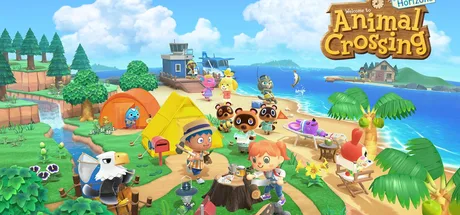
New Horizons hands part of the “who do I live with” decision to the player. You land under Tom Nook’s island getaway plan with two fellow villagers, and from that point you can choose incoming residents and where their houses stand. Villagers are not wallpaper — they visit your house, accept invitations to theirs, and do morning calisthenics with you.
The 2.0 free update lengthened the neighbor list by 16 villagers, 8 of them returning series characters, and added a full interaction set: home visits in both directions, shopkeepers setting up on Harv’s Island plaza, and (in the paid Happy Home Paradise DLC) redesigning the homes of your actual island neighbors.
This page runs: the two starting residents → player control over the roster → 2.0 additions → daily interactions → DLC villagers → sourcing boundary. Friendship values and move-out trigger formulas are unverified in our fact base — interactions are described qualitatively, with no invented numbers.
Two residents and a tent#
Confirmed: buying Tom Nook’s getaway plan means moving to a deserted island, starting from assigned tasks, developing the island at your own pace into an anthropomorphic-animal community — and there are exactly two other residents at launch. Those two are the first tiles of the whole community mosaic.
The two residents and the plan belong in one paragraph because together they define the “one player, two neighbors” opening: you don’t parachute into a village, you grow one from the tent stage alongside the island’s first two houses.
| Opening element | Confirmed content |
|---|---|
| Start condition | Move in under the getaway plan |
| Initial residents | Two villagers besides you |
| Early goals | Assigned tasks unlock services |
| Housing line | Tent → house upgrades |
| End state | A growing animal resident community |
- “Two villagers” excludes you — a common miscount in week-one posts.
- Tent-to-house progression belongs to our beginner pages; here it only marks the community’s starting line.
- Free furniture placement, house plots, move-in selection and skin tone are among the game’s stated changes versus New Leaf.
- The real-time clock also runs villager schedules: shops close, neighbors sleep, and visits have hours.
Move-ins and plots: your two dials#
The confirmed mechanics change is control: you decide incoming residents and house locations (plus furniture and appearance). For the villager system only the first two matter — one controls who, one controls where.
Those two dials convert the village from a random draw into a plan. Who moves in decides whose door you knock on daily; where the plot lands decides who you meet first each morning and which direction the main road grows. It’s the same layout logic as the Island Designer, applied to people.
| You decide | Acts on | Community effect |
|---|---|---|
| Move-in choice | Who joins | The roster’s personality mix |
| Plot placement | Where they live | First-sight lines, road planning |
2.0’s expanded roster and the visit economy#
2.0 added 16 villagers (8 returning from earlier games) and built the visiting loop: invite a villager to your house or accept their invitation to theirs, join morning exercises at the plaza, and browse shopkeepers who appear on Harv’s Island. The neighbor list got longer; more importantly, neighbors became visitable spaces instead of fixed map props.
For roster planners the practical reading: with a fixed island cap of ten residents plus you, the 2.0 additions widen who’s available to plan for — the planning problem shifts from “wait for a good random draw” to “run the invitation loop deliberately.” Exact spawn and invitation mechanics weren’t verifiable in our base, so we stop at the direction.
Daily interactions, qualitatively#
What confirmed interactions actually do to a day:
- House visits both ways: seeing a villager’s furniture is the game’s interior-design feed — and their visits to yours, request or no request, are how the game curates your story.
- Morning calisthenics: a plaza ritual that makes the clock tangible; regulars report it as the moment the island feels inhabited.
- Crafting requests: neighbors asking for an item are your recipe-discovery channel; helping is the cheapest relationship deposit available.
- Harv’s Island shopkeepers: visitor merchants as a rotating shop, adding a weekend errand to a loop that otherwise runs on your own schedule.
Friendship arithmetic (daily greeting limits, request values, gift cooldowns) is the most-folklorized area of the game and the least verifiable in our base — which is why this page describes deposits and withdrawals without ever quoting a balance.
Reading a villager before you commit#
Villagers differ in species, style and dialogue flavor, but the systems that matter to your island are shared:
| What you might notice | What it actually affects | What it does not |
|---|---|---|
| Catchphrase and greeting | Dialogue flavor only | Nothing mechanical |
| Species and design | Fandom appeal, card hunting | Move-in or leave mechanics |
| Personality archetype | Dialogue themes, reaction pool | Island rating or economy |
- Commit on design, not on rumor. The two dials this guide explains — plots and move-in queues — are mechanical; everything else is taste.
- The 2.0 roster additions reward checking back. Sixteen names joined in 2.0, eight of them returning favorites — a villager you met years ago may be in the pool now.
- Visits are flavor, not levers. Broadcasts, gym time and photo-studio moments are the visit economy; your two dials remain the only mechanical controls.
Quick Answers#
Can I pick my starting two villagers? No — the two launch residents are assigned; your selection power begins with subsequent move-ins.
How do I choose who moves in next? The 2.0-era invitation loop lets you target candidates directly; before 2.0, arrivals were campsite draws. Exact pre-2.0 mechanics stay unverified here.
Do villagers actually leave if ignored? The move-out trigger formula is unverified in our base — the honest answer is “yes, villagers can move out,” and the widely shared countdowns should be treated as folklore, not mechanics.
Is the DLC needed for villager homes? Happy Home Paradise (paid) adds redesigning island neighbors’ homes; 2.0 (free) added visits, the 16 villagers and plaza shops. The two are commonly conflated — our hub page marks the boundary.
Can villagers move to a friend’s island and back? Visiting works both ways for play sessions, but a permanent move is a one-way process run through the move-out mechanics above — plan it as a departure, not a loan.
Do duplicate species matter? Only to taste: species has no mechanical weight in move-in or leave systems, so a two-cat island is a valid aesthetic choice, not a strategic error.
Should I reject a villager I dislike on sight? The move-in dials decide who arrives; rejection is a separate decision you can make later — rushing it on day one is how players lose villagers they would have kept.
Do villagers interact with the museum or shops? They wander, browse and comment, but the exhibits and inventory are yours to build — villager presence flavors the island, it does not stock it.
Related#
- New Horizons hub — facts and the 2.0 boundary
- Island Designer guide — placing the houses you’re filling
- DIY materials guide — the requests you’ll be crafting for
- Full villager depth (ZH) — extended Chinese guide