Europa Universalis V Guide Hub: Grand Strategy from Opening Moves to 1.4#
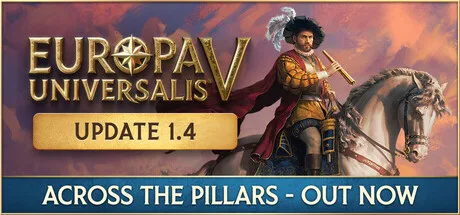
Europa Universalis V is a new historical grand strategy game developed by Paradox Tinto and published by Paradox Interactive, released November 4, 2025. It drops you into a world spanning five centuries and asks you to pursue your ambitions through war, trade or diplomacy. For first-time players the biggest barrier is not controls but how the systems interlock: population feeds the market, the market feeds the treasury, and the treasury decides how large an army you can afford.
This section splits that vast system into 24 independently readable pages, grouped into five categories: getting started, domestic, economy, military and versions. You do not need to read front to back — jump to whichever page matches where you are stuck. This hub’s job is to hand you the map first: the game’s basic facts, the time span, the version history, and what problems each page category solves.
One warning before you dive in: this entry departs sharply from its predecessor — the traditional administrative, diplomatic and military mana points are gone, replaced by a socioeconomic simulation built on population, markets, control and estates. If you are migrating from EU4, read the migration guide first; if you are entirely new, start from “Where to Start Reading” below.
Game Basics#
First, the board. Everything in this table comes from the section’s verified fact cards, with unverified items flagged explicitly — do not infer regional pricing or language counts from it.
| Item | Detail |
|---|---|
| Chinese title | 欧陆风云5 |
| English title | Europa Universalis V (full name on first use) |
| Developer | Paradox Tinto |
| Publisher | Paradox Interactive |
| Release date | November 4, 2025 |
| Platform | Windows (Steam), app ID 3450310 |
| Genre | Historical grand strategy |
| Time span | Five centuries from 1337 — late medieval into Renaissance and Age of Discovery |
| Core play | Pursue ambitions through war, trade or diplomacy across 500 years |
| Price | $59.99 (regional price unverified; not inferred) |
| Install size | About 14.1GB (first-hand fact-card data) |
| Handheld | Marked Playable on Steam |
| Launch reception | Mixed — about 66.5% positive across roughly 29,800 reviews (moving sample) |
On price and languages: the fact card states that regional pricing, regional DLC prices and premium-edition details were never first-hand confirmed, so this section omits them; earlier circulating claims about a specific language count were a mix-up with another game and are likewise banned here. Steam review figures are moving samples — cited qualitatively only, never as the sole basis for a purchase decision.
Five Centuries: 1337 to 1837#
The time scale is what separates this game from most strategy titles. You open in the late medieval period, with the Renaissance and the Age of Discovery immediately ahead — the backdrop the reviews cite for the expedition system’s design. The 500 years split into ages, and each age change alters available unit subtypes and artillery weight, so nations that fall behind in military technology pay on the battlefield.
The table lists the ages with third-party start/end years, so you can build a sense of time; the years themselves are third-party material and labeled as such.
| Age | Years (third-party) | Character |
|---|---|---|
| Tradition | 1337–1342 | Opening phase, pike-and-bow era units |
| Renaissance | 1342–1437 | Armies and institutions begin transforming, gunpowder not yet dominant |
| Discovery | 1437–1537 | Age of Sail expands, halberdiers, early arquebusiers and falconets arrive |
| Reformation | 1537–1637 | Religious and political order reorganizes, trade and colonial rivalry intensifies |
| Absolutism | 1637–1737 | Standing armies and centralized states become the norm, infantry rises |
| Revolution | 1737–1837 | The closing era — military and social structures upended again |
Time itself was reworked in 1.4: the unit moved from hours to days, improving performance across the huge span, and the base game gained a timeline system for viewing borders and key stats on any saved day. The practical effect: faster progression, but far more “days” to manage.
Version Timeline#
Knowing the version history helps you judge whether a guide still applies. Key nodes below come from the fact cards; player-count figures carry their own measurement sources, which differ between sites and must not be mixed.
| Date | Event | Note |
|---|---|---|
| November 4, 2025 | Release | Steam all-time peak 72,816 concurrent (launch-period figure) |
| December 2025 | Monthly peak 35,523 | SteamPeaks methodology |
| September 30, 2026 | DLC Across the Pillars of Hercules announced | First chronicles pack, MSRP $19.99 |
| October 28, 2026 | DLC and free update 1.4 ship the same day | 1.4 “Salado” called the largest free update yet by the official line |
| October 30, 2026 | 1.4.6 hotfix | Stability fixes right after the big update |
| November 2026 | Monthly peak about 14,000 | Third-party stats; methodology varies by site |
On “1.4 is the largest update of this generation”: that phrasing comes from media reviews and the official line — it is evaluative, not an independent measurement, and this section always writes it as “official says” or “reviews say” rather than as fact. The launch window drew criticism for startup issues, optimization, and thinner content than EU4, and the team has kept patching since — which is exactly why this section keeps mechanics pages and version pages as separate tracks.
The 24 Subpages, in Five Groups#
The tables organize all 24 subpages by category. Each group opens with what problem it solves.
Getting Started#
The landing zone: how to open, what to do in the first year, what the interface means.
| Page | Purpose |
|---|---|
| Beginners Guide: Six Things to Do in Your First Month | A six-step opening checklist, with recommended nations and a don’t-list |
| First 50 Years: Stability, Finances and Foundations | Years 1–10, 10–25 and 25–50 in stages, covering stability and finances |
| Choosing Your Starting Nation: Hungary, Castile and Portugal | Three nations’ strengths and risks compared, from the 1337 start |
| Interface and Hotkeys: From Top-Bar Values to Tabs | The ten top-bar values, function tabs and location view |
| Automation: What to Delegate and What to Keep Manual | The trade-offs of automating buildings, trade and more |
| Moving from EU4: From Mana Points to a Socioeconomic Engine | A mechanics-difference checklist for returning players |
Domestic#
The machinery of the state itself — values, cabinet, estates, laws, culture and religion: the foundation of long-term stability.
| Page | Purpose |
|---|---|
| Key Resources: Stability, Legitimacy, Prestige and Crown Power | Each key resource explained with threshold effects (third-party labeled) |
| Cabinet: Appointments and Domestic Priorities | Assigning ministers, investing stability, boosting legitimacy |
| Estates: Nobles, Clergy, Burghers and Power Balances | Four estates’ satisfaction thresholds, taxes and favor |
| Government Reforms and Laws: Values Routes and Their Costs | The stability cost of direct law changes and the parliament route |
| Culture and Religion: Revolt Roots, Assimilation and Missionaries | Three culture tiers, missionary work, integrating conquests |
| Population and Satisfaction: From Peasants to Burghers | Five population strata, literacy, needs and migration |
Economy#
Markets, trade and the building chain. This is the first series entry with dynamic inter-market goods flow — these pages are the core of understanding the economic engine.
| Page | Purpose |
|---|---|
| Market System: Centers, Attraction and Access | Market centers, attraction vs protection, access and price bands |
| Trade Guide: Advantage, Capacity and Distance Costs | Trade advantage, capacity, range, sea vs land costs |
| Economy and Buildings: From Raw Materials to Finished Goods | The full chain from inputs through buildings to markets |
Military#
From manpower to war and diplomacy — consult when expansion stalls or before a war.
| Page | Purpose |
|---|---|
| Military Basics: Levies, Standing Armies and Mercenaries | Three manpower sources compared, unlock ages, reinforcement rules |
| Combat Mechanics: Ages, Formations and Terrain | The seven-age timeline, unit evolution, battle phases |
| War Guide: War Score, Sieges and Peace Deals | Casus belli, war score sources, treaty terms |
| Diplomacy: Opinion, Trust, Favors and Coalitions | Three values, alliance betrayal, unions and expansion |
| 1.4 Military and Government Changes: War Leadership, Private Armies, Crises | The 1.4 war, estate-army and government-crisis changes |
Versions#
For players already running who want to know what changed and where the game is heading.
| Page | Purpose |
|---|---|
| Seven Ages and Tech Progress: 1337 to 1837 | The age timeline, institutions and units, 1.4’s new tech progressions |
| Exploration and Colonies: 1.4 Expeditions, Charters and Migration | Three expedition types, the global race, colonial charters |
| The 1.4 “Salado” Update at a Glance | 1.4 changes by system, plus the 1.4.6 hotfix |
| DLC Across the Pillars of Hercules: Strait Battles and a Golden Age | The DLC scenarios, featured expeditions, bureaucracy and soundtrack |
Where to Start Reading#
Different players need different first pages. Pick the line that matches your situation.
- Complete beginner: start with Beginners Guide: Six Things to Do in Your First Month to drill the opening; then Interface and Hotkeys to learn the board; then First 50 Years to lock down your base.
- EU4 veteran: jump straight to Moving from EU4 and focus on what losing mana points changes; then backfill Key Resources.
- Stuck on money and markets: read Market System and Trade Guide, falling back to Economy and Buildings when needed.
- Preparing for war or expansion: read Military Basics and War Guide, and keep 1.4 Military and Government Changes in view.
- Version watcher only: read The 1.4 “Salado” Update at a Glance, then continue into exploration-colonial or the DLC page as interest dictates.
Whichever line you take, keep the section’s fact boundary in mind: only fact-card and re-verified content is stated outright, third-party figures are always labeled, and anything without a first-hand source degrades to qualitative description. That way, on every page, you can tell “verified” from “third-party compilation” at a glance.