Spirit Orbs in BotW: Four Trade for Hearts or Stamina#
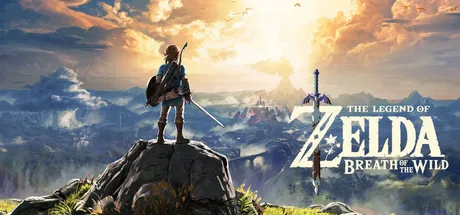
This game splits character growth into two lines that demand a repeated choice: the health cap and the stamina cap. Spirit Orbs, the payout from shrine trials, are the currency both lines share — you cannot max both at once, so every exchange forces you to decide which kind of capability your route needs first. This page settles where orbs come from, how the four-for-one rule actually works, and how the loop relates to the shrine total on the map.
The exchanges happen at goddess statues in the Temple of Time and in major towns, and the two possible results are a Heart Container, which raises the health cap, or a Stamina Vessel, which raises the stamina cap. The first decides how many hits you survive; the second acts directly on the stamina wheel shared by climbing, swimming and gliding. Understanding that trade-off beats memorizing any isolated number.
This page only writes what our fact base supports. Specific shrine names and locations, and initial values with no primary source, are not available from verifiable sources — they are described qualitatively, with no waypoint lists and no derived numbers.
1. Where Spirit Orbs come from: the shrine trial payout#
Shrines are designed as mini-dungeons: you enter a trial with clear boundaries rather than a stretch of open field. Our facts tie clearing a shrine trial directly to receiving a Spirit Orb, and note that every shrine holds at least one chest; some shrines contain neither puzzle nor enemy and hand over chest and orb directly.
| Shrine form | Trial content | Payout | Sourcing |
|---|---|---|---|
| Puzzle trial | Physics puzzles built on the Bomb, Magnesis, Stasis and Cryonis runes | Spirit Orb on clearing; at least one chest inside | Verified fact |
| Combat trial | Trial centered on a combat test | Spirit Orb on clearing | Verified fact |
| No puzzle, no enemy | Neither puzzle nor enemy present | Chest and orb taken directly | Verified fact |
| Four starting shrines | Grant the Sheikah Slate’s four runes on clearing | Bomb, Magnesis, Stasis and Cryonis | Verified fact |
| Specific shrine names and locations | Not available from verifiable sources | No waypoint list; qualitative only | Unverified list |
One nuance: the four starting shrines are documented as granting the four runes, so this page writes “clearing a trial yields a Spirit Orb” only as the general rule, and never asserts that a given shrine family pays an extra orb. The relation between the shrine total and the exchange cadence gets its own section below.
2. Four for one: the exchange rule and its two locations#
The rule itself is clean: bank four Spirit Orbs and you may make one exchange at a goddess statue — in the Temple of Time or in a major town — and each exchange takes exactly one of Heart Container or Stamina Vessel. Orbs are not loose change to spend one at a time; they are a node that triggers a choice only once four are in hand.
| Rule item | Documented wording | Practical effect |
|---|---|---|
| Exchange threshold | Four Spirit Orbs | Bank the odd ones; nothing is spent below four |
| Exchange location one | Goddess statue in the Temple of Time | Fixed node on the story route |
| Exchange location two | Goddess statues in major towns | Handy while resupplying at settlements |
| Result one | Heart Container — raises the health cap | More headroom in straight fights |
| Result two | Stamina Vessel — raises the stamina cap | Longer climbing, swimming and gliding |
| Per-exchange choice | Only one of the two | The caps trade off; pick by route |
| Exchange action | Must be initiated at a goddess statue | Four orbs do not auto-upgrade — go claim it |
Listing both locations side by side matters in practice: the Temple of Time sits on the story route, while town statues sit on the daily resupply loop, so upgrading never requires a special detour to one kind of place. Our facts give no other exchange channel, and this page adds none.
3. Hearts versus stamina: the trade-off through the stamina wheel#
The stamina wheel is the game’s core movement constraint: climbing, swimming and gliding all drain one shared wheel, and since Link can climb nearly any surface and glide from any height with no air walls, routes are limited by stamina rather than by invisible fences. A Stamina Vessel’s value is therefore not the number itself but “can I climb one more ledge, glide one more gap” — it decides which cross-terrain routes are even possible.
| Exchange direction | Raises | Linked systems | Common misread |
|---|---|---|---|
| Heart Container | Health cap | Margin against Guardians, Ganon’s creations | Thinking health helps you reach high places |
| Stamina Vessel | Stamina cap | One wheel shared by climbing, swimming, gliding | Thinking stamina only affects running |
| Alternating both | Both caps grow in turn | Free route planning with no air walls | Thinking one exchange raises both caps |
| Hearts only | Health grows alone | Fight survivability up; traversal unchanged | Thinking you can out-climb the wheel with hearts |
| Stamina only | Stamina grows alone | Long climbs and glides become relaxed | Thinking stamina replaces a health cap |
Because the wheel is one but its uses are three, leaning toward Stamina Vessels usually fits a game that rewards crossing mountains; leaning toward Heart Containers fits the run-up to the fights inside the Divine Beasts. Neither is the standard answer — our facts state only what each raises, and this page does not rank them for you.
4. How the loop relates to the 120-shrine total#
Spirit Orbs, the shrine total and the monks’ gift at the Shrine of Memories are three points on one progress axis. The map holds 120 shrines; clearing trials yields orbs; four orbs buy one upgrade; and completing all 120 shrines activates the side quest known as the monks’ gift at the Shrine of Memories. The chain turns scattered puzzle payouts into a goal with an endpoint.
| Related item | Documented wording | Writing boundary |
|---|---|---|
| Shrine total | 120 shrines across the map | Total only — no names or positions |
| Orb source | Granted for clearing shrine trials | No “each shrine gives N orbs” claims |
| Exchange cadence | Four orbs per upgrade | No derived totals of possible exchanges |
| Extra shrines | Extra content adds shrines; the count is single-source | Cited as “per a single source”; official data takes precedence |
| Full-clear activation | All 120 shrines activate the monks’ gift quest | Condition only — the reward is not documented |
One contrast is worth naming: activating the monks’ gift requires clearing every shrine that feeds the completion counter, yet the thing it activates is itself a side quest — and side quests do not feed that counter. Full-clearing shrines advances the percentage; what it unlocks does not.
5. Common misreads and this page’s boundaries#
Most confusion around Spirit Orbs comes from importing growth habits from other games. The table pairs what our facts support with what this page refuses to write.
| Claim seen around | Fact-base position | This page’s handling |
|---|---|---|
| Orbs can buy gear or materials | Only Heart Container or Stamina Vessel | No other uses written |
| Four orbs auto-upgrade you | Exchange must be initiated at a statue | Action and both locations stated |
| Shrine names and positions can be listed | Not available from verifiable sources | Qualitative description only |
| Starting hearts and stamina are settled | Not given in our facts | Left open; official data takes precedence |
| Weapon, bow and shield values are derivable | Not available from verifiable sources | No specific numbers |
Before you exchange, run this checklist so the rules do not blur:
- Do you actually hold four orbs? If not, keep clearing shrines.
- Are you standing at a goddess statue in the Temple of Time or a major town — not some other building?
- Which cap does your current route lack more: health or stamina? Decide before choosing.
- Are you mistaking the monks’ gift for another exchange location? It is a quest, not a place.
Also keep the three growth lines separate: Spirit Orb exchanges manage health and stamina; Korok Seeds handed to the Great Korok in the Lost Woods manage inventory capacity; Sheikah Towers unlock regional terrain and map information. The three are independent, and all three advance only through real exploration — growth in this game lives in the map, not in a level curve.
6. Two “shrine” names not to mix: the exchange point and the full-clear quest#
Our facts contain two names with “shrine” in them that do completely different jobs, and they are the easiest pair to blur. The Temple of Time is where four Spirit Orbs become a Heart Container or a Stamina Vessel, alongside the goddess statues in major towns. The monks’ gift at the Shrine of Memories is a side quest that activates only after all 120 shrines are cleared — a result, not a place you walk into to trade.
| Name | Nature | Trigger | Function | Sourcing |
|---|---|---|---|---|
| Temple of Time | Exchange location | Visit with four orbs banked | Heart Container or Stamina Vessel | Verified fact |
| Goddess statues in major towns | Exchange location | Visit with four orbs banked | Heart Container or Stamina Vessel | Verified fact |
| Monks’ gift at the Shrine of Memories | Side quest | Activates after all 120 shrines | Closing content after full clear; its reward is not available from verifiable sources | Verified fact |
| Generic trial buildings | Shrines | Scattered across the map | Trials yield Spirit Orbs | Terminology table and facts |
| Starting-region tutorial shrines | Special shrines | Early game | Grant the four Sheikah Slate runes | Verified fact |
| Specific shrine names and positions | Unverified content | Not available from verifiable sources | No waypoint list | Unverified list |
Terminology note: generic trial buildings are written as “shrines” throughout this section; the two proper names above are kept as documented, with no re-wording. That keeps the exchange points and the quest name from being filed as the same kind of thing.
Keep the two name-classes apart from the exchange rule and nothing blurs at the statue: standing there buys an upgrade, not the full-clear quest; and seeing that quest activate means every counted shrine is done — not that a new exchange point appeared.
Related pages in this section#
- 120 shrines — where every orb comes from.
- Stamina, climbing and gliding — what Stamina Vessels actually buy.
- Korok Seeds — the third growth line: inventory capacity.
- 100% completion counter — what the percentage counts and skips.