Breath of the Wild: Great Plateau Order of Operations#
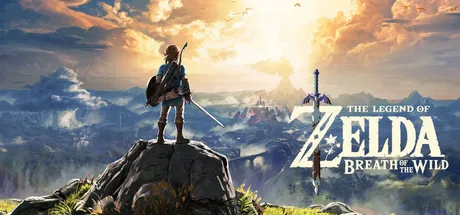
The Great Plateau is the only stretch of Breath of the Wild that holds your hand. Link wakes in the Shrine of Resurrection after a hundred-year sleep with no memory; the Plateau teaches you to move, hands you the Sheikah Slate and its four runes, and then the paraglider lets you leave — at which point the game stops ordering anything. Understanding this one zone explains why everywhere else has no sequence at all.
This page solves one question: the walkorder through the guided segment. Where our fact base has no verifiable shrine names or coordinates, we describe roles and rules rather than inventing landmarks.
The Shrine of Resurrection: your starting state#
The opening isn’t an empty map — it’s a deliberate narrative gap. Confirmed: Link wakes from century-long sleep with amnesia, and Princess Zelda sealed Calamity Ganon and herself inside Hyrule Castle with her awakened power.
| Opening element | Confirmed content | Player consequence |
|---|---|---|
| Wake location | Shrine of Resurrection | Tutorial is concentrated; no big map yet |
| Time skip | A hundred years | The world is post-Calamity Hyrule |
| Link’s state | Amnesia | The 18 memory photos are optional, never mandatory |
| The seal | Zelda sealed Ganon with herself at Hyrule Castle | The endpoint is known from minute one |
| Main goal | Calamity Ganon occupies the castle | You may legally ride for the castle the day you leave the Plateau |
A useful reading of this: the story advances by where you walk, not by what you remember. The tutorial’s real job is handing you movement and problem-solving tools, not catching you up on lore.
The Plateau: the only guided zone#
| Aspect | Great Plateau | Everywhere else |
|---|---|---|
| Order | Guided; four shrines sequence tool acquisition | Regions and dungeons freely ordered |
| Content | Grants the Slate and four runes | 120 shrines, Divine Beasts, castle — free choice |
| Exit | Paraglider from the mountaintop | Direct rush to Ganon is possible |
| Route limits | Tutorial bounds | No invisible walls; stamina decides reach |
Three graduation checks — pass all three and you’ve actually learned the Plateau, not just crossed it:
- Can you plan a climb and a glide around one stamina wheel without dying mid-wall?
- Do you treat the four runes as puzzle tools rather than weapons?
- Do you know that Sheikah Towers must be climbed to reveal terrain, and the scope marks points of interest by hand?
The four starting shrines and the runes#
Confirmed: the game’s first four shrines are special shrines that grant the Sheikah Slate’s four runes — Bomb, Magnesis, Stasis and Cryonis — used to solve physics-based shrine puzzles. The causal chain at the heart of the Plateau is exactly four shrines, four tools.
| Rune | What it enables | Common misread |
|---|---|---|
| Bomb | Breaking sealed walls, launching metal objects | Pure combat damage tool — it’s mostly a puzzle key |
| Magnesis | Moving metal at range | Combat shortcut; its real value is bridges, ramps and switches |
| Stasis | Freezing motion, accumulating force | Boss killer only; its launch-blast movement tricks unlock early traversal |
| Cryonis | Ice pillars on water | Water-crossing gimmick; it’s a portable platform economy |
The Plateau’s four shrine names and exact positions are not in our verifiable source set, so we won’t fabricate a tour list — but the sequence logic is fixed: each shrine trades one tool for one permanent traversal or puzzle verb.
After the Plateau: the order stops existing#
Once you paraglider off, nothing is gated except by your own competence: stamina decides where you can climb, food decides how long you can fight, and the four Divine Beasts can fall in any sequence. This is why our guide tree doesn’t number chapters — the only numbered walkorder in the game was the one you just finished.
What the Plateau is secretly teaching#
Every rule you learn on the Plateau is Hyrule’s full grammar, compressed into one safe zone:
| Plateau lesson | Where it pays off later |
|---|---|
| Climbing drains stamina — plan the line | Every cliff after the tower drop |
| Runes are physics, not keys | Shrines, shortcuts, chest looting |
| The pot turns gatherables into power | The heart-and-buff economy every region taxes |
| Weapons break; rotation beats hoarding | Your first camp clear outside the Plateau |
Four habits worth building before you leave:
- Sweep, don’t rush. The Plateau is the only zone designed to teach; everything after assumes you already know.
- Use every rune twice. Muscle memory earned where nothing kills you is puzzles solved everywhere else.
- Cook before you descend. The pot moment is the cheapest classroom in the game.
- Break something on purpose. Burn wood near a campfire, carry metal in a storm — the chemistry engine is safest to learn here.
Quick Answers#
Do I need all four runes to leave? You need the paraglider, which the final Plateau sequence grants; the four runes come from the four shrines along the way, and skipping shrines delays verbs you’ll need against later puzzles.
Should I fight the Guardian on the Plateau? Not with starter gear. Walking around its sightline is the intended answer; the fight becomes rational once you have ancient-adjacent gear or a shield you can afford to lose.
Hearts or stamina first on the Plateau? Stamina first, almost always. Climbing reach is the game’s core traversal skill, and every vessel pays off on the very next mountain you see.
Why do speedrunners leave the Plateau so fast? Because the zone’s tool grants are the game’s only hard tutorial gate — everything the Plateau teaches can be skipped or learned under pressure, which is exactly how rush strats exist.
Do the runes matter outside shrines? Constantly — each rune is open-world physics first and shrine key second; the Plateau shrines are just where each gets its safe tutorial.
Should I collect everything on the Plateau? Enough, not everything: its real currency is the habits above, and its apples and sticks are starter inventory, not wealth.
Does the tutorial ever repeat elsewhere? No — the Plateau is the game’s only guided zone, which is exactly why habits beat completion percentage there.
Related#
- Breath of the Wild hub — full facts table and guide tree
- Weapon durability — the mindset the Plateau can’t teach you
- Cooking system — turn Plateau apples into actual healing economy
- Tears of the Kingdom guide — the sequel’s opening does the same trick differently