Ghost of Yōtei Guide#
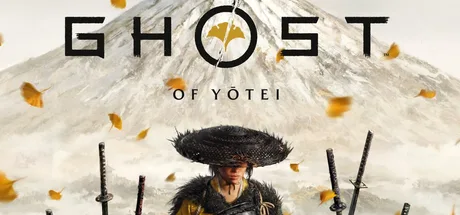
Ghost of Yōtei is Sucker Punch Productions’ standalone follow-up to Ghost of Tsushima, released on October 2, 2025 for PS5 and PS5 Pro. It is an open-world action adventure set around Mount Yōtei in Ezo (modern-day Hokkaido) in the year 1603, and it follows Atsu — a ronin and mercenary hunting the Yōtei Six under the mantle of the “Onryō”, an avenging spirit.
Platforms: PS5, PS5 Pro (launch-day enhanced) | Release date: October 2, 2025 | No PC version exists, and a March 2026 report said a deeply developed PC port was cancelled
Game Overview#
| Item | Detail |
|---|---|
| Developer | Sucker Punch Productions |
| Publisher | Sony Interactive Entertainment |
| Genre | Open-world action adventure |
| Setting | 1603, Ezo (modern Hokkaido) around Mount Yōtei |
| Protagonist | Atsu — family massacred sixteen years ago, hunted down by her father’s own blade |
| Central goal | Slay the Yōtei Six in any order you choose |
| Defining system change | The weapon-counter system fully replaces Tsushima’s stance system |
| Signature elements | Clue cards, near-unlimited open camping, shamisen-driven Guiding Wind, wolf companion, three cinematic modes |
This hub does not restate launch trivia. The whole section is organized around one structural judgement: Ghost of Yōtei swapped Tsushima’s stance system for a weapon-counter system, and once you accept that, the rest of the section — why weapons are split into their own pages, why spirit replaced resolve, why combat-defense has its own page — falls into place.
The Generational Swap: Stances Out, Weapon-Counter In#
| Aspect | Ghost of Tsushima | Ghost of Yōtei |
|---|---|---|
| Core answer to enemies | Switch stances by enemy type | Switch among five melee weapons by enemy archetype |
| How new answers arrive | Observe enemies, then rotate existing stances | Unlock a new weapon, gain a new option |
| When the choice happens | Locked in before the fight | Swapped live, mid-combat |
| Ranged weapons | Outside the stance system | Halfbow, yumi, matchlock and flintlock run alongside it |
| Signature mechanics | Stances, Resolve | Weapon counter, Spirit, disarm attacks |
The swap is a replacement, not a rename. In Tsushima you read the enemy before the fight and committed to a posture; here the decision moves into the fight itself, and its carrier becomes whatever blade is in Atsu’s hand. Unlocking a weapon is the only way to gain a counter-option — no talent points, no levels, just the weapon itself.
The swap does not discard Tsushima’s combat vocabulary. Combo attacks still require parries or blocks, unblockable attacks still require dodges, and chain assassinations return. What is new is the disarm attack: Atsu or an enemy can drop a weapon when hit, and the dropped weapon can be picked up and thrown. Which sword you are holding is itself a variable now, and combined with live switching, that is where this game’s combat rhythm comes from.
The Five Melee Weapons#
| Weapon | Role | Typical answer |
|---|---|---|
| Katana | Starting weapon, universal baseline | Standard enemy archetypes |
| Yari (spear) | Anti-guard | Shielded or armored enemies |
| Kusarigama (chain-sickle) | Control | Swarming or highly mobile enemies |
| Ōdachi | Anti-large | Oversized enemies and brutes |
| Dual katanas | Fast chains | Targets that need sustained pressure |
Atsu starts with only the katana — early on, the weapon-counter system is a single slot, not yet a web of counters. The yari, kusarigama, ōdachi and dual blades unlock through the story, and only then does live switching have anything to switch between. Ranged options run in parallel: the halfbow and yumi return, joined by the matchlock and a flintlock pistol; media previews also list kunai, bombs and smokescreen-throwing tools.
Every role above is qualitative on purpose. Upgrade-tree levels, crafting materials, armor stats and damage figures have no verified sources, so this section describes mechanics and counters instead of publishing tables of invented numbers.
Navigation, Camps and the Revenge Loop#
Ghost of Yōtei deliberately drops dense checklist-style UI guidance. In its place:
- Clue cards — obtained by interrogating enemies and civilians; each points to a hidden landmark, side quest or shrine. Target cards drive the hunt for the Yōtei Six.
- Binoculars and the Guiding Wind — mark landmarks at a distance, then let the wind point the way; playing the shamisen at camp changes the wind’s direction.
- Open camping — Atsu can camp almost anywhere on the map: restore Health and Spirit, cook for buffs, craft ammo, trade with merchants, receive allies, and pick up combat skills.
- Grappling hook from the start — unlike Tsushima’s tools, it is available in the first hour, and vertical traversal is where early progression actually lives.
- Wolf companion — summon the wolf in the field; it assists in combat and sniffs out leads.
The world splits into contrasting regions: the snowy Teshio Ridge in the north, held by the Fox and her nine-tail ninja clan, and the green Oshima Coast in the south, where the well-equipped Saito forces favor firearms. Dynamic weather — blizzards, rain, aurora, real cold pressure — pushes back on all of this. Three cinematic modes (Kurosawa, Miike, Watanabe) restyle the whole picture, alongside a full photo mode.
Versions and Multiplayer Notes#
Legends returns as the co-op mode: two-player story missions plus four-player survival waves against monstrosity-enhanced versions of the Yōtei Six. A Complete Edition exists with a content list of its own; its release date, the base game’s scores and its sales figures all circulate in more than one account, and this section lists conflicting figures side by side with their provenance rather than picking one. The reported PC port cancellation (March 2026) is recorded as a report, not an official announcement — the publisher has not issued one.
Guides in This Section#
- Beginner’s Guide — the first hour: katana-only start, first clue card, first camp, first hunt.
- The Weapon-Counter System: the stance replacement, explained rule by rule.
- The Five Melee Weapons: role, archetype and swap timing for every blade.
- Combat defense: blocks, parries, dodges (ZH source) · Spirit resource (ZH source) · Clue cards & interrogation (ZH source) · Camp system (ZH source) · Wolf companion (ZH source) · Regions and biomes (ZH source) — deeper pages currently ship in Chinese; English versions are in progress.
Quick Answers#
Is Ghost of Yōtei a sequel to Ghost of Tsushima? It shares the engine, the open-world structure and the sword-and-stealth philosophy, but it is set in a different era, a different region and follows a different protagonist. You do not need Tsushima to follow it — the two games tell standalone stories.
How many weapons are there, really? Five melee classes are the documented core, and the counter system is built around those five. Community descriptions sometimes add a ranged weapon to reach a higher count; treat that as a soft claim and see the melee weapons page for what is firm.
Do I need to pick a weapon style early? No. Weapon proficiency is separate from character level, so you can rotate classes as the counter table teaches you. Committing to one class too early is the most common new-pilot mistake.
Is it worth starting if I never played the first game? Yes — the revenge framing is self-contained, the tutorials assume nothing, and the combat is a fresh system rather than a carried-over one. Start at the beginner’s guide.
Related#
- Ghost of Tsushima Guide — the predecessor every comparison in this section leans on.
- Best Open-World Games — where Yōtei sits in our open-world rankings.
- Hardest Bosses — the Yōtei Six hold their own on this list.