Worst Class Ever Capture and Rescue Guide#
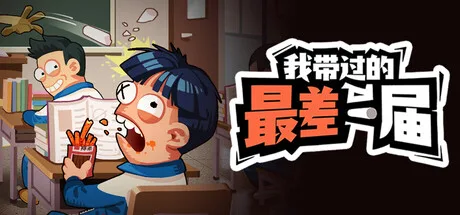
In Worst Class Ever, getting caught is not the end of a round — it is the start of a push-and-pull exchange. Cross-checked launch coverage from gaming media agrees on the sequence: a caught student gets hung on the pole for public display; teammates can pull them out while the teacher is looking away; and while the teacher is busy catching people, everyone else gets a window to complete tasks. Put those three sentences together and you have the most tense half-minute of any round.
This page stretches that into one chain: one player gets caught, the teacher’s attention gets locked, the others push tasks, and someone plans the rescue. Every link in the chain involves a trade-off — the hard part is never how to pull someone out, but whether this is the moment, and whether that window should go to the rescue or to the tasks.
The boundaries first: how long the display lasts, the rescue input, any cast time, revive rules, where exactly the poles sit, and how blind spots are calculated — none of it has official information. This page covers qualitative relationships and timing judgment only, and invents no numbers.
1. A typical exchange chain: caught, attention locked, others push, rescue on opportunity#
Lay the official description out on a timeline and the most common exchange chain of a round appears. The table below is gameplay analysis, not an official flow — none of these segments map to a fixed number of seconds.
| Chain link | What the teacher does | What the students do | The key of this link |
|---|---|---|---|
| One gets caught | Moves in, grabs, escorts to the pole | The caught player loses freedom of movement (qualitative) | Catching drains stamina — the teacher starts paying |
| Pole display | Deals with the freshly caught student | Everyone else decides whether to move | Teacher attention is pinned to one point |
| Others push tasks | Still at the pole or just turning away | Rush the snack-sneaking, note-passing, phone-scrolling windows | The window exists because attention is singular |
| Rescue on opportunity | Gaze may sweep back | A teammate uses a blind spot to pull the captive out | Pick the gap — not right after the teacher refills stamina |
Three rules that keep the chain running:
- While the teacher is busy catching someone, everyone else can claim task windows — that window is the payoff of the whole chain.
- The displayed player does not need to panic; teammates rescuing them is officially sanctioned cooperation.
- The chain usually breaks at the first two links: after one player is caught, everyone freezing in place hands the window over for free.
The full game supports up to eight players — one teacher plus seven students — and the chain scales with headcount. The 1v1 mode has no teammates and therefore no rescue, which is a special case this page does not cover.
2. The pole display: where you get hung vs blind spots, qualitatively#
The official material only says students are hung on the pole for display — no pole positions, no counts, no blind-spot math. What can be written is one qualitative relationship: the more the pole sits where the teacher naturally looks, the harder the rescue; the closer it is to cover and blind spots, the more openings appear.
| Pole position vs teacher | Vision coverage | Rescue difficulty (qualitative) | Which step pairs with it |
|---|---|---|---|
| Where the teacher can scan with a turn | Almost no blind spot | High | Wait until the teacher is pulled elsewhere |
| Inside dense desk clusters | Cover from bodies and desks | Medium | Blend into the crowd, close in, then act |
| Against walls or cover | Clear blind spots | Low | Go straight for the blind-spot rescue |
| Open areas like the playground | Open sightlines test footwork | High | Skip the hard rescue, farm task windows |
Four things worth remembering about positions and blind spots:
- Every map has different terrain, sightline gaps and hiding spots, so how easy the pole is to play varies by classroom.
- Corridors and bathrooms suit repositioning duels — looping around the teacher’s frontal vision beats a straight sprint; that is qualitative judgment, not a formula.
- In the evening study hall the teacher can sweep with a flashlight — when the beam crosses an area, its blind spot temporarily disappears.
- Specific pole spots and cover counts are unpublished; treat all of it as no official information.
This section stays at the visible-versus-hidden layer — no angles, distances or hiding-spot counts, because none of those numbers exist officially.
3. Blind-spot rescue: when to go and when to hold#
The rescue has exactly one qualitative standard: are the teacher’s gaze AND attention both off this pole? Missing either one is how you donate a second player.
| On-field signal | Vision state | Go or wait | Reason (qualitative) |
|---|---|---|---|
| Teacher is escorting someone else | Attention on the new target | Go | Single point pinned, blind spot widest |
| Teacher turned to write on the board | Gaze off the crowd | Go | Recovery stretch has the loosest vision |
| Teacher just refilled stamina and turned back | Gaze sweeping the crowd | Wait | A new patrol is starting — going now is high risk |
| Teacher raises camera or radar | Vision supplemented by gear | Wait | The blind spot just got filled by recon |
| Chalk piece in hand, aiming this way | Ranged stun ready | Wait | You may get stunned and caught again |
Three self-checks before any rescue:
- Is the teacher busy catching someone else? That is the shared precondition of both the task window and the rescue window.
- From your current spot to the pole, is there a stretch of path outside their frontal vision?
- If the rescue fails, can the rest of the team keep pushing tasks — do not stall the whole squad.
The rescue input, cast time, and whether a rescued player can move immediately — all of it has no official information. The go/wait table above is the entire deliverable; no operation details are invented here.
4. Skipping the rescue: when task windows beat a hard pull#
The most counter-intuitive truth of this mode: often the correct call is not rescuing. The few seconds of locked teacher attention are a scarce resource — spending them on a rescue or on task progress depends on which pays better.
| Situation | Cost of the hard pull | Payoff of task windows instead | Lean toward |
|---|---|---|---|
| Pole sits right under the teacher’s nose | You may donate another player | Everyone else does mischief in peace | Push tasks first |
| Round length shortened by the host | The pull burns most of the window | More prank rounds is better value | Push tasks first |
| The displayed player is the only veteran | Getting them back is valuable | Accept losing one push cycle | Rescue on opportunity |
| Teacher’s stamina empty, forced to refill | Big blind spot, low risk | The window is also growing | Rescue and push simultaneously |
Four rules for the skip decision:
- Round length is a host-adjustable parameter — the tighter the timer, the more windows should convert into task progress.
- More mischief means more exposure of real players, and the footwork spent approaching the pole is itself a layer of exposure.
- The task window that exists while the teacher is busy catching someone does not come back once missed.
- Mischief-point growth rate is also host-adjustable — the faster it grows, the more you should prioritize progress over brawling; default values have no official information.
All of the above is gameplay-analysis trade-off, not official scoring rules; task completion conditions, rewards and points all remain unpublished.
5. How the teacher breaks the chain: stamina refill, recon gear, anti-blind-spot#
Flip the camera to the teacher’s side and the same chain becomes their checklist. Students want to snowball on the fact that attention is singular; the teacher’s job is to keep that attention from being pinned by one pole.
| Teacher play | Verified fact it relies on | Which link it breaks |
|---|---|---|
| Refill at the board right after a catch | Catching drains stamina, board writing restores it | Shortens the vision gap of the recovery stretch |
| Keep a camera fixed on the pole | The teacher has dedicated recon gear | Fills the blind spot next to the pole |
| Sweep the radar over the area | The teacher has dedicated recon gear | Spots rescuers before they arrive |
| Stun from range with a chalk throw, then approach | Chalk pieces can stun students at range | Breaks the others-push-tasks link |
Three things the teacher must prevent:
- Do not empty your stamina chasing one student — at zero you cannot even patrol, and the chain snowballs longer.
- Catching the wrong NPC costs stamina AND donates a full task window — the most feared mistake on this chain.
- Recon and catching both consume attention, and students will exploit that; do not stare at the pole forever.
Whether chalk throws cost stamina, and camera/radar range and cooldowns — no official information; teacher vision size is host-adjustable and changes blind-spot size, but the settings’ values and defaults are unpublished.
6. The blanks and how to log them yourself#
The phrase “no official information” repeats through this page because those rules genuinely are not public. Here is the blank list and how to fill it with your own observations.
| Blank you want solved | How to log it yourself |
|---|---|
| How long until rescue is possible | Each round, note the relative length from display to rescue — faster or slower only, no seconds |
| How rescue actually triggers | Fix one map, then review which pole approaches worked |
| Can the rescued player move at once | Log a few rounds separately: moved immediately vs had to recover |
| Poles vs blind spots | Note per map which poles are easy pulls and which get you spotted |
Items this page deliberately leaves blank:
- Display duration, whether the display ends automatically.
- Rescue input, cast time, rescue range and failure consequences.
- Revive rules, catch limits, post-rescue state.
- Pole counts, fixed spots, cover counts and blind-spot math.
When logging, only write relative differences like “easier to pull” or “harder to pull” — never fill in numbers without a source; durations, inputs, rule tables and revive conditions all remain unpublished or unverified by this site.
Quick answers#
Q: Is getting caught the end of the round?
A: No — it starts the exchange chain. You get displayed on the pole, the teacher’s attention locks onto one point, and both your rescue and everyone else’s task windows revolve around that single fact.
Q: Can I rescue myself?
A: The verified loop is teammate rescue: teammates pull you out through the teacher’s blind spots. Self-rescue inputs and timing have no official information — log what happens in your own rounds rather than assuming.
Q: Should I always rescue?
A: No. The pole’s position decides a lot: under the teacher’s nose means a hard pull likely donates a second player, while a cover-adjacent pole is a genuine target. When in doubt, compare the rescue’s risk against the task window everyone else is enjoying.
Q: Does the rescue have a button or a timer?
A: Unpublished. The rescue input, cast time and post-rescue state all have no official information — this guide deliberately writes none.
Related reading in this section#
- Stamina and Blackboard: the resource loop between catching and teaching.
- NPC Disguise: mimicking the stiff motion and positioning of non-player students.
- Mischief Tasks: the exposure math of sneaking snacks, passing notes and scrolling phones.