Story and Lore#
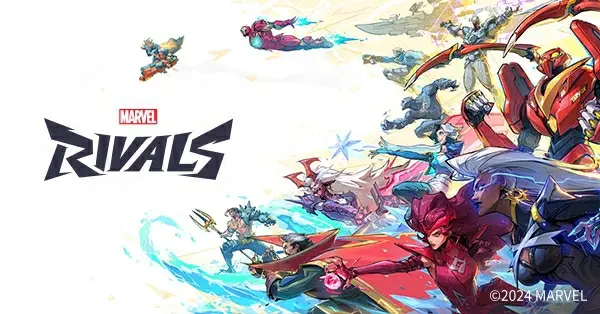
Marvel Rivals has no single-player story mode, but its universe advances season by season: each season introduces a themed chapter, and the new heroes and battle pass content all revolve around that event.
Worldbuilding Framework: Timestream Entanglement#
The starting premise of Marvel Rivals is the “Timestream Entanglement”. Timelines across the multiverse have fallen into disarray, and locations from different eras and different universes have been forcibly stitched together, putting characters who could never have met onto the same battlefield.
This premise accomplishes three things:
- It explains why the maps are mashups: Yggsgard can merge with the World Tree, and Tokyo 2099 can sit alongside traditional Japanese architecture
- It explains why the factions are scrambled: heroes and villains can share a team because the conflict itself crosses the line between good and evil
- It explains why the game keeps updating: Timestream Entanglement is a framework that can expand without limit
Settings and Factions#
Each war zone corresponds to a different sphere of influence in the Marvel universe:
| War Zone | Background |
|---|---|
| Tokyo 2099 | A future Spider-Man timeline |
| Yggsgard | The Norse realm of the gods, with the Bifrost and the World Tree |
| Intergalactic Empire of Wakanda | Wakanda’s cosmic empire form |
| Klyntar | The symbiote homeworld |
| Empire of Eternal Night | New York shrouded in eternal night |
| Hellfire Gala | Krakoa and Arakko, tied to the mutants |
| Hydra Charteris Base | The villain organization’s secret base |
Heroes’ faction affiliations mirror their comic identities: the Avengers, the X-Men, the Guardians of the Galaxy, the Fantastic Four, plus a large number of independent heroes and villains.
Season Storylines#
Seasons are how Marvel Rivals advances its story. Each season is built around one event, and the newly added heroes and battlefields all tie into it.
| Season | Theme | Story Direction |
|---|---|---|
| Season 6 | Night at the Museum | A struggle themed on museums and collecting |
| Season 7 | The Hunt Begins | Built around hunting and pursuit |
| Season 8 | Sins of Arkmaks | A high-tech testing ground run by the Arkmaks corporation |
| Season 9 | Mystery of Thebes | Themed on ancient Egypt and its mythology |
| Season 10 | The God Butcher’s Desecration | Gorr the God Butcher strikes, and the gods become the target |
Character Relationships Behind Team-Ups#
Team-up ability designs often reflect the relationships between characters in the comics — one of the details where Marvel Rivals bakes its lore into gameplay.
| Team-Up | Members | Relationship Background |
|---|---|---|
| Gamma Charge | Hulk, Black Panther, The Thing | Built around gamma radiation and empowerment |
| Planet X Pals | Groot, Rocket Raccoon, Jeff the Land Shark | The rapport between Guardians of the Galaxy members |
| Fantastic Four | Invisible Woman, Mister Fantastic, Human Torch, The Thing | Four members of the same team |
| Stars Aligned | Captain America, Winter Soldier | Longtime comrades fighting together |
| Arcane Order | Doctor Strange, Scarlet Witch, Magik | Three characters tied to magic |
| Viking Lineage | Thor, Angela | Both belong to the Asgardian pantheon |
Reading the team-up list is very nearly a tour of the Marvel character relationship map.
Environmental Storytelling on Maps#
Every map carries traces of a backstory:
- In the Yggsgard setting, Loki seized the throne and claimed the powers of the Nine Realms for himself
- Spider-Islands in Tokyo 2099 is an entire archipelago suspended in the air by the Weaver’s webs, holding the sky fracture from widening
- The Intergalactic Empire of Wakanda shows what Wakanda could become on another timeline
None of this affects gameplay, but it explains why the maps look the way they do.
What to Follow and What to Ignore#
Worth paying attention to:
- The consistency between season themes and battle pass content
- Why each new hero joins (why they arrive at this moment)
- How map settings connect to the season storyline
Not worth stressing over:
- Whether the timeline is self-consistent: a multiverse premise allows contradictions by design
- Who should be against whom: team composition in this game is not restricted by faction
- The exact order of story details: with no single-player story, everything is conveyed through seasons and costume flavor text
FAQ#
| Question | Answer |
|---|---|
| Is there a story mode | No, this is a pure PvP game |
| Is there background story to read | Yes, delivered through season themes, map settings, and character bios |
| Can heroes and villains team up | Yes, team composition is not restricted by faction |
| Does the story affect gameplay | Barely; only the season theme steers the direction of new heroes and maps |
How Season Story Connects to Gameplay#
The season story is not just packaging — it shapes what players actually get to play in several concrete ways:
| Connection Point | How It Shows Up |
|---|---|
| New heroes | Every new hero ties into that season’s event |
| New maps | Battlefield settings are drawn from where the season’s story takes place |
| Battle pass theme | Costumes and cosmetics are designed around that season’s characters and scenes |
| Event missions | Mission content often echoes the season’s story |
The Right Way to Approach the Lore#
Marvel Rivals’ universe serves the matches, not the other way around. Its premise answers “why would these characters fight each other” — it is not a storyline you need to follow.
For Marvel fans, the details worth noticing are the maps’ recreations of classic locations and the way team-ups echo character relationships; for players who only want matches, all of this can be safely ignored.