Performance Optimization and Settings Guide#
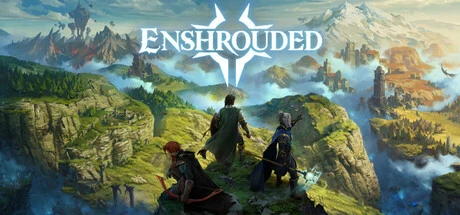
The in-house engine behind Enshrouded was polished throughout two years of early access, but treating ‘performance’ as a headline topic only begins with the 1.0 full release: the developer explicitly lists low- and mid-end PCs as optimization priorities and gives three concrete directions — improved lighting and shadow rendering, significantly increased view distance, and reduced scene loading pop-in. This page translates each official statement into ‘what you can actually see in game’, and provides preparation checklists for before and after the update plus post-launch self-check criteria. The full patch notes are not due until sometime in October, and concrete performance parameters were unpublished as of this writing, so every judgment on this page is based on ‘comparing against your own pre-update experience’ — no numbers without a source are cited.
The Official Word on 1.0 Performance#
The developer’s statements on 1.0 performance focus on four things, each of which maps to a concrete in-game scenario:
| Optimization Direction | Official Statement | What It Means in Game |
|---|---|---|
| Lighting and shadow rendering | Better visuals at more reasonable cost | Day-night cycles, torch lighting, and indoor base visuals benefit most directly in quality and frame stability |
| View distance | Significantly increased | Distant landmarks come into view earlier while gliding or scouting from high ground |
| Scene loading pop-in | Noticeably reduced | While gliding, distant mountains, buildings, and vegetation appear more coherently instead of popping in as you approach |
| Optimization priority | Low- and mid-end PCs are the explicitly named target group | Machines that previously needed drastic quality cuts to stay smooth are exactly who this round of optimization serves |
The key point: the developer gave directions, not numbers — parameters such as improvement magnitude and target frame rates are left to the full patch notes due within October. Any concrete performance figures appearing before 1.0 ships are not official.
How This Optimization Came About#
Performance optimization was not a 1.0 afterthought but information released step by step over recent months. The timeline:
| Time | Official Action |
|---|---|
| January 2026 | Announced over 5 million players at the two-year mark; cautiously promised only ‘Fall 2026’ for the 1.0 window |
| Late August 2026 | The team stated it was optimizing performance for low- and mid-end PCs and showed PS5 gameplay to media at Gamescom |
| September 23, 2026 | Released the 1.0 combat changes list on Steam, detailing combat system changes ahead of launch |
| October 2026 | Full patch notes and highlights video pending; concrete performance parameters defer to those notes |
| October 15, 2026 | 1.0 launches, leaving early access on Steam and PS5 simultaneously; Xbox Series X |
From the cautious two-year statement, to explicitly naming ’low- and mid-end PCs’ in August, to showing PS5 gameplay at Gamescom — this timeline shows performance optimization was a set goal of 1.0, not a patch plan improvised after launch.
Why This Game’s Performance Deserves Its Own Page#
Many games’ performance pages can be written as generic settings tutorials, but Enshrouded cannot — its hardware demand profile is quite unusual, and four mechanics explain why these particular optimizations matter:
- Voxel terrain changes constantly: Embervale’s ground lets you tunnel through a mountain, fill in a valley, or carve a terrace into a cliff. The engine handles not a fixed map but voxel data rewritten by players — before and after terraforming or major demolition, the load profile differs completely from most open worlds.
- Gliding makes view distance a hard requirement: Leaping off an Ancient Spire and gliding halfway across a region is the game’s core way of getting around. If distant mountains only load as you approach, the whole playstyle loses its point — 1.0 listing ‘significantly increased view distance and reduced pop-in’ as priorities targets exactly this scenario.
- A base is a small city that never stops running: Five artisans, animals, crops, beehives, and entire production lines all concentrate inside the altar’s building area, plus the complex structures of voxel builds — standing in the workshop quarter loads nothing like an empty wilderness. 1.0 also reduces NPCs and pets getting stuck inside bases — far fewer doorway pile-ups in the workshop quarter.
- Boss fights have instantaneous VFX peaks: The Fell Dragon Youngling’s meteor shower and sweeping Shroud breath, plus reinforcement waves of Fell Draconian Vultures, max out VFX density in an instant. Lighting and shadow rendering cost reductions help frame stability in such scenes the most.
For a full breakdown of the Youngling fight, see Boss bestiary (III); for planning base zones that balance function and looks, see Base building and the five-zone layout.
Before Updating to 1.0: Preparation Checklist#
Not much must be done on 1.0 launch day, but the order matters. Follow these steps to minimize update-day chaos:
- Back up saves: No official wipe has been announced and saves carry over; hosted-server owners should back up before the update per their host’s advice, and local players should copy their save before updating too.
- Unify versions: After 1.0 launches, client and server must both be version 1.0 or joining fails. Teams should agree to update on the same day; server renters should watch the host’s update announcements.
- Prepare for the skill tree reset: On login the skill tree resets automatically with all points refunded; re-invest your core survival and damage skills before leaving base — official wording: leaving without points ‘will be rough’.
- Run a baseline on first launch: Don’t rush into settings. Glide a loop from the nearest Ancient Spire, take a look back at your base’s workshop quarter, feel 1.0’s default performance first, then decide what to change.
For the full skill-tree-reset checklist, see Complete guide to 1.0 changes.
Four Post-Launch Self-Check Criteria#
The developer gave no numbers, but these four criteria need no external tools — in-game observation alone tells you whether the optimization landed:
| Criterion | How to Test | What to Look For |
|---|---|---|
| View distance | Climb to the top of an Ancient Spire, or Howling Peak, the highest point of Embervale | Whether landmark silhouettes on the horizon (snowpeak mountains, spire outlines) resolve farther away than before the update |
| Pop-in | Fly a fixed glide route (e.g. Springlands toward Revelwood) twice in each direction | Whether mountains, trees, and buildings still pop in as you approach; 1.0’s goal is to reduce exactly this |
| Lighting and shadows | Return to your base and observe once at noon and once at dusk | Whether shadow edges are clean and whether the image flickers under torches and indoor lights |
| Smoothness | Return to scenes that clearly dropped frames before (full workshop occupancy, the Youngling’s meteor phase) | Whether frame stability improved; try restoring one previously lowered quality setting and compare |
The shared premise of all four criteria is ‘compare against your own pre-update experience’: don’t benchmark against someone else’s machine, and don’t use pre-update web videos as reference — their settings, weather, and time of day are uncontrollable, so no conclusion can be drawn.
Platform and Multiplayer Facts#
Performance claims around cross-platform versions demand extra caution; here is what can be confirmed as of before the 1.0 launch:
- PS5 version: gameplay was shown to media at Gamescom, but the developer has not announced PS5 frame rate, resolution, or other concrete parameters — everything defers to the actual 1.0 build; don’t treat any demo footage as the final performance baseline.
- PS5 multiplayer limits (hosting-provider claims): PlayStation Plus is required for online play; PS5 cannot self-host dedicated servers — only rented hosting.
- No crossplay: the official community manager confirmed on October 5 that crossplay won’t be supported at the 1.0 launch, with research ongoing; hosting-provider sources say PC and PS5 players cannot join each other’s servers.
- No mod shortcut: there is no official mod support and no Steam Workshop — for performance problems there is no ‘install a community optimization patch’ fix; you depend on official updates and your own settings adjustments.
Still Unannounced as of October 14#
The following performance-relevant information was unpublished as of this writing, and this page speculates on none of it:
- Full patch notes and highlights video (officially planned for within October);
- The exact unlock hour on 1.0 day;
- Dedicated server specs and player caps;
- PS5 frame rate and resolution parameters.
Once the full notes publish, this page will re-verify and complete these against official data.
Quick FAQ#
| Question | Answer |
|---|---|
| Can 1.0 save a machine that struggled in early access | Low- and mid-end PCs are the explicitly named 1.0 optimization priority, but no concrete improvement figures were given — judge by your own hands-on experience |
| What is the authoritative source for performance details | The full patch notes and highlights video the developer plans to release within October |
| Do servers need a restart or wipe | No official wipe was announced and saves carry over; simply self-backup before the update per your host’s advice |
| Do existing players pay again for 1.0 | No — the 1.0 update is free for existing players; copies bought during early access convert to the full version automatically |
Further Reading#
- Complete guide to 1.0 changes — where performance optimization sits among all 1.0 changes
- Two years of early access — timeline background and version context for the optimization work
- Boss bestiary (III): Halls and Summits — breakdowns of high-VFX-density fights like the Youngling
- Base building and the five-zone layout — planning ideas for workshop quarters and base load
- Game overview and world lore — overview of the Ancient Spires and the seven regions