Game Overview and World Lore#
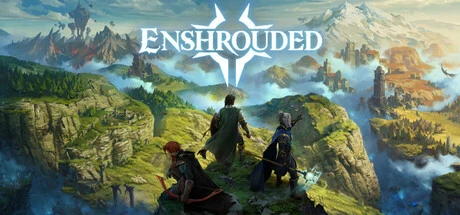
The story of Enshrouded takes place on the continent of Embervale. This is a land that once flourished but is now largely swallowed by a purple mist called the Shroud: twisted monsters lurk within it, and mortals who linger too long are slowly corrupted. You play as a Flameborn, awakening on a highland in the Springlands, rebuilding civilization from a Flame Altar as your point of origin and pushing onward into the mist-corrupted distance. Understanding the continent’s geography and faction structure is the prerequisite for planning exploration routes and base sites.
World Background and the Throughline of the Story#
| Element | Details |
|---|---|
| Setting | The continent of Embervale, split by the Shroud into regions of varying altitude and ecology |
| Player identity | A Flameborn, relying on Flame Altars to establish bases and fast travel |
| Core threat | The Shroud itself, plus hostile factions such as the Fell that dwell within it |
| Progression method | Rescue artisans, strengthen the Flame, and defeat bosses region by region |
| Capital | Pikemead’s Reach, the capital in the Revelwood region |
| Key landmarks | 5 Ancient Spires across the map, serving as fast travel points |
The keyword of the main story is ‘reclamation’. The Shroud is not a mere natural disaster: clues pieced together from the backstory of the Hollow Halls dungeon show that it sealed away the tragedy of King Gormander’s era, where the cursed were cast into the dungeon and became Hollow Cyclops-like beings; the Fell Monstrosity of the Nomad Highlands, meanwhile, was created by the alchemist Ikora experimenting on Shroud Spores with the Black Cauldron. In other words, behind the mist and the monsters lies a chain of man-made calamities, and every boss you defeat corresponds to a chapter of the continent’s fall.
The fate of the capital, Pikemead’s Reach, is the most representative sample of this downfall. Once the seat of royal power in Revelwood, it is now the destination of the mid-game main quest — the quest ‘Reach The Capital, Pikemead’s Reach’ leads players to the capital, while the Fell Wispwyvern perched atop The Pike guards its gateway. The capital has fallen, the spires lie dusty, and bosses occupy the landmarks of old: every landmark in Embervale repeats the same sentence — the order of the old civilization is dead, and the Flameborn’s task is not to repair it but to relight the flame upon its ruins.
Overview of the Seven Regions#
The regions of Embervale are arranged roughly in ascending altitude and danger, and players usually progress in this order:
| Region | Role | Key Content |
|---|---|---|
| Springlands | Beginner zone | Recommended site for your first base; abundant resources, lowest Shroud pressure |
| Low Meadows | Transition zone | Home of the Vukah arena and Ceremony Hill |
| Revelwood | Mid-game zone | The capital Pikemead’s Reach and the boss atop The Pike |
| Nomad Highlands | Late-mid zone | The Cradle of Dusk and the Fell Monstrosity; recommended late-game hub |
| Kindlewastes | Desert zone | Five boss spawn points including the Haunted Sun Temple |
| Albaneve Summits | High-mountain zone | Five Cyclops lairs, frozen Elixir Wells, and Howling Peak, the highest point in Embervale |
| Veilwater Basin | Late-game zone | A late-game area mentioned in boss guides and region descriptions |
The progression order of the regions also maps to the migration route of your bases. The community’s three-step consensus: place the first main base in the Springlands to enjoy low risk and abundant resources; in the mid-game, set up a satellite altar in Revelwood to cover central commuting; in the late game, move the central hub to the Nomad Highlands and radiate toward the desert and the snowy peaks. For the detailed logic of site selection (high ground outside the Shroud line, avoiding open valleys, staying near glide paths), see Base location guide.
The 1.0 full release will also add an entirely new biome. As of early October 2026 the developer has not announced its name or location; this site will verify and complete the information once the full release is out — until then, any claim that ’the new biome is in such-and-such direction’ is unreliable and should not be trusted.
The Five Ancient Spires#
The Ancient Spires are the most important fast travel network on Embervale. There are 5 on the map, and climbing a spire also lets you survey the surrounding terrain — a natural lookout for route planning and finding POIs.
| Spire Value | Details |
|---|---|
| Fast travel | Teleport between Flame Altars and spires, dramatically shortening cross-region commutes |
| Route anchor | Explore outward from a spire as your center; when lost, return to the spire first |
| Visual advantage | From the top you can survey the Shroud boundary and landmarks, aiding site selection |
Spire and altar form a two-layer network, one official and one player-made: spires are fixed nodes preset on the map, permanently usable once unlocked by climbing; altars are mobile nodes laid by players, buildable for 5 stones and indestructible, with building areas immune to Shroud erosion (community sources say the active altar cap is tied to flame level). The standard rhythm of exploration follows from this — in a new region, climb the spire first to seize the high-ground view, then place an altar outside the Shroud line, and use these two footholds as a springboard into the Shroud to clear Elixir Wells and pull Shroud Roots. For the full altar-side mechanics (building area size, Shroud Core upgrades, Strengthen the Flame), see The Flame Altar system explained.
Hostile Factions at a Glance#
| Faction | Traits | Representative Enemies |
|---|---|---|
| Fell | Native twisted creatures of the Shroud, highly aggressive | Fell Thunderbrute, Wispwyvern, Monstrosity, Sicklescythe, various Cyclops |
| Scavenger | Organized humanoid raiders | The Scavenger Matron and her Gorger and Grizzler variants |
| Vukah | A tribe devoted to martial prowess | The Vukah Brawler, garrisoning arena-like sites |
| Hollow | Former residents corrupted by the curse | The Hollow Cyclops, warden of the Hollow Halls dungeon |
In the 1.0 full release, every hostile faction gains new variants, some of them heavy or elite grade. This means the old ‘memorize the spawn table’ experience will partially expire in the new version — familiar areas may spawn strengthened enemies you’ve never seen, so leave more preparation margin before entering the Shroud than in early access.
Details worth noting per faction, useful when planning builds and routes:
| Faction | Notable Details |
|---|---|
| Fell | Thunderbrutes specialize in guarding Elixir Wells and Shroud Roots, spawning from the Springlands all the way to Kindlewastes — the first mini-boss-tier enemy players encounter |
| Scavenger | The Matron has two variants with divided roles: the Gorger spews toxins, the Grizzler summons reinforcements |
| Vukah | Brawlers are weak to fire and garrison arena-like sites such as Ceremony Hill in the Low Meadows — a good early yardstick for fire-based damage |
| Hollow | The warden at the deepest level of the dungeon is the Hollow Cyclops; the entire Hollow Halls is the ‘sediment layer’ left by the king’s curse |
Weakness information deserves a separate note: Vukah Brawlers are weak to fire, and the Cyclops of the Albaneve Summits are weak to both fire and Shroud — fire weapons and spells have clear payoff both against Vukah early on and in the snowpeak caves later, so build around this thread when gearing up.
Timeline: What Has Happened to This World#
From official and community sources, the timeline can be outlined as follows:
- Era of prosperity: Embervale was ruled by human monarchy; the capital Pikemead’s Reach flourished, and alchemical and necromantic research advanced side by side.
- The cataclysm: The Black Cauldron experiments epitomized runaway Shroud Spore research — the alchemist Ikora created beings like the Fell Monstrosity, while the curse of King Gormander’s era cast a group of residents into the dungeon, turning them Hollow.
- The Shroud locks the continent: The Shroud spread, swallowing the lowlands and the wilds; the Springlands where players awaken became one of the few footholds still carrying the flame’s breath.
- The flame rekindles: The Flameborn awaken, rebuild the transport network on the skeleton of the five Ancient Spires, pull up Shroud Roots and defeat bosses region by region, reclaiming the continent from the mist piece by piece.
The World’s Next Chapter: What 1.0 Brings#
This timeline has not frozen. The 1.0 full release of October 15, 2026 (leaving early access on Steam and PS5 simultaneously; Xbox Series X|S planned for Spring 2027) will write a new chapter for Embervale. Three items bear directly on the world:
- New biome: An entirely new biome whose name and location the developer has not yet announced — the map of seven regions will be rewritten; the region table on this page will be updated once the full release ships.
- Level and gear caps: The player level cap rises from 45 to 50 and the gear cap to 55, reserving a new growth curve for endgame exploration.
- Faction variants arrive: The all-faction new variants mentioned in the faction overview officially enter the world, and the threat gradient of old regions will be reshuffled.
In other words, this page describes Embervale on the eve of 1.0: the skeleton — regions, spires, factions, timeline — will not change, but the flesh will keep growing after October 15. For the full change list, see Complete guide to 1.0 changes.
Three Design Logics the Lore Imposes on Gameplay#
- Altitude is difficulty: Regions progress roughly by altitude and latitude — lowlands are gentle, high mountains and deserts lethal. Site selection, glide paths, and logistics should all be planned along this gradient.
- The Shroud is a living level: The Shroud is not scenery but a mechanic zone with timed damage. Elixir Wells and Shroud Roots both grow inside it, forcing players to repeatedly enter timed areas — this is the game’s most distinctive loop.
- Bosses are keys: The skull of nearly every major boss is the upgrade material for a specific Flame Altar level; combat progression and base-building progression are bound together — no boss killed, no next tier of base.
Quick Glossary of Key Terms#
New players easily get lost among place names and terms; here are the high-frequency terms from the body text, collected in one place:
| Term | Meaning |
|---|---|
| Embervale | The continent where the story unfolds; all seven regions and five spires sit on this map |
| Shroud | The purple mist engulfing the continent; activity inside is limited by timed damage — the game’s core threat |
| Flameborn | The player’s identity, rebuilding civilization with the flame as the source of power |
| Flame Altar | Base foundation and fast travel anchor; built from 5 stones and indestructible |
| Ancient Spires | 5 official fast travel points across the map; climbing one surveys the surrounding terrain |
| Pikemead’s Reach | The human capital in Revelwood, destination of the mid-game main quest |
| Elixir Wells | Key sites inside the Shroud; alongside Shroud Roots, a source of Shroud Cores |
| Shroud Roots | Key sites rooted in the Shroud; uprooting them is a core step of the Shroud loop |
| Black Cauldron | The device the alchemist Ikora used to experiment on Shroud Spores; the Fell Monstrosity was born from it |
| Hollow Halls | The dungeon sealing the curse of King Gormander’s era, guarded by the Hollow Cyclops |
| Cradle of Dusk | The lair of the Fell Monstrosity in the Nomad Highlands |
| Haunted Sun Temple | One of the spawn points of the Sicklescythe in Kindlewastes |
| Howling Peak | The highest point of Embervale, home of the Youngling’s lair |
The mechanical details in the table (Shroud Core uses, building area sizes, the offering directions of Strengthen the Flame) are fully expanded in The Flame Altar system explained; for which region your base should sit in, see Base location guide.
Suggested Next Reads#
- Ready to start: go straight to Beginner’s guide and opening flow.
- Want each region’s resources and danger points: start with Springlands and Low Meadows and read the region pages in order.
- Tracking the version cadence: Two years of early access lays out the full timeline from launch to 1.0.
- Want the core progression mechanic: The Flame Altar system explained explains the Shroud Core, building area, and boss skull upgrade chain.
- Preparing for the October 15 full release: Complete guide to 1.0 changes breaks down every announced change by system.