Tears of the Kingdom — Weapon Durability Management#
Tears of the Kingdom keeps its predecessor’s durability rule: weapons, shields and bows wear down and shatter. It is the game’s most contested system — fans call it an elegant loop that forces constant experimentation, critics call it favorite-weapon syndrome with a health bar. This page takes neither side. It gives management strategy: make durability work for you instead of against you.
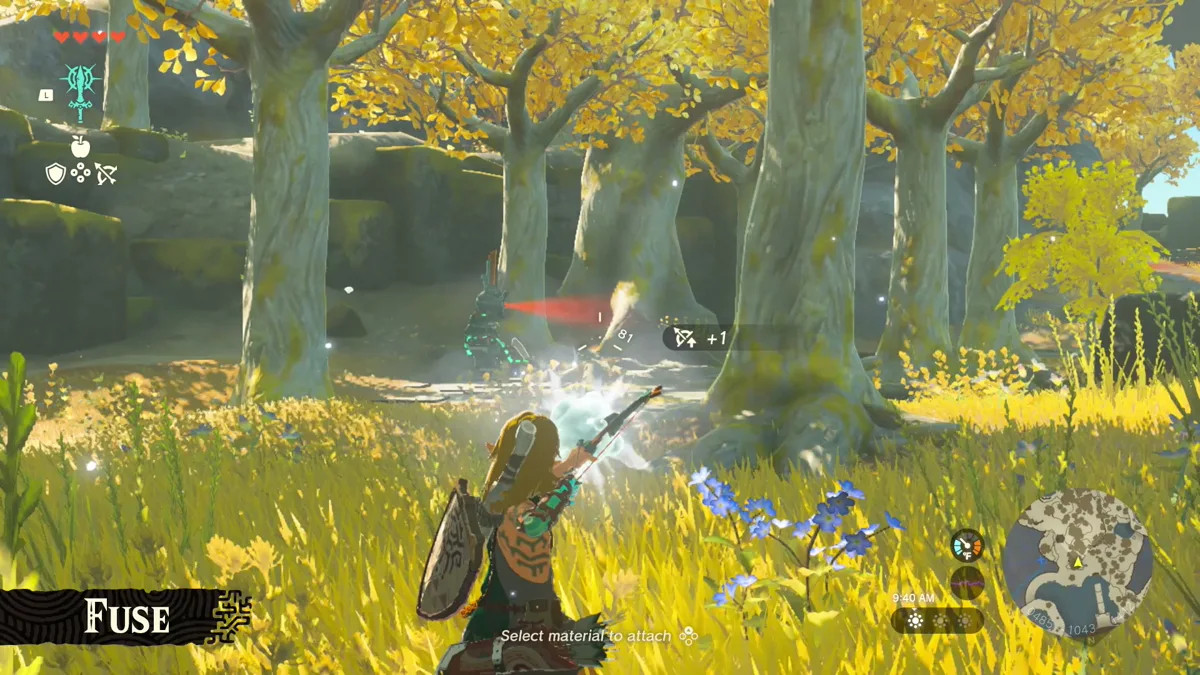
The Design Logic First#
Durability means equipment in this game is not an asset — it is ammunition. Every weapon is walking toward its own death from the moment you pick it up, and your inventory is really a magazine that must keep being fed.
Two corollaries follow, and every technique below stands on them:
- Gear’s value is in use, not in keeping. A weapon you are afraid to spend loses durability to your hesitation anyway — it never appreciates. Meanwhile it could have bought you an easier fight.
- The core skill is circulation speed. Supply is constant — drops, chests, pickups. The goal is not owning the strongest gear but keeping the break → replenish → break loop turning.
If hesitation is your default, no table of techniques will help; if circulation is your default, everything else is optimization.

Weapons: The Main Consumable#
- Allocate by encounter value. Trash-mob fights get adequate weapons; dangerous fights get gear in good condition. The allocation rule is one question: is what this fight pays worth what this weapon will burn?
- Check after every fight. One glance at weapon condition when the last enemy drops. Near-broken weapons either finish this fight and get swapped, or get swapped now — never “later”.
- Make them break somewhere that matters. A weapon’s final points of durability should die on a worthwhile target, not on your fortieth Bokoblin.
The allocation question is the whole game of durability. Players who “run out of good weapons at the boss” did not have a scarcity problem — they spent high-value durability on low-value encounters for thirty hours and felt it at the checkpoint.
Shields: Defensive Consumables#
Shield wear comes from blocking and absorbing hits, so the rules are short:
- Against high-frequency attackers, dodge beats block. A perfect dodge costs zero shield durability; a successful block still chips it.
- A shattered shield is not an emergency. It is the same consumable as a sword, and the supply loop will replace it. Panic-saving a shield is panic-losing a fight.
If you find yourself eating hits to “save the shield”, the system has flipped from tool to tax — the correct fix is more dodging, not better inventory management.
Bows: Restrained Ranged Spend#
Bows wear per shot, which makes them the most silent drain in the game — one careless volley against cheap enemies can cost more durability than a whole sword fight. The discipline: open with bows for openings and precision (heads, weak points, distant objectives), not as a default attack. A bow held in reserve until it actually matters outlasts a bow used as a crossbow would-be.
The Three-Line Loop#
| Line | Wear source | The one habit |
|---|---|---|
| Weapons | Every hit dealt | Allocate by encounter value |
| Shields | Blocks and absorbed hits | Dodge high-frequency attacks |
| Bows | Every shot fired | Save them for real openings |
The loop view is what separates managing durability from suffering it: three consumable lines, constant supply, one question per encounter. The combat resource guide (ZH) extends the same logic to fight-or-skip decisions and retreat lines; the resource economy page (ZH) shows how durability interacts with shrine and Korok growth.
A Note for Returning Players#
Breath of the Wild veterans already know all of this — and half of them still play the same way. The change worth updating: Tears of the Kingdom’s fusion economy (Fuse) makes “spent” weapons recyclable material rather than pure loss, which strengthens the spend-it argument further. Gear is ammunition; now the casings reload into new guns.
The Fuse Layer on Top of Durability#
Fusion changes the durability math in two directions at once, and both matter more than any single weapon’s number.
Fusing spends a material, not durability. Stick a monster part or a rock onto a weapon and the weapon’s own break-clock is untouched — you pay in materials gathered from the same loop that drops weapons. Fusion is the economy’s pressure valve: broken weapons and dead plants feed one inventory.
Fused weapons keep the same clock. A fused weapon does not live longer; the material dies with the weapon. So don’t treat fusion as an upgrade for a favorite in storage — treat it as a tax paid on the weapon you are currently spending.
The practical rule falls out of those two facts: fuse freely, save nothing. Materials farm back at the same rate weapons do, and hoarding fuses only moves the pain around. The loop drawn below — spend weapons, bank materials, fuse, repeat — runs better the less you save from it.
What Durability Is For#
The design answer, stated once: durability exists to rotate the arsenal. An inventory that never loses items is an inventory where one or two weapons ever matter. Breaking is the mechanic that keeps everything you pick up in play — including the bad ones, which become fuse fuel and emergencies. Read that way, every break is the economy working, and a broken favorite hands its materials back with interest.
Quick Answers#
Should I stop hoarding my best weapons? Yes. Hoarding is the single most common mistake this guide exists to fix: a broken weapon was spent, but a hoarded weapon that never leaves the inventory is the same zero, just prettier.
What about the Master Sword — is it really different? Its durability works on recharge rules rather than break-on-use rules, which is exactly why it can serve as your default weapon while everything else is treated as consumable.
What is the best source of disposable weapons? Constructed weapons — fused material onto base stock — plus enemy camps as renewable farms. The loop in the three-line section above keeps the pipeline full without mining rare weapons for trash fights.
Does fusing waste the material? No. Materials are the abundant resource; weapons are the scarce one. Spending a rare material on a doomed sword is still net-positive when the fusion makes the difference between winning and retreating.
Do golden enemies really drop better weapons? Enemy weapon drops scale with enemy strength, which is why deeper regions and stronger camps produce the arsenal’s top end — the farm advice follows from that scaling, not from folklore.
Is there any reason to keep a weapon at low durability? Only sentimental. Break-clock weapons have no repair economy — once the clock runs, the remaining durability is already spent, so finish spending it rather than storing a countdown.
Should I avoid strong weapons to save them? Inverting the question: what does the strong weapon enable that you’re currently paying extra for? Every tough fight survived with a mediocre weapon is a break you didn’t need to schedule.
Does the durability system get gentler later? Late-game fusion materials and enemy-drop scaling effectively lower the cost per fight — the same arsenal cycles faster. The anxiety that starts the game is quietly priced out by the game’s own economy.
Related#
- Beginner roadmap — where the durability habits slot into the first hours.
- Shrines and blessing lights — what the fights are for.
- Section hub — systems map and reading paths.