BotW Sheikah Towers: Map Unlocking and Binocular Marks#
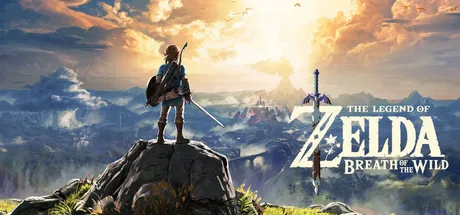
The map of Breath of the Wild is not handed to you spread open. Each region’s terrain unlocks piece by piece as you climb that region’s Sheikah Tower, and once you stand on top you can mark shrines, rock formations and other points of interest by hand through binoculars. This page lays out what opening the map actually unlocks, what the marks can flag, and how the whole thing interlocks with the stamina wheel, the paraglider and the completion-percentage rules.
Climbing a tower is itself a climb, and it spends stamina; from the summit you leave by paraglider. So map-opening, stamina upgrades, bottles of stamina and route planning are several faces of one activity, not a standalone “light up the map” button. Our facts also state the game has no invisible walls: nearly any surface can be climbed.
One boundary to set before anything else: opening the map and main-story progress are separate. Apart from the Great Plateau’s tutorial, regions and dungeons have no fixed exploration order, and which map you open first never restricts the non-linear main line. The number of towers and their individual locations are not available from verifiable sources, so this page lists no location checklist — only the rules and their edges.
1. Climbing a Sheikah Tower unlocks that region’s terrain#
How our facts describe a Sheikah Tower is “unlocks the region’s terrain”. The emphasis is terrain, not a quest list. Each tower you summit turns that region’s geography from blank into something recognizable, and that is the most basic act of map-opening.
| Element | Wording per facts | Practical effect | Writing boundary |
|---|---|---|---|
| How it unlocks | Climb the Sheikah Towers across the regions | Each summit spreads out that region’s terrain | No individual tower locations |
| What unlocks | That region’s terrain | The map turns from blank into readable geography | Not quests or story beats |
| The climb itself | A climb, bound by the stamina wheel | Tower height directly tests your stamina cap | No specific tower heights |
| Distribution | Sheikah Towers exist in every region | Map-opening advances region by region | No total count or positions |
| Location list | Not available from verifiable sources | Nothing listed item by item | Unverified in our facts |
Holding this line keeps map-opening from being written as “accepting quests” or “pushing the plot”. Our facts give neither a tower count nor a single tower’s position, so this page stays at the layer of “the Sheikah Towers of each region”. The climbing act itself is governed by the stamina wheel, which the next sections tie together with the paraglider.
2. Binocular marks: shrines, rock formations and other points of interest#
There is a second step after summiting: marking by hand through binoculars. The examples our facts give are shrines and rock formations, with “and other points of interest” covering the rest — which means the marking scope is the player’s own choice, not a system auto-filling the map.
| Markable object | Wording per facts | Purpose | What it must not become |
|---|---|---|---|
| Shrines | Markable by hand via binoculars after climbing | Records trial locations on the map | Not “all marked automatically” |
| Rock formations | A point of interest listed beside shrines | Flags visible terrain for the return trip | Not “Korok Seeds get marked” |
| Other points of interest | Covered by the word “other” | The player decides manually what to mark | No invented category list |
| Korok Seeds | Hidden under rocks, in rivers, in mini-puzzles | Not listed as binocular targets | Not “seeds can be flagged” |
| The marking act | Manual marking | An active record, not an auto-filled map | Not “automatic map-opening” |
The single most important “must not” here: our facts write the binocular targets as shrines, rock formations and such points of interest, and never say it can flag Korok Seeds. The nine hundred seeds hide inside the environment and must be found by their concealment patterns; treating binocular marks as a seed-finding shortcut is an easy way to go wrong. The word “manual” also has to stay in the text — you decide what to record; summiting does not fill the map for you.
3. Stamina wheel and paraglider: the climb itself costs stamina#
Treating map-opening as “one click on a menu” is the biggest misconception. Our facts state the stamina wheel governs climbing, swimming and gliding; Link can climb nearly any surface and glide from heights with the paraglider, with no invisible walls restricting routes. A tower climb hits all three at once.
| Linked system | Wording per facts | Relation to map-opening | Common misread |
|---|---|---|---|
| Stamina wheel | Governs climbing, swimming and gliding | The tower climb spends that same stamina | “Towers ignore stamina” |
| Climb freedom | Nearly any surface; no invisible-wall routes | Many ways up and around each tower | “Only fixed handholds exist” |
| Paraglider | Glide down from heights | Your exit from the summit, chaining into the next tower | “Gliding is stamina-free” |
| Stamina vessels | Traded for four Spirit Orbs; raise the stamina cap | Decide how high you climb, how far you glide | “Map-opening is just menu work” |
| Spirit Orbs | Earned from shrine trials | Shrine progress and map ability feed each other | “The two lines are unrelated” |
Read as one chain, this is the full ledger of a single tower run: the climb draws on the stamina wheel; the cap rises through stamina vessels traded four Spirit Orbs at a time; the exit is a paraglider launch from the top, on the way to the next tower or shrine. Our facts state gliding is equally bound by the stamina wheel and that routes face no invisible walls — so your map-opening ability is part of character growth, not a one-time switch in the interface.
4. Map-opening and the counter: how discovered place names count#
The place names your map-opening lights up fall into exactly one category of the completion rules. Per a guide compiled by an overseas Nintendo-focused strategy site, the counter tallies only the four Divine Beasts, all discoverable place names (towers included), all shrines and all nine hundred Korok Seeds. Below, each map-opening act is paired with the counted item it feeds and the neighboring things that do not count.
| Map-opening act | Item it feeds | Source of the rule | Neighboring, not counted |
|---|---|---|---|
| Climb a Sheikah Tower to unlock terrain | Discoverable place names (towers included) | Per the overseas strategy guide; secondary material | The binocular marks themselves |
| Set foot in and light a place name | Discoverable place names | Same; in-game display takes precedence | Side quests |
| Clear a shrine trial | All shrines | Same | Spirit Orb trades |
| Find and hand in Korok Seeds | All 900 Korok Seeds | Same | The Great Korok’s pouch upgrades |
| Finish the four Divine Beasts | The four Divine Beasts | Same | The Blight Ganons inside them |
This rule set is secondary material, not an official verdict — judge against what the game itself displays. The point: lighting place names counts, while binocular marks, Spirit Orb trades and pouch upgrades score nothing on their own. Map-spreading is one input to the counter, not everything it counts. Side quests, album photos and Expansion Pass content are excluded the same way; no amount of tower-climbing substitutes for them.
5. Opening order and the non-linear main line#
Since towers must be climbed one at a time, players naturally ask whether opening one region first locks the main story. Our facts answer: no — and quite explicitly.
| Common worry | Wording per facts | Conclusion |
|---|---|---|
| Opening region X first locks the plot | Apart from the Great Plateau tutorial, regions and dungeons have no fixed order | Map order never restricts the main line |
| No map, no story progress | After leaving the Plateau you can head straight for Hyrule Castle to challenge Calamity Ganon | Map-opening is not a story prerequisite |
| Towers must be climbed in some order | Facts only say each region’s towers unlock that region’s terrain | The order is yours |
| Full map equals 100% | Discoverable place names are one of four counted categories | Map-opening is not completion |
| A fixed optimal route | Not available from verifiable sources | No scripted route written |
Our facts describe this entry as the series’ first fully open world: apart from the Great Plateau’s tutorial, regions and dungeons have no fixed exploration order, and after leaving the Plateau you can ride straight to Hyrule Castle and challenge Calamity Ganon. Map-opening therefore only spreads terrain and lights names — it is neither a ticket to the main story nor a route you must follow. Which tower you climb first mostly depends on whether your stamina wheel can survive that climb at the time, not on whether the plot permits it.
6. Writing boundaries and a checklist#
The easiest place for this page to overstep is turning “explain the rules” into “list the locations”. Our facts have no verifiable source for individual tower positions, tower counts or climbing numbers, so those places stay qualitative and say so outright.
| Not written | Reason | What this page writes instead |
|---|---|---|
| Individual tower locations and count | Not available from verifiable sources | The regional towers and the unlock rule |
| Tower heights and climbing numbers | Not available from verifiable sources | “Bound by the stamina wheel” |
| Every binocular category | Facts only give shrines, rock formations, etc. | Only the examples and the word “manual” |
| A fixed opening route | Not given in the facts | Order never gates the main line |
| Percentage weight per category | Not available from verifiable sources | No weight figures |
| Cooking recipes and weapon numbers | Not available from verifiable sources | Not touched, not backfilled |
When you actually open the map, check yourself against these lines and spend effort on the rules:
- To judge whether a region is opened, look at whether its terrain spread out — never treat a binocular mark as map-opening.
- Check the stamina wheel before a tower; if it falls short, trade Spirit Orbs for a stamina vessel at a goddess statue first.
- Mark only obvious points of interest like shrines and rock formations; Korok Seeds still come from the under-rocks and in-rivers patterns.
- To raise completion, count the four categories item by item — do not fold map-opening or marking into them.
- Never treat opening order as a story gate; the facts give no fixed route, the order is yours.
Hold these boundaries and what remains on this page is all mechanics unique to this game: region terrain unlocked by climbing, manual binocular marks after the summit, a tower-climb cost interlocked with the stamina wheel and paraglider, and a completion rule that counts discoverable place names while excluding side quests. Together they make map-opening free — and still not the same as finishing the game.