The Genes of Horror Games: From Haunted House to Psychological Thriller#

Horror is a strange genre: its core metric is “how scared do players get”, and fear can neither be demoed nor measured — which is why so many games understand horror as “monster lunges into frame plus loud audio sting”. Jump scares do work, but they only govern the most primitive one-second reaction. What actually keeps players awake at night is usually a completely different mechanism at work.
This feature splits the fear sources of horror games into three “genes” — resource fear, information fear, loss-of-control fear — and seats the horror guide hubs on this site against them, to show how the genre grew over thirty years from haunted-house roller coaster into psychological-thriller theater.
Gene one: resource fear — “I don’t have enough ammo”#
The oldest horror gene, inherited directly from the survival-horror bloodline. The principle is simple: when the player’s resources — ammo, herbs, a grid-limited inventory — are tuned to “always a little short”, the threat does not need to appear. The player manufactures the fear alone. You are not scared when the doorbell rings, because you know there is nothing outside; you are scared of the door at the end of the corridor, because you don’t know what is behind it and you have three bullets left.
- Resident Evil 2 Remake is the modern textbook: resource drops are precisely computed, every encounter spends from your safety margin, and the flutter of panic after a fight is not given by the monster — it is given by the ammo counter.
- Resident Evil 4 Remake shows the gene’s other face: it hands out resources more generously than RE2, and fear shifts to siege pressure — ample ammo, endless enemies — proving one gene yields two sensations by changing resource tempo alone.
- Resident Evil Village pushes the tempo further toward action: fear concentration down, power fantasy up. That trade itself is an evolutionary record of resource fear being diluted, clearest when you watch the three games back to back.
- Dead Space builds resource fear into the weapon system: every gun is a converted mining tool, and strategic dismemberment demands cold aim in scenes deliberately designed not to let you cool down.
The gene’s weakness is equally obvious: it is defenseless against memorization. Once players learn the resource layout and enemy positions, tension falls off a cliff — one reason the whole survival-horror category declined and later revived through remakes and narrative reinvention.

Gene two: information fear — “I don’t know what is happening”#
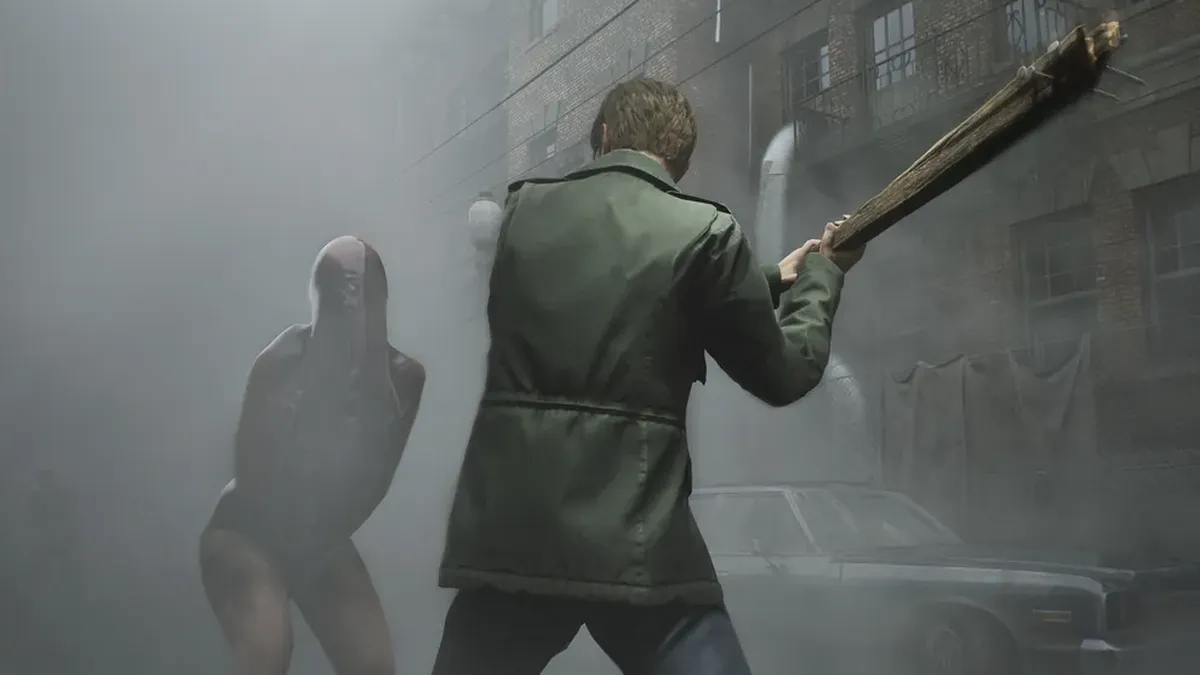
The second gene never touches your resources; it attacks your cognition: when the game refuses to tell you what the enemy is, what the rules are, whether you are currently safe, your brain renders the worst-case version itself. Silent Hill found this switch thirty years ago — the fog in the original was a mask for hardware that could not draw the distance, and “being unable to see” became the genre’s most successful horror design ever.
- Silent Hill 2 Remake is this gene’s most complete sample in the 2024–2026 cycle. It explains almost nothing: radio static, empty apartments, stairs that recur — atmosphere alone makes players assemble the story’s shape. Our guide hub analyzes each ending’s symbolism.
- The Last of Us Part I and The Last of Us Part II represent narrative-driven information fear: the infected’s rules are stated plainly; what actually holds your nerves is uncertainty at the story layer — the indeterminacy of characters’ fates outlasts any jump scare.
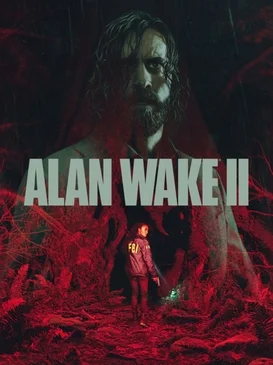
- Alan Wake 2 makes information fear the structure itself: player and protagonist are trapped together in a Dark Place whose narrative logic is self-consistent yet unpredicatable; solving puzzles is “figuring out this place’s rules”, and every step before understanding lands on uncertainty.
- Control is a close relative: strictly an action-adventure, but the Oldest House’s aesthetic of anomalies described in cool bureaucratic documents — and therefore increasingly wrong — is a high-grade variant of information fear.
Games on this gene face a standing contradiction: fear depends on the unknown, but a game must guide the player forward. The good ones (Silent Hill 2) keep ambiguity and multiply-interpretable gaps; the bad ones turn into riddle games, and fear curdles into annoyance. This balance is where horror writing craft actually lives.

Interlude: why remakes became the genre’s life support#
Look at recent release slates and one pattern stands out: roughly half of horror’s most important new releases are remakes — Resident Evil 2 Remake, Resident Evil 4 Remake, Silent Hill 2 Remake, plus Demon’s Souls (strictly a souls game) — a remake wave that nearly reshaped the genre’s top tier. At the gene level the reason is simple:
- Resource fear and information fear are psychological mechanisms; they do not depreciate with graphics — a 1998 resource ratio still sweats your palms today.
- Loss-of-control fear depends heavily on medium technology — low frame rates and fixed cameras of the era manufactured loss of control by themselves; modern hardware has to reinvent the instruments.
- So the old formulas still work, and studios only need to repaint the information-fear negatives with modern graphics. Remakes are not creative exhaustion; they reflect this genre’s unusually long half-life of its fear genes.
A note for new players, then: horror history rewards being played in original order — old games will probably still scare you without breaking your immersion, provided you can forgive period-typical controls.
Gene three: loss-of-control fear — “the controls themselves are betraying me”#
The newest gene, and the most innovation-dense of the past decade: put fear directly into the player’s senses and motor control, bypassing thought and hitting the body first.
- Visual loss of control: games in the escape-the-room horror family (the Backrooms setting collected on its guide hub) typically strip out combat entirely; night-vision cameras and battery levels — the observation tools themselves — become countdown pressure.
- Social loss of control: Phasmophobia’s brilliance is that fear travels through voice chat — your microphone sensitivity is your health bar; teammates’ screams spread through the house via your own ears. It proved that online, “loss of control” extends from solo controls to the social layer.
- Rule loss of control: Dead by Daylight makes horror asymmetric PvP — the fear source becomes another human running the killer, and human unpredictability dwarfs any AI; Shift at Midnight makes “break the rules and die” creepypasta logic the core loop — you must keep executing rules while terrified.
- Narrative loss of control: The Last of Us Part II ran the most aggressive experiment — lifting loss of control from the motor layer to the moral layer, forcing you to play a character you do not want to inhabit. The discomfort afterwards comes from narrative, not from shock — so far the deepest point loss-of-control fear has reached.
The blend ratio is the recipe#
Put three representative games side by side and the recipe logic shows:
| Game | Resource fear | Information fear | Loss-of-control fear |
|---|---|---|---|
| Resident Evil 2 Remake | Main | Supporting | Small amount |
| Silent Hill 2 Remake | Trace | Main | Supporting |
| Phasmophobia | Supporting | Main | Main |
Industry trend reads the same way: pure resource-fear games (classic survival horror) shrink year by year, information fear has become standard equipment for narrative horror, and loss-of-control fear keeps expanding as voice interaction, VR and asymmetric multiplayer spread. Upcoming titles like Silent Hill: Townfall and the released Resident Evil Requiem (per our guide hub) both show published information leaning the recipe toward “information + loss of control”. Two newer samples worth watching: Tenebris Somnia builds its core loop on “controlled loss of control” — breakdown on each game’s hub.
By the way: the pure loss-of-control “no-combat escape” road (represented by the Backrooms setting on Escape the Backrooms) and the co-op horror ecosystem around Phasmophobia both have guide hubs on this site, browsable under the horror category of the guides index.

Where to start#
Three tiers by how hard you want to be hit:
- Want the classics, do not mind combat: Resident Evil 2 Remake → Resident Evil 4 Remake → Resident Evil Village. The resource-fear starter trilogy, friendly difficulty curve, and plain good games regardless of your taste for horror.
- Want the aftertaste, willing to slow down: Silent Hill 2 Remake — then read the ending analysis; follow with Alan Wake 2 and Control. The common thread: fear that leaves you thinking afterwards.
- Bold, looking for thrills: go straight to Phasmophobia (bring friends) or Dead by Daylight (a human killer terrifies more than any script); solo players pick the escape/Backrooms family — no combat, pure flight, the most direct pressure on the nerves.
- Low fear tolerance but curious: start with The Last of Us Part I — lowest horror concentration, highest narrative concentration, a proper “horror inoculation shot”.
One common misconception: “faint-hearted people shouldn’t play horror games.” More accurately, the three genes hit different channels — someone afraid of “running out” may be fine with “not understanding”, and vice versa. Knowing which gene gets you works better than asking “is this game scary”.

Further reading#
- Every horror hub on this site is listed in the guides index; horizontal comparisons in the rankings section.
- Companion features: The Soulslike Lineage (SEKIRO’s horror bosses are one skin-deep layer from psychological thriller) and The Roguelike Essence (procedural generation is also horror’s go-to engine for manufacturing unpredictability).
- Every game name links to its guide hub on this site, including walkthroughs and ending breakdowns.
The coming years of horror will be about gene hybrids: when procedural generation makes “the unknown different every time” (the roguelike’s signature trick) meet information fear’s “unknown is fear”, when voice chat pushes loss-of-control from the motor layer into the social layer — the arms race of scaring people is only beginning. This feature gets a revision when the next recipe-level work appears.
Related Games#
- Silent Hill 2 Remake — information fear’s most complete modern sample
- Resident Evil 2 Remake — the resource-fear textbook, panic delivered by the ammo counter
- The Last of Us Part II — loss of control lifted from controls to morality
- Phasmophobia — fear traveling through voice chat, your mic is the health bar
- Alan Wake 2 — information fear as the puzzle structure itself
Related Rankings#
Best Open-World Games · Hardest Bosses Ranked
Full Guides#
In-depth sub-guides — stealth and evasion routes, item and resource planning, puzzle solutions, ending unlock conditions and monster behavior breakdowns — are available in Chinese on NTGame’s horror game guides.