The Soulslike Lineage: From Lordran to the Erdtree#

“Soulslike” is the strangest genre label the games industry has produced in the past fifteen years: no publisher invented it, no analyst defined it. Players started describing certain games as “like Dark Souls”, and only later did developers, publishers and storefront categories accept the word. This feature threads the soulslike and soulsborne guide hubs on this site into one timeline and answers three questions: what are the genre’s actual design genes; how each generation rewrote or discarded them; and if you want to start today, in what order you should play.
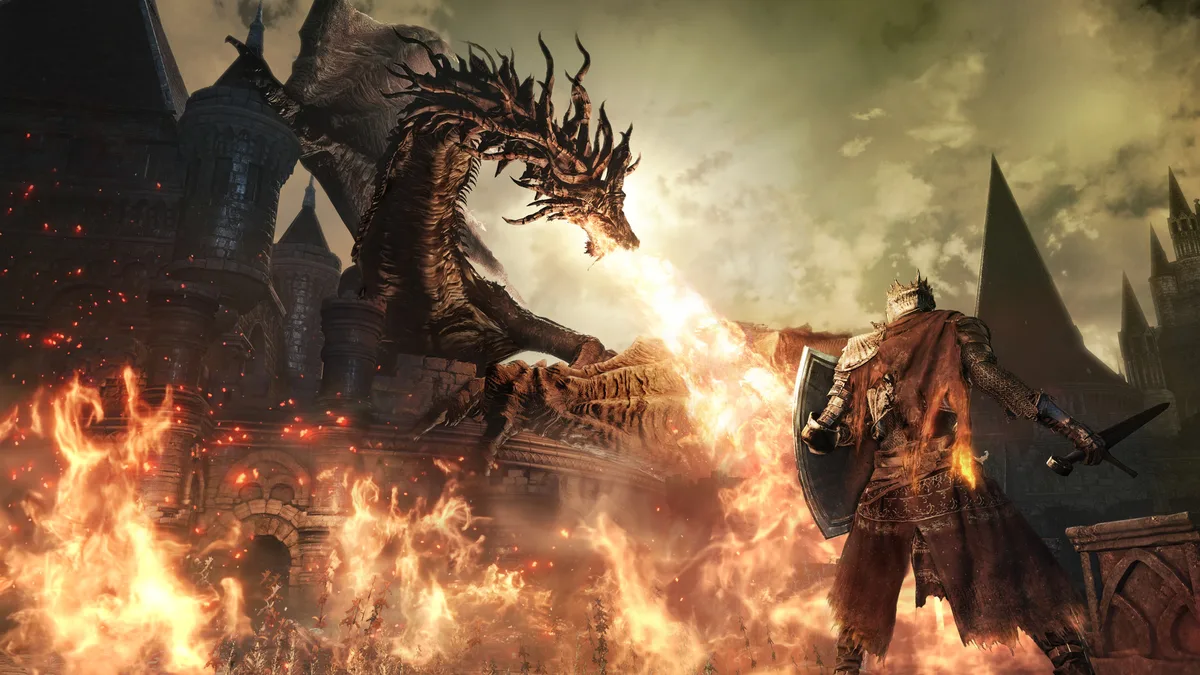
The starting point: what Dark Souls actually put on the table#
To understand the whole lineage you have to go back to Dark Souls Remastered. The oft-retold “it’s hard” was never this game’s invention — around 2011, difficult games were everywhere. What the industry kept copying were four things:
- The bonfire as the progress node. Death does not delete your save, but it does cost you resources; the rest point is simultaneously a teleport hub and an upgrade bench. This alternating rhythm of “safe zone, danger zone, safe zone” became the skeleton of nearly every soulslike that followed.
- The stamina bar as combat currency. Every attack, roll and block draws from one bar, forcing a constant choice between greed and restraint. Combat tension comes from resource management, not stat checks.
- Fragmented storytelling. The plot is never announced through cutscenes; it hides in item descriptions, level geometry and NPCs who only finish half their sentences. Community archaeology became part of the game itself.
- Asynchronous online. Messages on the floor, phantom silhouettes from other worlds, bloodstain replays — a single-player game suffused with the strange mood of “you are not alone, but you will never meet anyone”. This began as an accident of console networking policy and was later kept deliberately as a design feature.
Of the four, the industry truly inherited the first two. “Hard” can be imitated badly; bonfire rhythm and stamina-as-currency are the hardest tests for deciding whether a game “is a soulslike” at all.

FromSoftware’s own three forks#
After the first game, FromSoftware did not simply “make the same game prettier”. They rewrote their own rules three times in a row — which is why the souls lineage is not a single road but a branching tree.
First fork: turn defense into offense#
Bloodborne replaced turtle-with-a-shield play with the Rally system: counterattack shortly after taking damage and you reclaim much of what you lost, so getting hit stops being pure punishment and becomes a high-risk, high-reward gambling resource. Transforming weapons and gun parries further squeezed the survival space of “hold shield and wait”. Bloodborne proved the souls skeleton can carry an aggressive combat identity — still the reason so many players rank it as the studio’s best.
Second fork: replace the objective function entirely#
SEKIRO: Shadows Die Twice is the most radical experiment in the lineage. It kept the clang rhythm and the shortcut-rich map structure but tore out builds, spells and the summoning system, replacing single-track health attrition with the Posture meter — the goal is no longer to grind down HP but to break the enemy’s stance through relentless pressure. Resurrection lets you retry a half-fought boss immediately, and even the beginner-area rules were rewritten. SEKIRO proved a souls game can drop role-playing altogether and become a pure duel game.

Third fork: stitch in the open world#
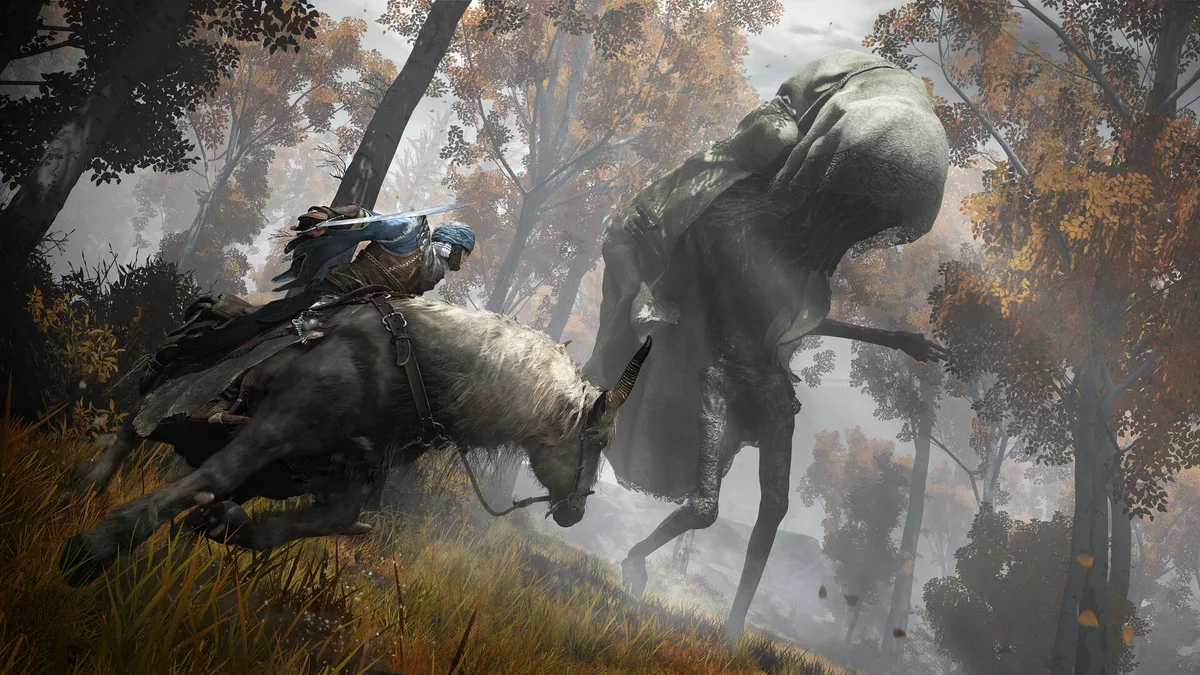
Elden Ring answered that the souls skeleton never needed “linear maps plus hidden shortcuts” at all. The Lands Between swaps connected level design for open continental exploration; “run away, level somewhere else, come back” became, for the first time, an officially sanctioned strategy, and summon ashes plus weapon arts loosened the entry gate further. The result is the sales figure everyone knows: several times any previous entry. The Shadow of the Erdtree DLC then pulled map density back to interconnection-era standards at expansion scale — a self-correction against the criticism that “open world dilutes the joy of discovery”.
The three “souls rules” most often misunderstood#
Genre discourse circulates several iron laws that are really folklore, and they directly affect how you judge whether a soulslike is worth buying:
- “Souls games must not have difficulty options.” SEKIRO has none, but Elden Ring has summons, Black Myth: Wukong has difficulty tiers, and most new soulslikes ship with assist modes. Treating “no difficulty option” as the genre’s essence is carving the boat to find the dropped sword — if the bonfire rhythm and the stamina bar are still there, it is a soulslike.
- “The map must interlock and the shortcuts must be ingenious.” That is the signature of the Dark Souls 1–3 and Bloodborne puzzle-boxes, not the definition. Elden Ring’s open map still breathes in the “site → explore → boss → unlock teleport” pattern within each region; the skeleton is unchanged, the skin is just larger.
- “The story must be obscure.” Fragmented narration is a style, not an obligation. SEKIRO’s plot is straightforward, and Black Myth tells its story with cards face-up. What actually runs through the lineage is “levels speak”: environment carries narrative function, instead of everything being delegated to text.

Beyond the bonfire: what other studios added#
Studios outside FromSoftware rarely dare copy everything; typically they pick one gene and dig. The games on this site are convenient case studies:
- Hardcore action route: Lies of P amplifies SEKIRO-style perfect-parry payoff and adds weapon-build depth through the arm and Legion systems — among the most finished non-FromSoftware soulslikes of recent years. Nioh 2 and Nioh 3 go the opposite way, pouring depth into an abyssal loot-and-build system where, outside combat, the game plays like a looter.
- Setting-substitution route: Black Myth: Wukong swaps weapon builds for spells, transformations and staff stances, fitting Eastern mythology into the souls pipeline; Wo Long: Fallen Dynasty pairs its Three Kingdoms setting with the Deflect system so that “every attack can be parried” becomes the core tempo. Both prove the skeleton’s compatibility with non-Western-fantasy settings.
- Gate-lowering route: Stellar Blade and The First Berserker: Khazan compromise visibly between “soulslook” and “mass-playable difficulty”, landing closer to action-adventure with souls flavor; Mortal Shell 2 keeps the old-school austerity line and represents the niche end.
- In development and new entries: Phantom Blade Zero is the Chinese soulslike the community watches closest, with ongoing coverage on its guide hub; Wuchang: Fallen Feathers shows how wide the completion-quality spread of the current soulslike wave really is.
Two side branches are easy to miss: Demon’s Souls is the lineage’s factual starting point — earlier than Dark Souls — and its remake is the best sample for observing the genre’s genes in primordial form; Dark Souls II: Scholar of the First Sin remains the series’ most contested entry, the first to try open region selection. And Elden Ring Nightreign stitches a roguelike random loop onto souls combat — the lineage’s frontier intersection with another genre (see also this site’s roguelike feature).

One through-line: the answer to “why do players stay” keeps changing#
Lay these games out in time and a clear through-line appears — every leading entry answers the same question: after dying a dozen times, why does the player not quit?
- Dark Souls’ answer was sociality: messages, phantoms, co-op — suffering becomes a collective experience.
- Bloodborne and Dark Souls III answered build depth: this build failed, try another one.
- SEKIRO answered flow: narrow the game to a scalpel until “one more try” is itself the pleasure.
- Elden Ring answered freedom: stuck here, go somewhere else — the retry always has another door.
The pattern: every leading entry lowered the appeal of “quit” relative to “retry” — and never by simply cutting difficulty, always by giving players new reasons to retry. Conversely, every soulslike accused of “copying the skin, not the skeleton” commits the same error: it replicated the death penalty without replicating the positive loop around death.

Where to start#
No standard answer, but three routes by taste rarely miss:
- Want the artifacts, willing to forgive ancient controls: walk Demon’s Souls → Dark Souls Remastered → Dark Souls III. The awkwardness of the old entries is itself the coordinate system for every “improvement” that followed.
- Want today’s most complete experience: start with Elden Ring; if the combat clicks, backfill Bloodborne and SEKIRO; for build depth add Nioh 2; for bladed clash add Lies of P.
- Want souls flavor without the suffering: Stellar Blade, The First Berserker: Khazan or Black Myth: Wukong on lower difficulties are all legitimate entrances, no guilt required — genre expansion has always been carried by the “compromised” entries.
One counterintuitive warning: do not start with Dark Souls II. Not because it is bad, but because its design trades (region levels, the NPC quest web) are the most idiosyncratic in the series — a newcomer will struggle to tell which quirks are “souls law” and which are just one entry’s experiment.

Further reading#
- Each game named above has its own guide hub on this site — starting guides, boss fight breakdowns and collectibles — linked inline.
- Browse every game hub by type in the guides index.
- For horizontal score comparisons see the rankings section, action and RPG categories.
- This feature belongs to the specials section; companion pieces are The Roguelike Essence and The Genes of Horror Games.
The lineage keeps growing. Nightreign plugged the roguelike loop into souls combat, several Chinese soulslikes are inside their release windows, and the community has started asking “what does the next souls game look like after open-world fatigue”. This feature gets a revision when the next rule-changing leading entry appears; the revision note will sit at the top of this page.
Related Games#
- Elden Ring — the open-world pivot that multiplied the genre’s audience
- Bloodborne — the aggressive-combat fork, still many players’ favorite
- SEKIRO: Shadows Die Twice — the duel-game experiment that dropped builds entirely
- Lies of P — the most finished non-FromSoftware soulslike of recent years
- Demon’s Souls — the primordial sample, before the rules had names
Related Rankings#
Best Soulslike Games · Best Soulslikes of 2026 H2 · Hardest Bosses Ranked
Full Guides#
In-depth sub-guides — boss step-by-step kill orders, build and stat spreads, weapon upgrade paths, collectible maps and ending conditions — are available in Chinese on NTGame’s souls game guides.