The Roguelike Essence: Two Roads for Randomness#

Open any store category page and The Binding of Isaac, Slay the Spire, Hades, Dead Cells and Balatro all land in the same “Roguelike/Roguelite” bin. They look like nothing in common: one is a top-down shooter, one a turn-based card game, one an action slasher, one a side-scroller, and one is literally poker. Yet putting them in one conversation is correct — they share one design skeleton, and each gives its own answer to the same question: which layer of the game should randomness live in?
This feature threads the roguelike guide hubs on this site, takes the skeleton’s three core parts apart, and follows the evolution logic of the genre’s three main branches.
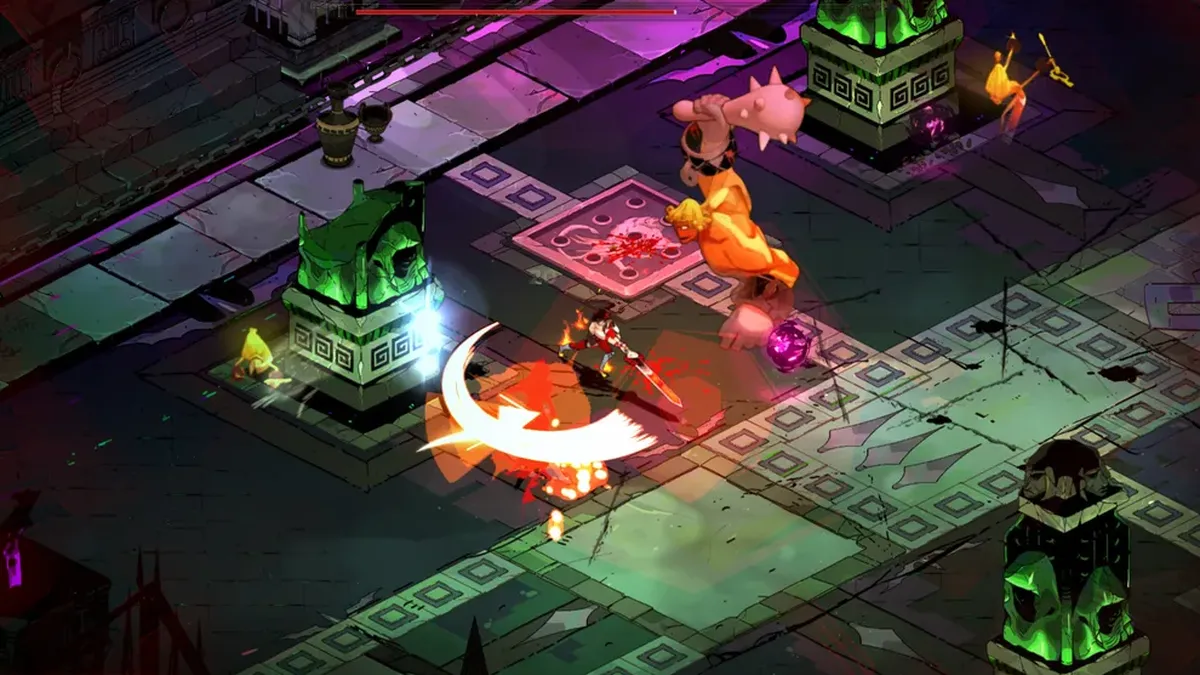
Three skeleton parts: permadeath, procedural generation, in-run build#
Whatever the skin, every roguelike is a combination of these three parts:
- Permadeath: when a run ends, everything that run earned returns to zero. Its purpose is not punishing players but making every choice weigh something — when picking the wrong reward can cost you the entire run, a small decision like “attack bonus or healing” carries real tension.
- Procedural generation: maps, enemies and reward placement are assembled by algorithm, guaranteeing “the next run is different”. It solves content volume — near-infinite situations from finite art assets.
- In-run build: each run grows from nothing into a kit assembled from picked-up items, powers or cards. The genre’s actual payoff lives here: the hand you are dealt is bad, but you can forge synergy out of it — playing a bad hand well is the game.
The permutations of these three parts are the genre’s design space. The last decade of roguelike evolution is, essentially, the gradual softening of part one, permadeath.
Roguelike vs roguelite: the argument is just “how much stays at zero”#
The roguelike/roguelite debate confuses newcomers endlessly, but there is exactly one test: after a run ends, what do you keep?
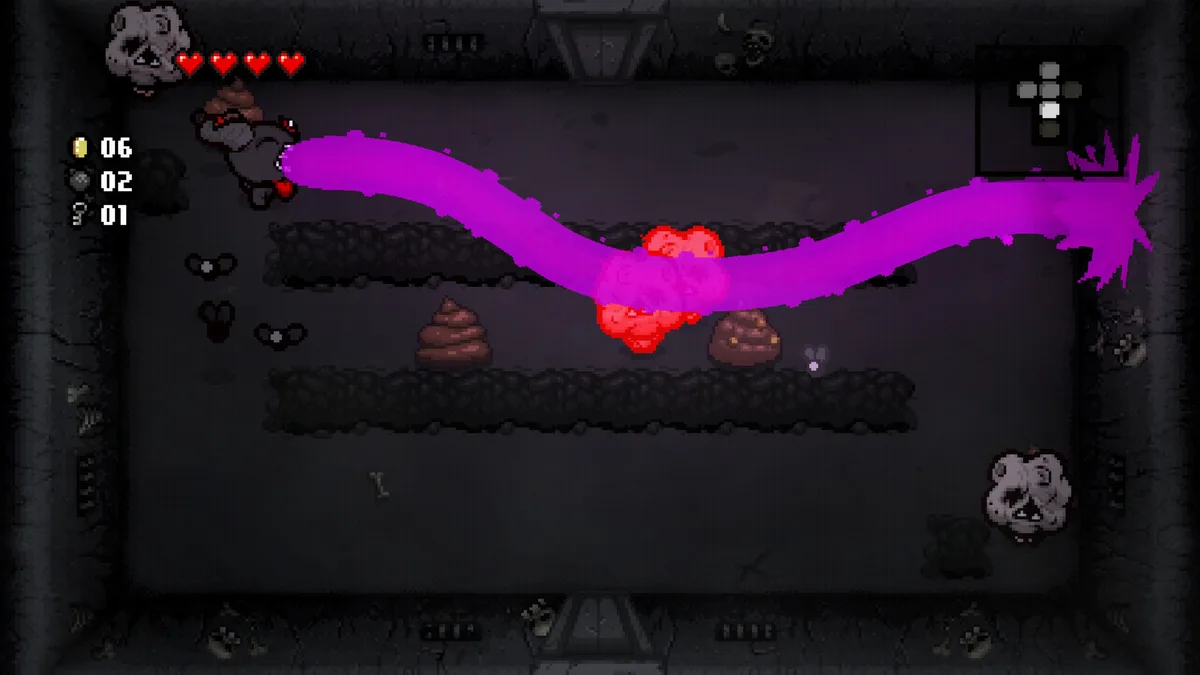
- You keep nothing; only your knowledge grows — the traditional roguelike, starting with Rogue in 1980. On this site, The Binding of Isaac comes closest to the archetype: item synergies approach infinite combinations, but the player character never powers up.
- You keep permanent unlocks — new characters, new weapons, new cards entering the pool. That is roguelite. Hades is its mass-market benchmark: every failed run advances the story and banks permanent upgrades, and “failure” is restructured into narrative — you are the prince of the underworld; dying is coming home to dinner, not punishment.
- You keep bulk stats (a meta talent tree can flatten difficulty) — take that too far and the game becomes an idle looter, a slide longtime genre fans watch warily.
Slay the Spire deserves its own note: it gives almost no meta stats (ascension is a difficulty switch, not a power-up), doing all its meta-progress through unlocking card-pool breadth — the template for the hardcore school of roguelite. Slay the Spire 2 deepens co-op combinations and its event web in the sequel, proving this minimalist meta model’s ceiling is nowhere in sight.

A litmus test: is this next run worth taking?#
Collapse the three parts into a practical test. When a run ends — win or inglorious death — ask two questions:
- “Do I know where I lost?” If yes, randomness is transparent and failure attributable; you already sketch a counter-plan for the next run. If no, randomness has become noise and the game is gaslighting you.
- “Am I planning to play the next run differently?” If yes, the build space is wide enough that the deal genuinely forces new decisions. If no (“same plan, luck wins it”), randomness is a slot machine.
Two “yes” answers and the game deserves your hours. One “no” usually marks a design failure — a reward pool too shallow, an optimal solution unique, random deals pointless. Run the test over the canon: Slay the Spire scores perfectly (card order, relics and routes are three stacked randomizers each demanding new answers); Balatro likewise (Joker combinations force fresh probability math every run). And the idle roguelites you beat with eyes closed after maxing the talent tree fail both — they stopped being roguelikes; they just borrowed the jacket.

Branch one: deck-building — randomness locked into math#
The DBG branch is the lowest-“random-feel” road of the three, for a simple reason: turn-based play grants unlimited thinking time, and random draw order eventually dissolves into math and planning. The design core here is probability management — you know roughly what is coming, and your build decides what you can absorb.
- Slay the Spire set the rules: chooseable map routes, relics that rewrite rules, randomized hand each turn. Three layers randomize independently, and skill shows in route planning against known probabilities. Our guide hub carries full per-character card priority analysis.
- Balatro is this branch’s latest breakout: it compresses roguelike decision-making to a single point — every discard and play is pure probability — then multiplies the math into fireworks through Joker synergies. It proved the branch can keep subtracting, and subtraction all the way down is still fun.
- Cult of the Lamb and Darkest Dungeon II represent the fusion road: the former sews base-management onto the roguelike skeleton; the latter turns turn-based pressure into stress-meter storytelling. Their common ground: randomness stops being the enemy and becomes a resource — bad random runs are managed as part of your characters’ stories.

Branch two: action and shooting — randomness acts through your hands#
The other road leaves randomness at the layer of your hands: situations generate randomly, and you must respond in real time. The payoff here is imposing order on chaos — last run’s god-tier combination is not available this run; you survive on this run’s misfit kit.
- Dead Cells’ key move is softening permadeath until it barely exists within a level: stages blend hand-crafted chunks with randomized arrangement, tempo runs so fast that restarting takes three seconds — the cost of “one more run” compressed to nearly “one more attempt”.
- Hades gave the action branch the answer mentioned above: narrative stitched into the death loop, boon combinations guaranteeing each run’s build thinks differently. Hades II adds spells and summons to the combination pool, further proving the extensibility of its “fixed protagonist + random powers” structure.
- Dead Cells and Risk of Rain 2 respectively represent side-scrolling and 3D-shooter feel: the latter pushes stacking random items into quantity-becomes-quality spectacle (the joy of the same item at 20 stacks), a classic case of trading build depth for mechanical demand.
- Vampire Survivors and Nordic Ashes — the “survivors-likes” — are the skeleton’s extreme simplification: moving is attacking, positioning is the mechanic, all decisions bet on level-up picks, the optimal answer for commute gaming.
A telling contrast is Pathogenic: a card roguelike built on cell division and gene pairing, proving the skeleton can leave combat settings entirely — the frame is universal, the skin is free.

Branch three: the crossroads — when roguelike becomes a secondary engine#
The most notable development since 2024: roguelike has been demoted from “a genre” to “a component” — more and more non-roguelike games procure its random loop as a retention engine.
- Elden Ring Nightreign hangs an in-run roguelike loop on soulslike combat (this site’s soulslike feature covers the intersection).
- Cult of the Lamb’ “manage by day, roguelike by night” structure is widely seen as founding a replicable subgenre.
- Mainstream live-service “weekly rotation modes” heavily reuse roguelike-style random modifier pools.
The risk of componentization was stated above: when the random loop becomes a retention tool, the freshness of “a different next run” gets eaten by the fatigue of “the same next run”. To test whether a game uses the skeleton sincerely, check whether the in-run build actually yields new solutions per run — or just re-skins the same optimal line.

Where to start#
- New to the genre, allergic to twitch reflexes: start with Balatro or Slay the Spire. Turn-based has no reaction-time gate — when you lose, you blame your math, not your hands.
- Want action feel without narrative interruptions: start with Hades; if it clicks, continue to Hades II or Dead Cells (the latter hungrier for mechanical skill).
- Want the fundamentalist experience: The Binding of Isaac. Unfriendly, unfair, full of malice — but it is the coordinate system for the entire genre; nearly every “item synergy” design today is in dialogue with it.
- Commute and spare-time sessions: Vampire Survivors — a run under thirty minutes, decision density that exactly fills fragmented time.
- Want to see what else the skeleton can wear: Pathogenic, Cult of the Lamb and Risk of Rain 2 are each a different fusion answer.
Further reading#
- Browse every roguelike hub in the guides index; for horizontal score comparisons see the rankings section.
- Companion features: The Soulslike Lineage (Nightreign is where the two lineages meet) and The Genes of Horror Games (co-op horror leans on procedural generation just as heavily).
- Every game name links to its guide hub on this site, including starting guides and patch breakdowns.
Randomness is the genre’s most misunderstood ingredient: it looks like luck, but it is designers repeatedly re-weighing “the cost of restarting” against “the experience gap between runs” on a balance. Next time a store page advertises “hundreds of random items”, ask first: is the randomness in the items, or in the chemistry between them? The amount of the latter basically decides whether the game is worth buying.
Related Games#
- Slay the Spire — the deck-building school’s permanent reference standard
- Hades — narrative stitched into the death loop, roguelite’s mass-market benchmark
- The Binding of Isaac — the unfriendly coordinate system every item-synergy design talks to
- Dead Cells — action branch with restart cost compressed to three seconds
- Balatro — roguelike decision-making compressed to pure probability, and still fun
Related Rankings#
Best Roguelikes · Best Indies of 2026 · Best Indies in History
Full Guides#
In-depth sub-guides — per-character card priority tables, boss opening reads, unlock condition lists, build tier lists and challenge run guides — are available in Chinese on NTGame’s roguelike game guides.