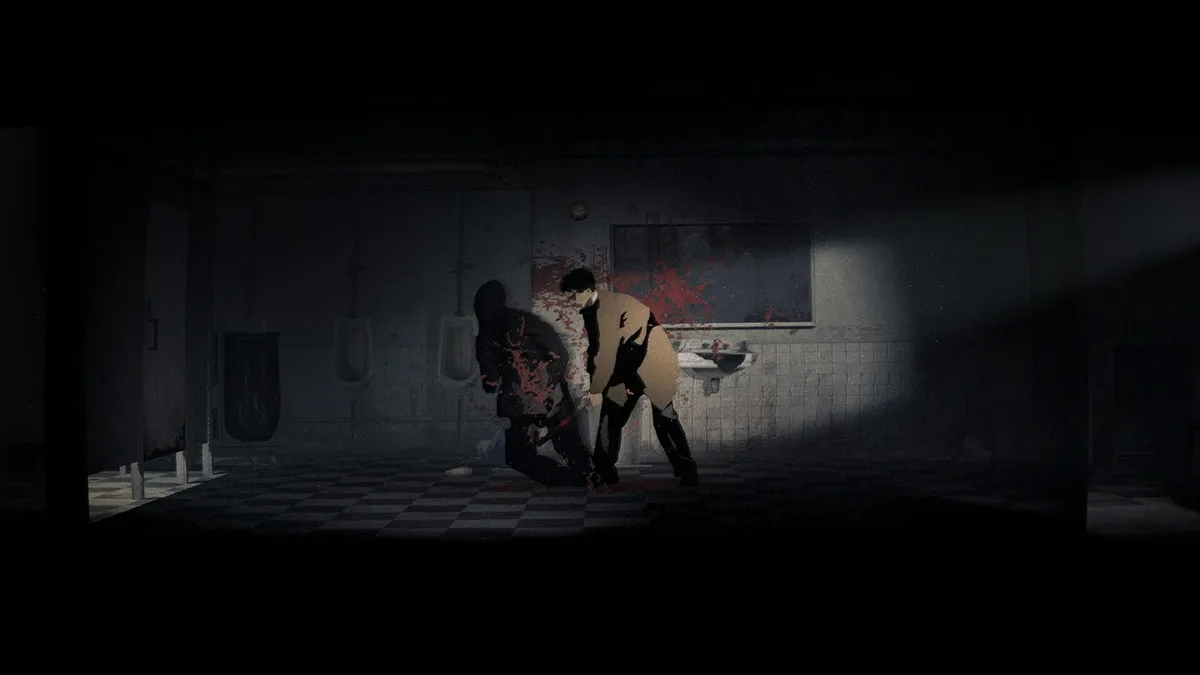
Silver Pines Inventory Guide: Survival Arithmetic in a Small Bag#
The Official Framing: Two Constraints in One Sentence#
The resource philosophy is one line in the official feature list, and it carries two constraints: “Inventory space is limited; every bullet, every medkit, every upgrade matters.”
- Space constraint: the inventory is not a warehouse; it is a backpack. Picking up or leaving behind is a continuous decision with an upper bound.
- Value constraint: three resources are named — ammunition, medkits, upgrades. All three “matter,” so wasting any one bills you in the others.
The design descends directly from the Resident Evil 1–3 school: grid backpacks, strategic-materiel resources, packing as gameplay. The difference: this tradition now lives inside a 2.5D side view and a metroidvania skeleton, with supplies flowing through the town’s spatial network.
The Three Resources, Ranked by Role#
| Resource | System role | Cost of waste | Management note |
|---|---|---|---|
| Ammunition | The entry ticket to fights | Dry at the crisis; forced melee or detours | Budget by zone; below the safety line, switch to avoidance |
| Medkits | Run sustenance | Every later fight costs more while hurt | Evaluate wounds on the spot; neither hoard nor splash |
| Upgrades | Exploration keys | Missed areas; thinner exploration | Value by “what does it open,” not by stat vanity |
Note the third row: the official text ranks upgrades alongside bullets and medkits as critical resources. In a metroidvania, an upgrade’s worth should read in exploration area opened — details on the Chinese progression page.
The Packing Frame: The Four-Slot Check#
With limited space, every departure deserves a fixed routine — the four-slot check:
- Threat slot: likely encounter types and numbers → decides melee, firearm and ammo load;
- Sustain slot: zone depth and retreat distance → decides medkit count (deep zones with far supply points carry more);
- Task slot: the trip’s purpose (push the line? open a return door? collect clues?) → key items and their tools first;
- Margin slot: what this zone might give you → keep slots free so a key pickup never bounces.
The fourth slot is the most neglected and the most punishing: with weapon-tooling and photo-marking in play, key items and clue photos show up mid-exploration, and a full bag’s “cannot pick up” defeats the whole loop.
The Zone Budget: An Execution Plan for Ammo#
“Every bullet matters” operationalizes as a zone budget:
- Set the budget at entry: expected encounters × per-fight consumption + safety margin = the zone’s ammo ceiling; the excess stays in a safe spot.
- Record mid-zone: after each engagement, mentally reconcile spent vs remaining against the safety line. The number is personal; the rule is not — below the line, flip to avoidance-first mode immediately.
- Audit at exit: before leaving, count ammo and medkits and decide: push on, return-trip, or tidy up first.
The point is converting vague anxiety into concrete numbers — survival horror’s pressure feeds on the unknown, and a budget reclaims the half of the unknown that belongs to you.
Discard Order: What Goes First When the Bag Is Full#
Limited space makes discarding routine. A working priority, most-discardable first:
- Over-budget ammunition: the zone’s unspendable surplus is better banked at a storage point than squatting in a slot;
- Tools confirmed useless here: note “confirmed” — an unconfirmed tool stays; it may be a door’s key (the weapon-as-tool design is on the Chinese weapons page);
- Renewable consumables beyond need: surplus over your sustain line;
- Never lightly discard: clue items, unidentified key objects, anything “no idea what this does yet” — this is a detective game; uselessness usually means “not yet.”
One extra habit: the photo-pinned map records item reminders officially, so before discarding, photograph the drop spot with a recognizable reference (doorframe, sign, distinctive prop) and pin it. A discard becomes a map marker, not a fading memory.
Tidying Discipline: When and Where#
Real-time interaction applies to the backpack too: tidying itself has exposure cost. Three rules:
- Tidy only in safe zones: consolidating, merging and discarding happen in confirmed-safe rooms;
- Pre-corner quick check: before a new frame, slot the next-needed item within easy reach — adjustment only, no big reorganization;
- Subtract on schedule: after each major progress beat, run a full audit and retire the long-unused — but never below the baseline load of a melee weapon and basic medkits.
Timing Is Also a Cost#
The officially confirmed real-time pair — manual reload and manual password entry under active enemies — extends directly to the bag: any two-handed, attention-holding operation has an exposure window. Loading can’t be automated; neither does tidying happen while you evade.
| Operation | Mechanic link | Suggested timing | Discipline |
|---|---|---|---|
| Manual reload | Real-time interaction | After opening distance, in cover after corners | Never linger with a partial magazine |
| Password entry | Real-time interaction | Only after confirming threat-free surroundings | Pre-pair codes with clues in a safe zone |
| Using a medkit | Named critical resource | Immediately after disengagement | Don’t travel wounded; don’t hoard to the last breath |
| Tidying and discarding | Limited space | Batched in safe zones | Pre-corner adjustments only |
The Chain Ledger: Save Ammo, Avoid Damage, Keep Medkits#
The three resources are one linked ledger, not three accounts: how you spend ammunition shapes your damage rate; your damage rate sets medkit consumption; your medkit stock decides how many more fights you can afford. Read the chain and the real value of each habit appears:
- Avoiding a skippable fight → zero ammo → zero contact risk → zero medkits. One decision saving two resource classes is the best trade on the ledger — the full flow is on the encounter choices page;
- Melee on low threats → saves ammo but raises contact risk → may spend more medkits; whether the swap pays depends on your medkit stock and experience;
- Firearms on route-sealers → ammo buys a lower injury probability; when medkits run low, the trade inverts and spending bullets to save blood is usually correct.
So budget ammunition and medkits together — the sustain slot and the threat slot of the four-slot check are one balance sheet. The chain’s biggest conclusion: the worse your resource state, the harder you should lean toward avoidance.

The Demo: A Zero-Cost Sandbox#
The Windows demo launched on Steam June 2, 2026, alongside the release-date announcement. Three directed rehearsals weld this page’s frame in advance:
- Four-slot check drill: run threat, sustain, task and margin before every trip, deliberately keeping margin slots free — the demo’s small scale makes failure cheap;
- Budget rehearsal: pick a multi-encounter route; set the ammo budget at entry, record mid-zone, audit at exit — one full cycle;
- Discord drill: deliberately trigger a pickup with a full bag and rank the discard tiers, practicing “clues are never lightly discarded.”
The demo won’t cover the retail game’s full pressure, but the check-budget-audit loop is universal muscle memory — bring it in and the early game’s supply anxiety drops sharply.
Three Management Myths#
- Treating the bag as a warehouse. Under a space constraint, every carried item pays a carrying tax — over-budget ammo and idle tools squat in slots while the real key item bounces. The standing question: which of the four slots does this belong to?
- Reading “unknown” as “useless.” A detective game’s items reveal value when clues pair up — the last discard tier is iron law, not a suggestion.
- Traveling wounded to “save” medkits. Medkits are officially run sustenance, not a last-resort talisman — every fight costs more while hurt, and one early medkit often cheaper than a clutch late-game save.
Recap#
- Two constraints, one sentence: limited space; three resources all critical.
- The four-slot check: threat, sustain, task, margin — margin is where runs die.
- Zone budgets: set at entry, record mid-zone, audit at exit; below the line, avoid.
- Discard tiers: over-budget ammo → confirmed-useless tools → surplus consumables → never clues.
- Tidying happens in safe zones; every two-handed action has an exposure window.
- The chain ledger binds ammo, damage and medkits — avoidance is its cheapest line.
Next: the encounter choices page (Chinese) to unburden the ledger, or the puzzles and key items page (Chinese) for how items flow through the case.