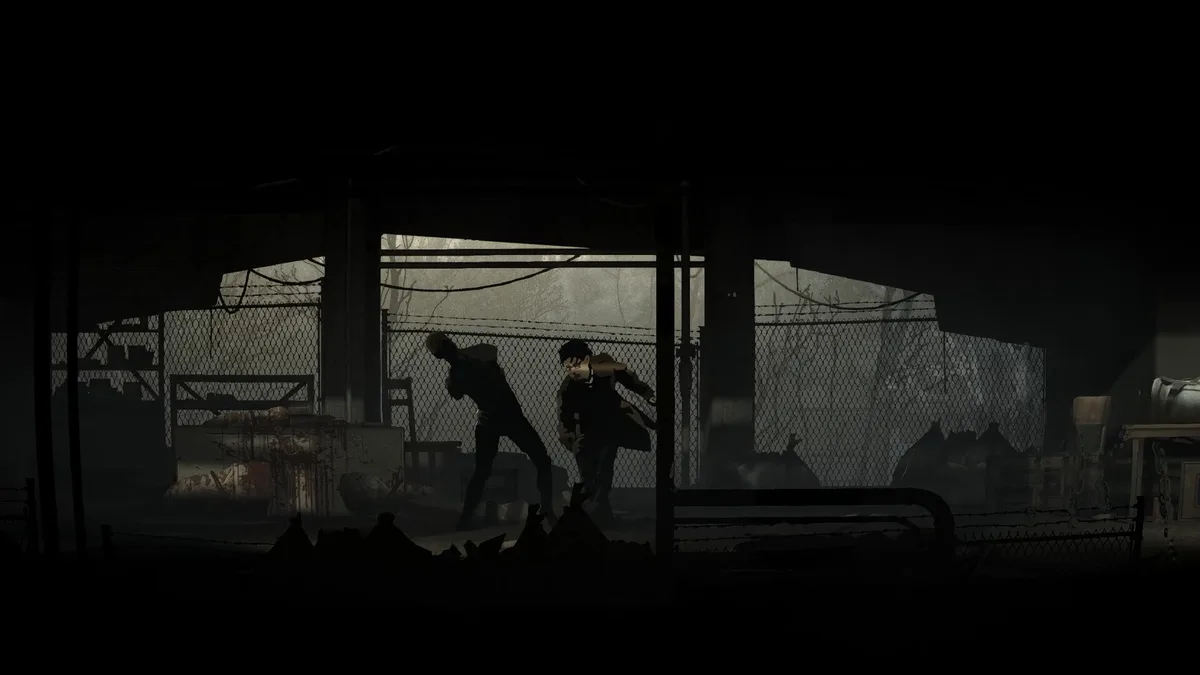
Silver Pines Combat Guide: The Arithmetic of Melee and Firearms#
Three Confirmed Facts First#
Everything below stands on three officially confirmed points — listed first to keep rumor out:
- Combat uses melee weapons and firearms — two classes (official feature list);
- Every encounter can be fought or avoided — fighting is an option, not an obligation;
- Manual reloading is required while enemies are still active — reloading is a live action, not a background system.
No specific weapon names, stats or locations have been published. This page covers classes and systems, not “best weapon” picks — any confident weapon-tier list is unsourced as of writing.
Two Classes, Two Jobs#
Melee: The Zero-Cost Floor#
Melee’s greatest virtue is that it spends no ammunition. Under the every-bullet philosophy, melee carries three duties:
- Cover during reload windows: while the firearm reloads, melee is the only uninterrupted response (assuming you packed one);
- Low-threat cleanup: for weak threats that merely block the road, melee beats spending bullets — after you’ve checked that avoidance isn’t cheaper still;
- The point-blank last resort: cornered against the edge of a side-view frame, melee is the only close answer.
Firearms: The Strategic Key#
Firearms play less like a weapon and more like a key: their firing rights belong to two scenarios — avoidance confirmed impossible, or a target sealing the only route. The cost is double: the ammunition itself, plus the exposure the reload buys.
| Dimension | Melee | Firearms |
|---|---|---|
| Resource cost | No ammunition | Every round is inventory |
| Risk exposure | Must close distance; contact risk | Ranged output, but heavily exposed while reloading |
| Best scenarios | Low threats, reload cover, point-blank emergencies | High threats, route-sealers |
| Management note | Carry one as a habit | Front-load magazine checks; reload in safe windows |
Manual Reload: The Core Rhythm Variable#
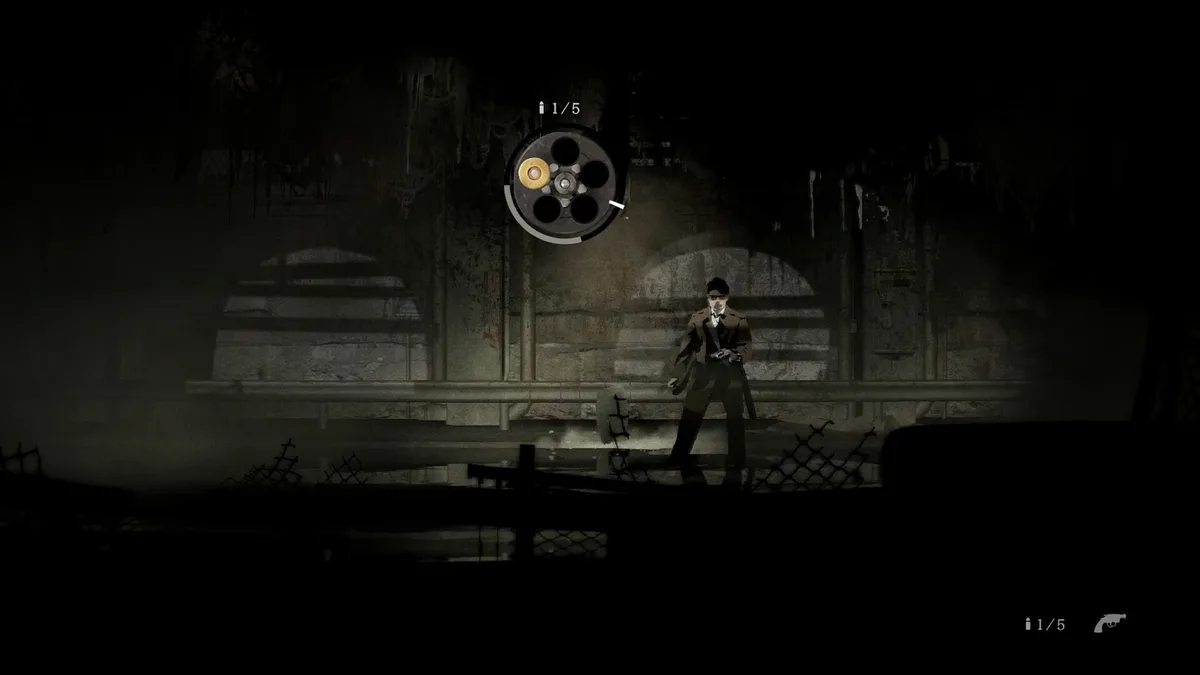
“Shoot dry, auto-refill” does not exist here. Manual reloading splits combat into output segments and reload segments — and the reload segment is when you are most fragile. The derived discipline:
- Pre-contact check: before corners, doors, and new frames, confirm the magazine.
- Reload in the gaps: the instant an enemy is dodged, knocked back, or retargeting — that’s the window.
- Position matters: reload where the enemy must detour to reach you; height differences and obstacles in the side view are cover.
- Never covet the last round: the urge to empty the magazine fully is the most expensive habit under a real-time reload system.
Reload Isn’t an Isolated Case#
Zoom out and manual reloading is one instance of a whole real-time interaction design — the officially confirmed pair is manual reload during active enemies and manual password entry. Both share one logic: operations that could have been a paused menu become interruptible real-time actions. You are exposed while reloading, and equally exposed while typing a password. The knock-on effect: any “stop and do a thing” action must be planned by combat rules. Full input analysis on the Chinese controls page; password-door workflow on the Chinese puzzles page.
Cost Accounting: Spend Every Shot Like a Budget#
The decision unit here is not “can I win” but “what does winning cost.” A fight’s true ledger:
- Ammunition cost: hits required + reload exposure risk;
- Medkit cost: expected damage, priced in healing resources;
- Opportunity cost: bullets spent here are bullets missing before a locked area later;
- Time cost: reloads and repositioning lengthen the encounter and raise ambush odds.
The official “every bullet, every medkit matters” lands operationally as this ledger. The full pre-fight chain: can I avoid → avoidance cost vs fight cost → pick a weapon class → plan the reload window. The decision framework’s home is the encounter choices page.
The Lineage: Combat Grammar From Resident Evil#
The developers cite Resident Evil 1–3 and Silent Hill as gameplay influences, and the combat design’s lineage shows:
- Ritual slowness under scarce ammo: the originals’ deliberate aim-and-fire rhythm returns here as manual reload caution;
- Avoidance-first doctrine: early survival horror’s “run when outmatched” becomes an explicit per-encounter option;
- Melee as the last line: in an ammo economy, melee is the floor, never the mainline — unchanged here.
The difference is the frame: the side view compresses each encounter into a single readable composition, so enemy positions are visible at a glance. That tips the balance from “dodging” toward “calculating” — you don’t rotate a camera to find threats; you solve routes on a static frame.
Combat FAQ#
Has the official published weapon stats? No. Only the two classes and the “some weapons double as exploration tools” design are confirmed; treat any numeric weapon list online with suspicion.
Are there combos or skill trees? Nothing of the sort appears in official descriptions. Combat is resource management plus real-time reload — survival horror arithmetic, not action-game execution ceilings.
What if I’m surrounded? Enemy behavior parameters are unpublished. From confirmed systems: in side-view space, route choice outranks output — which is the entire point of fight-or-flee being an explicit option.
How does combat tie into upgrades? Tightly. The official line prices upgrades on the same budget line as bullets and medkits. Resources burned on an optional fight may be the shortfall at your next upgrade. Full growth-system notes on the Chinese progression page.
Calibrate Reload Discipline in the Demo#
The free Windows demo hit Steam June 2, 2026, alongside the release-date reveal. Its combat value: reload rhythm is muscle memory, and practicing it in the retail game costs real bullets. Two drills worth doing there: fire two shots and seek a top-up window (rather than draining the magazine and then panicking), and practice reloading while opening distance — master both in the demo’s side-view frame and the retail opening hours get noticeably more forgiving.
The opening-phase resource plan continues on the beginner guide.
Recap#
- Two classes only: melee (zero-cost floor) and firearms (strategic resource); no official weapon list exists.
- Manual reload splits combat into output and reload segments; reload discipline is the first survival variable.
- Every fight is a four-column cost: ammunition, medkits, opportunity, time.
- The combat grammar descends from Resident Evil 1–3; the side view raises the weight of calculation over reflex.
Next: the encounter choices page (Chinese) to make fight-or-flee reflexive, or the weapons-as-tools page (Chinese) for the exploration side of the arsenal.