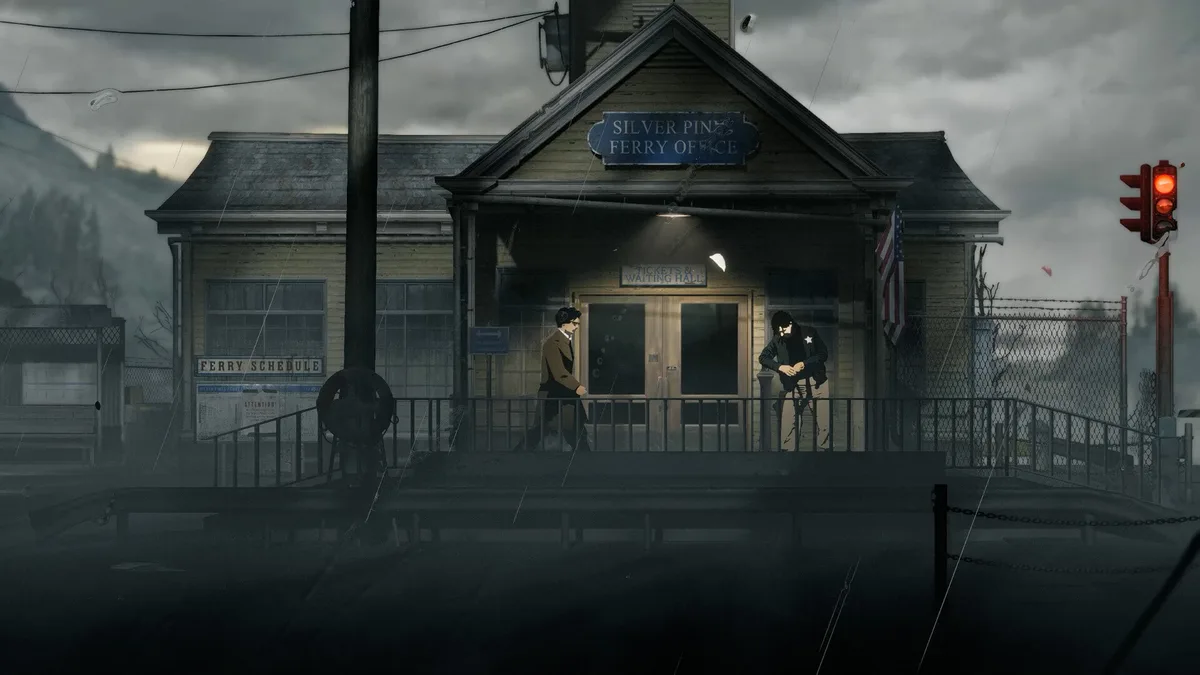
Silver Pines Beginner Guide: Enter Town With “Every Bullet Matters”#
Calibrate the Mindset First#
The official line on resources deserves to be read word by word: “Inventory space is limited; every bullet, every medkit, every upgrade matters.” That is not marketing — it is the game’s operating logic. It means three things:
- Ammunition is strategic materiel, not your default output. The question before pulling a trigger is “is this shot worth it,” not “can this shot hit.”
- Medkits are run sustenance, not health-bar patches. Taking damage is not a “heal it later” signal; it is a resource event to evaluate on the spot.
- Upgrades are exploration keys, not stat cheats. Every upgrade should answer: does it open a new area, unlock a new path?
If you lived through the item-grid management of the original Resident Evil 1–3 — which the developers explicitly name as gameplay influences — this mindset is already muscle memory. If this is your first survival horror, treat the three lines above as rule number one before entering town.
Two Facts Before You Start#
First, the demo is worth playing. A free Windows demo hit Steam on June 2, 2026, alongside the release-date announcement. Its value: letting you feel two things before paying — side-view navigation, and the rhythm resource management imposes. If the demo feels “too stifling” to you, re-evaluate the purchase: that tightness is the designed core experience, not a defect.
Second, there is no multiplayer. The official store page lists single-player only. Every tactic here assumes one person, one life, finite resources — no teammate absorbs pressure for you.
Know Your Case: Who You Are, Who You’re Finding#
You are private investigator Red Walker, in a half-abandoned American small town, tracing missing musician Eddie Velvet. A mystery phone call gives one instruction: “Find Eddie Velvet.”
Two practical notes follow from that setup:
- Nobody shares your load. Solo play means every “do I open this door” call is yours alone — which is exactly where the every-bullet mindset comes from narratively: a detective alone in town self-funds everything.
- You keep your own clues. The official story pitch is deliberately sparse — only two named characters. Notes, patterns and suspicious devices may all hide Velvet-related leads, and the photo-pinned map system exists precisely for this kind of casework. Use it.
Deeper story analysis belongs to play; the Chinese story page carries a spoiler-free narrative frame — read it after the opening hours.

The Pre-Town Checklist: Platform, Specs, Language#
Two minutes against the official hard facts beats discovering a bad fit in-game:
| Check | Official figures |
|---|---|
| Release | October 8, 2026, worldwide |
| Platforms | PS5, Xbox Series X|S, Switch, Switch 2, Windows (Steam & Epic) |
| Mode | Single-player |
| PC minimum | i5-4460 or Ryzen 3 1200, 8 GB RAM, GTX 660 Ti or R9 270X, DX12, 5 GB storage |
| PC recommended | i5-6600 or Ryzen 5 1600, 8 GB RAM, GTX 770 or R9 380 |
| Handheld | Steam Deck Verified |
| Languages | 10 languages; Simplified & Traditional Chinese interface; Simplified Chinese listed with full audio on Steam |
The verdict is easy for most: a decade-old quad-core and 5 GB of storage clear the bar, and handheld players get Valve’s top compatibility grade. The only caveat — hardware clearing the bar does not mean your nerves will; the machine runs the game fine, the game’s resource pressure is another matter. Full editions and pricing live on the Chinese platforms page.
The Four Opening Priorities#
Based on officially confirmed systems, here is where early attention and resources should go:
Priority One: Build the Map Habit#
The map supports pinning photos as reminders of puzzle locations and items — official feature-list wording. The opening-hours workflow: see a suspicious door, a locked passage, an unobtainable item → photograph, pin, move on. You will not solve everything on first pass; a photo on the map beats a memory under stress.
Priority Two: Make Avoidance the First Reflex#
Every encounter offers fight or flee. A newcomer’s instinct is to shoot first, which here is standard resource suicide. The correct order: observe patrol routes and sight lines, judge whether you can circle or run; only when avoidance is impossible or the enemy blocks the only road do you consider fighting. Internalize the decision frame from the encounter choices page and you will save enormous ammunition.
Priority Three: Manage Reload Timing#
Real-time interaction means you reload manually while enemies are still active. That turns “when to reload” into an active decision. The habit: check ammunition during lulls, before corners, before entering a new room — never discover an empty magazine by pulling the trigger.
Priority Four: Inventory Is a Packing Problem#
Space is limited; start subtracting early. Keep safe margins of essentials, do not hoover up everything. Before each new area, ask three questions: what threats live here, which weapons do I need, and if I find a key item will there be space for it. The full frame lives on the inventory page.
Six Classic Opening Mistakes#
Every entry maps to a confirmed system mechanic — audit yourself against the list:
| Mistake | System it trips | Consequence | Fix |
|---|---|---|---|
| Shooting on sight | Encounter choice, resources | Dry by the real crisis | Evaluate escape routes first; combat is the last resort |
| Walking with an empty magazine | Real-time reload | Mid-encounter reload wrecks your rhythm | Top up before corners and new rooms |
| Never photographing | Photo-pinned map | Return trips become aimless | Photograph and pin anything suspicious |
| Looting everything | Limited inventory | Can’t pick up the key item later | Decide what to drop before you take |
| Ignoring melee | Two weapon classes | Forced to shoot point-blank or eat hits | Carry a melee weapon as a habit |
| Ignoring locked doors | Locked doors and hidden paths | Lost return-trip value | Record the location; come back able |
A Suggested Opening Sequence#
- Learn the navigation grammar. The 2D view stitches streets, rooms and corridors with map-style turning transitions; spend a few minutes adapting and the disorientation fades.
- Open a resource ledger. Rough-count your ammunition and medkits, set a personal safety line (“below X bullets, no voluntary fights”) and drop into pure-avoidance mode under it.
- Complete your first return loop. At the first locked area, don’t grind — photograph, move on; when a new tool or key lands, deliberately go back once to feel the metroidvania payoff.
- Plan upgrades around keys. “Every upgrade matters,” per the official line — before mid-game, favor options that open areas; more on the Chinese progression page.
When You’re Stuck: A Five-System Checklist#
Under a metroidvania structure, “temporarily can’t pass” is normal operation — but different blocks have different fixes:
- Did you photograph it? An unrecorded blockage becomes a “where was that again?” blockage — pin it first.
- Is this a door for later? Locked doors are an official system; many are return-trip content by design. Not forcing them now is correct play, not failure.
- Tried every weapon on it? Some weapons double as exploration tools that break blockades — swap through your arsenal on anything suspicious; the test is nearly free.
- Prepared your passwords? Real-time password entry under threat is misery; organize codes before approaching the door.
- Are you forcing it on empty? Below your safety line, the right move is disengage and resupply — that is lesson one of encounter choices all over again.
If all five check out and you’re still stuck, re-walk your pinned route: with no quest markers to feed you, the map you run yourself is the only reliable navigation. Input details live on the Chinese controls page; the return-trip system on the Chinese locked-doors page.
Mindset: Slow Is Fast#
Survival horror’s iron law: the faster the pace, the faster you die. The side view compresses each room into a readable composition — read the whole frame before moving and your survival rate jumps. Run the investigation like an investigation: look, record, circle, calculate — and only then, fight.
Beginner FAQ#
Do I need the classics first? No. Resident Evil 1–3 and Silent Hill are the developers’ influences, not your prerequisites. These rules assume a first-timer; veterans should shed habits like “clear every enemy.”
Can I lower the difficulty? No difficulty options have been officially documented (community testing hasn’t found a traditional switch either, as of this revision). Either way, the resource philosophy is the fixed setting — running these guidelines as your default config beats waiting for an easy mode.
Should I wait for a sale? You can, but do the math: CN standard ¥90, Deluxe ¥115, launch −10% to ¥81/¥103.50 with Steam showing the promotion ending October 22, 2026; the art book (¥18) and soundtrack (¥22) also sell separately. The launch window is the confirmed price floor — full analysis on the Chinese editions page.
Recap#
- Resource philosophy: ammo is strategic materiel, medkits are run sustenance, upgrades are exploration keys.
- The June 2026 Steam demo calibrates expectations before you pay.
- Four priorities: photo-map habit, avoidance reflex, reload timing, inventory subtraction.
- Six classic mistakes, all traceable to confirmed mechanics — audit once and save a run’s worth of resources.
Next: the combat guide for the full fight arithmetic, or the inventory guide for the packing rules.