Silent Hill f Complete Guide: Showa-Era Horror and Every System#

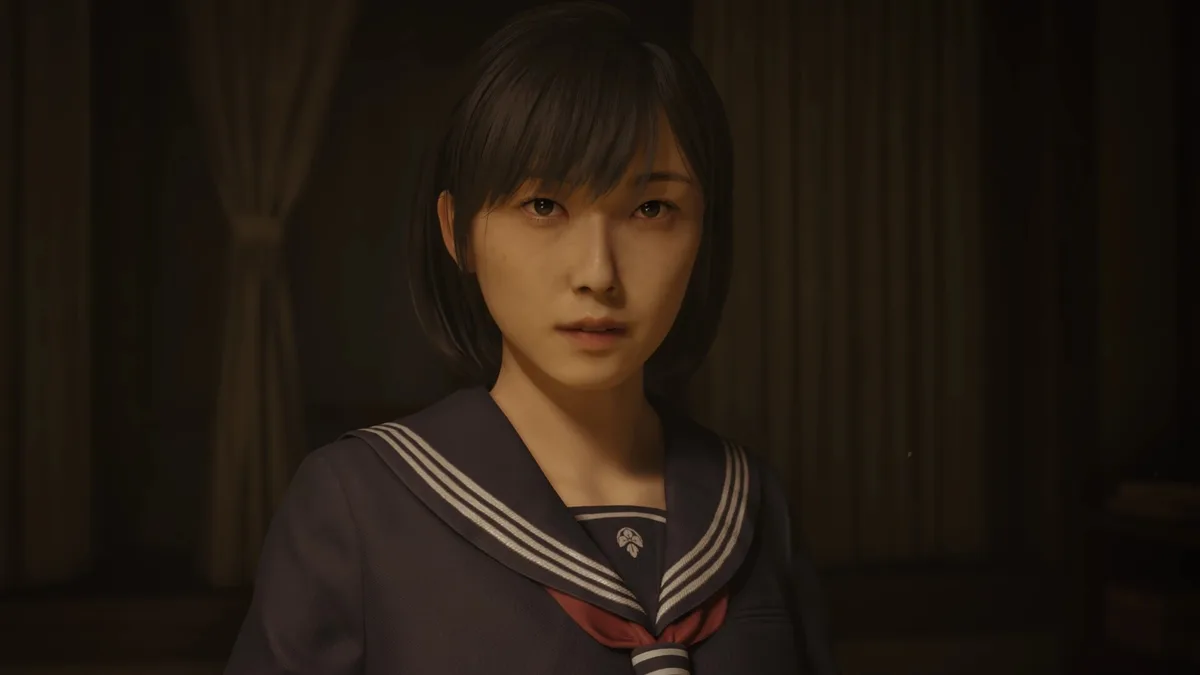
Silent Hill f is the first entry in the series to set its entire story in 1960s Showa-era Japan. When the fog over Ebisugaoka parts enough to reveal rusted signage, wet flagstones, and schoolgirl Hinako Shimizu in her sailor uniform, the register of fear is immediately clear: this is not the abandoned-hospital dread of an American small town, but the slow erosion of the familiar. Developed by NeoBards Entertainment and published by KONAMI, the game launched on consoles and PC in September 2025 (Steam app 2947440).
It also made a structural bet: no firearms, no flashlight. Everything is compressed into close-quarters melee and resource management, which is why new players so often arrive at the third district with broken weapons and drained sanity. This hub summarizes the systems that matter and maps where to go next; the English section answers the three questions players actually ask, and the 24-page Chinese tree covers every mechanic in depth.
Fog and Rust: Why the Art Direction Carries the Game#
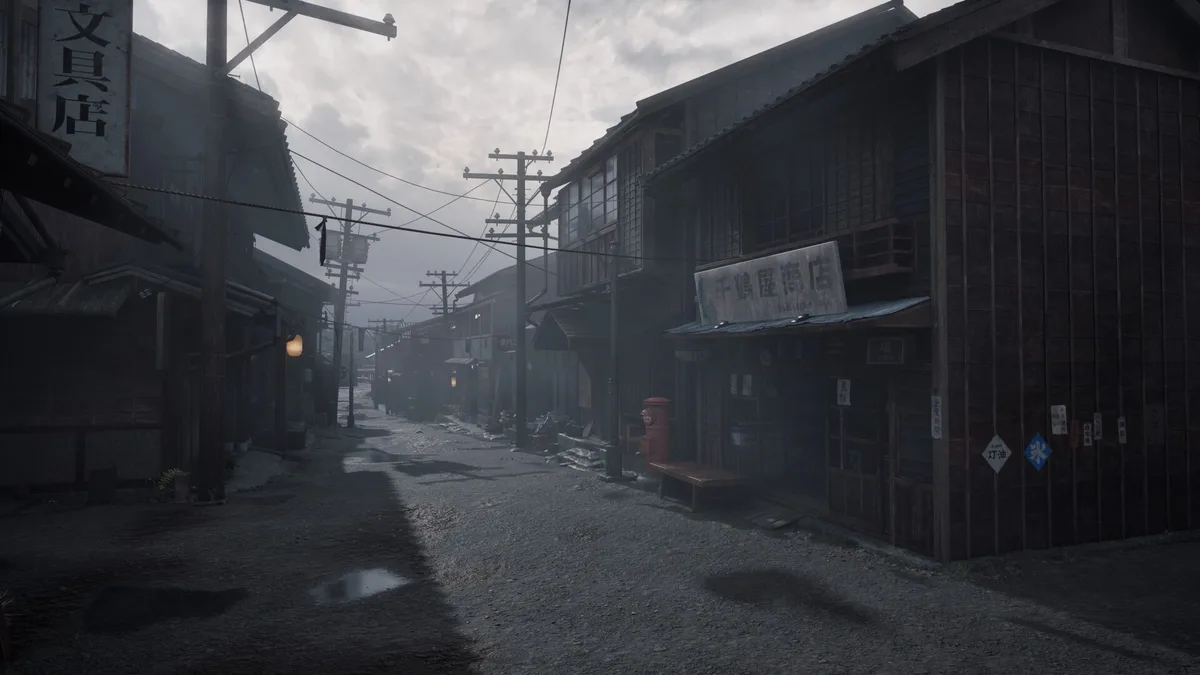
The strongest thing in Silent Hill f is not its monsters but the unity of its visual language. Fog is the first subject: visibility in Ebisugaoka streets and rice paddies cuts off after a dozen meters, distant torii gates survive only as silhouettes, and clues surface the instant the mist thins. Rust is the second: edges of gates, railings and vending machines carry a decayed texture over otherwise familiar Showa daily life. The Inari shrine faith — fox imagery, vermillion hokora shrines, offering vessels — frames the threat as punishment for breaking folk prohibitions rather than plain survival danger, a deliberate break from the series’ American hospital-and-town aesthetic.
| Visual element | Where you see it | What it does to the fear |
|---|---|---|
| Fog | Streets and paddies of Ebisugaoka | Kills the horizon; being watched and lost |
| Rust | Signage, gates, railings, vending machines | Abandons the familiar Showa everyday |
| Inari faith | Hokora shrines, fox motifs, torii | Threat dressed as folk-taboo retribution |
| Sailor uniform | Hinako’s schoolgirl silhouette | Youthful normalcy as the thing being invaded |
This choice dictates the play: no gun resolves threats at range, no flashlight pushes back darkness. You hold a melee weapon that can break and dance in the fog at arm’s length.
Systems at a Glance: Four Verbs, Three Meters#
Combat is a four-verb structure — light attack, heavy attack, dodge, counter — and every verb draws from the same stamina bar, which makes button-mashing an explicitly losing move. Light hits are fast and weak, heavies are slow and stagger-hard, dodges create distance, counters deflect on connect.
Three meters demand simultaneous management: Health (zero means death), Stamina (how many more swings and dodges you have), and Sanity (low sanity makes the game worse to play). Enemies grant no experience; growth comes entirely from Faith — offer items at shrines to convert them, then spend ema plaques plus faith on attribute levels. Meaningless combat only burns health, healing items and weapon durability: pure loss.
| Module | Core rule | Easiest beginner trap |
|---|---|---|
| Four-verb melee | All verbs share stamina | Panic-dodging empties the bar instantly |
| Three meters | Health, stamina, sanity run separately | Ignoring sanity until it degrades the experience |
| Weapon durability | Every hit and block costs durability, three stages | Carrying no backup — a broken main leaves you unarmed |
| Faith growth | Offerings convert to faith; ema plus faith buy stats | Grinding enemies expecting XP |
| Charm slots | One slot initially, four expansions | Chasing full slots on a first playthrough |
Durability, Faith and the Shrine Economy#
Durability is the hardest constraint. Light weapons (steel pipe, sickle, bat, crowbar, kitchen knife) swing fast and break young; the sledgehammer and axe are slow and hard-hitting. Zero durability destroys the weapon, and the game will not let you fight bare-handed, so a backup weapon in inventory is a requirement, not a suggestion. Repair toolkits restore roughly half durability, only work on intact weapons, and are rare — save them for your main. The Dark Shrine phase hands over three Durability-free weapons — a katana, a naginata and the fox arm — a deliberate release of tension. Perfect dodges (on the frame of impact) refund stamina rather than costing it, and a Lily of the Valley charm in the fifth district forgives the timing.
Hokora shrines are the economy’s hub: save, offer for faith, spend ema plus faith on stats or charm slots, draw random charms, swap costumes, claim bonuses. Offering values run from Arare crackers at 10 faith up through ramune soda, yokan, divine water, sweets, kudzu tea, inari sushi and dried carcass, to antique combs at 300 and the shriveled abura-age at 500 — the single highest-value offering. There are 22 ema plaques total: about 12 obtainable on a first playthrough, 9 New Game+ exclusives, 1 third-playthrough only. Full life/stamina/sanity costs 18 ema and 22,500 faith; charm-slot expansions cost 1,500/3,000/3,000/3,000, unreachable in one run.
Five Endings, Locked Early#
Silent Hill f has five endings, decided by choices and puzzles across the whole game rather than a final prompt. The decisive mechanic: the moment you enter the Shimizu house, that playthrough’s ending is locked — missed offering or puzzle conditions cannot be recovered. Manual saves before big decisions are the single most practical habit in the game, especially on NG+.
| Ending | How it comes about |
|---|---|
| Coming Home to Roost | First-playthrough default, no extra conditions |
| Fox’s Wedding | Purify the sacred sword, obtain Agura’s Benzaiten statue, complete five offerings and three bells |
| The Fox Wets Its Tail | The branch where the sacred sword goes unpurified |
| Ebisugaoka in Silence (true ending) | Requires a third playthrough and offering the brooch |
| UFO | Series tradition: hidden radio broadcasts and three posters, in order |
Nine named boss fights stand between you and those endings, from the early-game Ara-abare to endgame Kyubi; the final boss variant depends on ending-linked choices. Nine shrine ema, five district offerings and the red-water bell sequence carry the Fox’s Wedding route — the endings guide and bosses guide carry the detail.
The Gentle Path for Story Players#
If you came for Hinako and Ebisugaoka rather than action challenges, a late-2025 patch made the game considerably friendlier. Casual Mode cuts enemy damage sharply, speeds stamina recovery and reduces encounters; after three deaths on higher difficulties the game offers to switch it on (irreversible downward). The same patch added skippable NG+ sections, trading away some items and trophies, and reduced mandatory unskippable fights.
Casual mode only lowers combat pressure — it does not complete offerings or puzzles for you, and the Shimizu-house lock applies exactly the same.
PC Requirements#
| Item | Minimum | Recommended |
|---|---|---|
| OS | Windows 11 | Windows 11 |
| Memory | 16 GB | 16 GB |
| Storage | 50 GB, SSD required | 50 GB, SSD required |
| CPU | i5-8400 / Ryzen 5 2600 | i7-9700 / Ryzen 5 5500 |
| GPU | GTX 1070 Ti / RX 5700 | RTX 2080 / RX 6800XT |
| Target | 720p at 30 fps | 1080p at 60 fps, or 4K with DLSS |
Steam Deck is marked playable with settings adjustments; stable framerates require resolution and effects trade-offs.
Where to Go Next#
- Beginner’s guide — the ten things worth knowing before Ebisugaoka swallows you.
- Bosses guide — all nine named fights, including what to actually do about Ara-abare.
- Endings guide — the lock rule, the five endings, and the NG+ calendar.
The Chinese section carries the full 24-page tree — combat stamina math, weapon catalog, charm and ema collection routes, the Fox’s Wedding offering-and-bell sequence, story analysis and aesthetic reading. Start at /silent-hill-f/.
Related Games#
- Silent Hill 2 Remake guide — the series’ modern American chapter, for contrast
- Silent Hill: Townfall coverage — the episodic branch of the same revival