Pikmin 4 Beginners Guide: Your Custom Captain and the First Day#
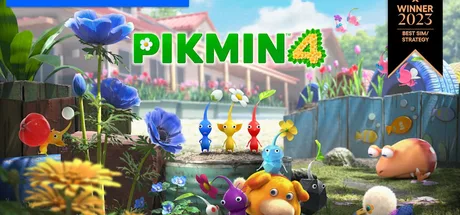
Opening Pikmin 4, you do not charge into the map — you first customize an explorer: look and name are yours, and this captain ships out with the Rescue Corps to an unknown planet. This page follows the real first-day sequence: setting the captain, clarifying the rescue goals, how the three base actions interlock, and the first haul back to base — so the whole crew’s loop makes sense in one pass.
Nintendo EPD developed and Nintendo published this fourth mainline entry, which reached Switch on July 21, 2023. It keeps the series’ day-night exploration and throw-based command, and adds a custom captain, the space dog Oatchi, and a squad rule of three Pikmin types per sortie. What actually stalls newcomers is rarely combat — it is not knowing where Pikmin come from, how to recall them, or where resources go.
The sections below run along day one, with tables for action order, priority, and the section’s reading paths. The ~13-real-minute day cycle brings nocturnal threats after dark, but the story itself has no total-day limit — so do not rush against a clock; the challenge content lives in the Dandori modes, and the opening should prioritize stability.
Customizing Your Captain: Decide Who Leads First#
The first act is customizing the explorer — deciding “who does the rescuing,” not picking difficulty or squads. The official store page states it plainly: you customize an explorer who leads the Rescue Corps to an unknown planet. Customization covers identity and appearance; real efficiency comes from the three base actions that follow.
| Customization / setting | What day one requires |
|---|---|
| Captain look and name | Player-set; the Rescue Corps identity on the unknown planet |
| Organization | The Rescue Corps — repair the mothership, rescue castaways |
| Difference from earlier entries | Pikmin 3 used three explorers; here a custom captain leads |
| Companion | Oatchi the space dog can lead Pikmin alone, smash obstacles, haul, and carry you |
| Squad cap | At most three Pikmin types per sortie; the rest wait in reserve |
The captain and Oatchi are two parallel command lines: the captain handles direct command — throws, whistles, plucking — while Oatchi can take a small squad to smash obstacles or carry you. Do not max Oatchi’s training points on day one; having it shadow the squad to learn routes pays more. Its training and voice commands get their own page in Group C.
Dispatch, Mothership and Day-One Goals#
The captain is not a standalone setting — it hangs on the Rescue Corps line. The corps sends the captain to the planet with two goals: repair the mothership, and rescue castaways including the S.S. Beagle crew. Day one’s chain reads:
| Order | Day-one goal | Story role |
|---|---|---|
| 1 | Accept the Rescue Corps dispatch | Your custom captain lands on the planet |
| 2 | Set out with the mothership as base | The mothership anchors assembly and story |
| 3 | Haul resources back | Repair progress and Pikmin growing both depend on carrying |
| 4 | Rescue castaways | Beagle crew and others return one by one |
| 5 | Register creatures | The archive fills as you explore |
The mothership repair line runs through the story, the Beagle crew is the named rescue target, and the custom captain hands “who rescues” to the player while “who is rescued and what gets repaired” stays fixed. The creature archive and story push each other: the farther you explore, the more you register, and the easier repairs get funded. The archive count is the series’ largest — register casually on day one; completeness can wait.
Throw, Whistle, Pluck: The Three Actions Divided#
The official page keeps it simple: throw sends Pikmin onto targets, whistle recalls the squad, and pluck pulls Pikmin — grown from blooms and wild creatures — out of the ground. They are not three buttons but one loop, and nearly every day-one operation orbits it.
| Action | Role | Most used on day one for |
|---|---|---|
| Throw | Place Pikmin onto targets to carry, fight, or dismantle | Dropping the squad on resource piles or electrified gates |
| Whistle | Recall the squad, muster idling Pikmin | Wrapping carries, or gathering before dark |
| Pluck | Pull newly grown Pikmin into the squad | Expanding your commandable force at the start |
The standard order to memorize — each step mirrors the official store text:
- Pluck first: Pikmin grow from blooms and wild creatures; they join only when plucked.
- Throw next: send the squad onto targets to haul, bridge, or clear obstacles.
- Whistle last: finished Pikmin idle in place; come close and whistle to muster.
- Final check: before dark, confirm no Pikmin are left behind for the nocturnal creatures.
Yellow Pikmin break electrified gates and Winged Pikmin ferry across water — read such terrain before throwing, or the squad runs for nothing. The three-types-per-sortie rule applies here too: the rest wait in reserve, and day one has no reason to field nine.
The First Resource Run: Blooms, Growing and the Base#
The first haul back is the moment the loop clicks. Resources are not the endpoint — they grow more Pikmin, build bridges, open new paths; the base is where all of it collects.
| Stage | Concrete action | Why it matters |
|---|---|---|
| Find resources | Throw Pikmin onto them to start the haul | No throw, no first income |
| Haul to base | Resources travel back along the path | The base is the hub of goods and squad |
| Build bridges | Spend resources to open impassable routes | Expands the day’s explorable range |
| Grow Pikmin | Blooms and wild creatures yield new ones | Pluck reinforcements; the squad snowballs |
| Idle | After tasks, Pikmin stay put | A close whistle musters them again |
The official page lists “haul resources and build bridges” as core Pikmin duties, and notes they grow from blooms and wild creatures and must be plucked to join. Read together, day one’s logic is a circle: throw and haul → base collects → grow more → pluck in → throw farther. The base is also one of several daily landing sites; choosing between sites gets its own Group A page.
Priorities Inside the Thirteen-Minute Day#
The ~13 real minutes measure one daylight window in the day-night cycle; night brings aggressive nocturnal creatures that endanger unprotected Pikmin. The story has no total-day cap and the challenge moved to Dandori modes — so day one is not a speedrun, it is about closing the action loop cleanly.
| Priority | Action | Reason |
|---|---|---|
| 1 | Pluck and muster the starting squad | No Pikmin, no hauling or fighting |
| 2 | Haul the first resource type back | Opens the resource-and-growing loop |
| 3 | Whistle in the squad before dark | Unprotected Pikmin suffer at night |
| 4 | Register creatures, push mothership repairs | Archive and story accrue together |
| 5 | Use rewind to fix mistakes as needed | Time-rewind is a series-first here |
A before-dark checklist, all game-specific operations:
- Whistle every idling Pikmin in — never leave the squad in the field.
- Bank the day’s hauled resources at base; nothing should be mid-road at nightfall.
- Leave Glow Pikmin for night stages; the daylight three need no night-battle makeup.
- Remember 13 minutes is one day’s daylight, not the story’s deadline — never a countdown to credits.
The Beginner Reading-Path Table#
After day one, pick the next page by the question you most want answered:
| Question | Read next | Path |
|---|---|---|
| What does each of the nine types do | The Nine Types at a Glance | /pikmin-4/pikmin-types-overview/ |
| Mastering Oatchi | Oatchi, Fully Explained | /pikmin-4/oatchi-guide/ |
| Fine-tuning throws and cursor | Throws, Whistles and the Cursor | /pikmin-4/controls-whistle-guide/ |
| The full growing-plucking flow | Growing and Plucking | /pikmin-4/breeding-pluck-guide/ |
| Planning the day cycle | Day Cycle and Daily Planning | /pikmin-4/day-cycle-planning-guide/ |