Ghost of Yōtei Characters — Atsu, Wolf Pack & Voices#
Ghost of Yōtei’s character table revolves around one person: Atsu, the ronin in 1603 Ezo around Mount Yōtei who hunts the Yōtei Six as an Onryō — voiced in English by Erika Ishii and in Japanese by Fairouz Ai. This page is not a string of mini-biographies. It splits “who stands with Atsu, who stands on the list, and who performs her” into a relationships table and a credits table, so every name met in the story pages has a place to land.
The other side of the relationship lines is the Wolf Pack. Atsu’s ally circle is called the Wolf Pack, and it holds both a shamisen player and former Yōtei Six member (Oyuki) and Atsu’s twin brother (Jubei) — a Matsumae domain samurai who also carries the title Lord Kitamori. A former Six member and a domain samurai standing together among the allies says on its own that this revenge is not something Atsu completes alone.
The naming convention needs stating too. Names and group names appear once with their original spelling in parentheses, then are referred to consistently; the tables carry a reference column so the originals stay checkable without leaking into every sentence. The development roster works the same way — two creative directors, a producer, an artist and a composer are listed by role, not as a run of bare foreign names. The voice and presentation section then gathers everything about “who performs her,” keeping it from scattering across other pages.
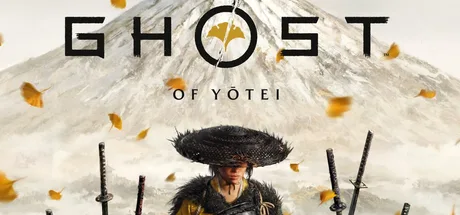
Atsu: the Onryō identity and dual voice casting#
| Item | Original | This section’s wording | Note |
|---|---|---|---|
| Protagonist | Atsu | Atsu | Consistent across the section |
| Identity | Onryō | Onryō | Self-identity while hunting the Six |
| English voice | Erika Ishii | English voice actor | Named once at first mention |
| Japanese voice | Fairouz Ai | Japanese voice actor | Named once at first mention |
| Occupation | — | Ronin, mercenary | Different from the previous game’s samurai |
| Target | Yōtei Six | The Yōtei Six | Six hunt targets |
| Stage | Ezo | Ezo (present-day Hokkaido) | Around Mount Yōtei |
Atsu’s row reads with three things attached: identity, occupation, target. She is a ronin and mercenary, not the first game’s samurai; sixteen years ago her family was slaughtered and she was pinned to a burning ginkgo tree with her father’s blade, and since then she has stood as an Onryō hunting the Yōtei Six. Onryō is not a system-granted title but the identity Atsu built for her revenge — the story page covers where it came from; this page treats it as the center node of the relationships table.
Dual voice casting is the item most often written wrong. Two actors play Atsu in the two languages, and this page names each once, then uses “English voice actor” and “Japanese voice actor” consistently instead of repeating the names — and never mixes the two performers into the credits roster with the development staff. The “Original” column keeps the spellings for reference only; they do not enter the prose.
The “Target” row names the Yōtei Six rather than six individuals because the list belongs to the story pages: Lord Saito at the top, subordinates Snake, Oni and Kitsune, and sons Spider and Dragon. Here the page only needs the opposition between Atsu and the six; pulling each member over would duplicate the story page’s roster and dilute the Atsu-centered arrangement.
The stage row works the same way — Ezo (present-day Hokkaido) around Mount Yōtei, without unrolling Teshio Ridge or the Oshima Coast biomes. A character table cares about who relates to Atsu and on which side; place names and climate belong to the regions page. Keeping the two sets of information apart means readers entering from any page never see half a character sheet glued to half a map.
Wolf Pack ally relationships#
| Character | Original | Relation to Atsu | Identity or role |
|---|---|---|---|
| Atsu | Atsu | Center | Onryō, avenger |
| Wolf Pack | Wolf Pack | Ally circle | Umbrella term for Atsu’s side |
| Shamisen player | Oyuki | Ally | Former Yōtei Six member |
| Twin brother | Jubei | Kin and ally | Matsumae domain samurai |
| Domain title | Lord Kitamori | Twin brother’s title | Matsumae domain related |
| Yōtei Six | Yōtei Six | Opposition | Atsu’s hunt targets |
| Onryō | Onryō | Self-identity | Runs through the revenge line |
The Wolf Pack is an umbrella term for Atsu’s allies, not the name of one wolf. The fact card keeps it separate from “Atsu can bond with a wild wolf as a companion”: the first is a set of human relationships, the second a combat and stealth companion system. This page handles only the first; the wolf companion page covers summoning aid and scent-sniffing — the two must not merge into one entry.
The shamisen player’s row deserves a pause. She is both a Wolf Pack ally and a former Yōtei Six member — someone who stepped out of the hunt list and over to Atsu’s side, naturally bridging the “opposition” and “ally” columns. She plays shamisen at camp, and the shamisen can alter the Guiding Wind, so character relationships, camp life and exploration navigation all meet in this one name.
The twin brother is the other relationship line. He is a Matsumae domain samurai with a domain title, kin to Atsu rather than a simple companion; listing him inside the Wolf Pack shows the ally roster holds blood ties, old subordinates and defectors — not a uniform crew of helpers. The character pages add no story detail beyond that: dialogue and history the fact card omits stay blank.
The table also keeps a row for “Onryō,” though it is not a character — it is Atsu’s self-identity. It is listed so the direction of the table is visible at a glance: the Wolf Pack, the shamisen player and the twin brother on Atsu’s side, the Yōtei Six opposite, the Onryō identity spanning the middle as the label. A relationship map’s value is its direction, not filling every cell with a biography.
Two core allies: the shamisen player and the twin brother#
| Dimension | Shamisen player | Twin brother |
|---|---|---|
| Relation to Atsu | Ally | Kin and ally |
| Past allegiance | Former Yōtei Six member | Matsumae domain samurai |
| Group | Wolf Pack | Wolf Pack |
| Related mechanics | Shamisen, Guiding Wind | Matsumae domain, title |
| Where they appear | Playing at camp | Story progression |
| Toward the revenge line | Crossed over from the list | Intervenes via domain standing |
The two sit side by side because they represent two opposite routes into the Wolf Pack. The shamisen player comes from the Yōtei Six — “someone who crossed over from the other side”; the twin brother comes from the Matsumae domain — “someone who stands over as kin and samurai.” Atsu’s revenge is therefore not one lone figure against six: old enemies and family gather around her, a pairing no straightforward party-based game would assemble this way.
The shamisen player’s row also hooks into mechanics. She can play the shamisen at camp, and playing it changes the Guiding Wind; sumi-e, zeni hajiki and new shamisen songs all sit in the side-activities set. So this name is not confined to cutscenes — it connects to camping, navigation and the music tracks. The camp-system page and the side activities page each pick those up; this page only gestures and does not steal their scenes.
The twin brother’s row needs the boundary held. The fact card gives exactly three things — Atsu’s twin brother, Matsumae domain samurai, and the title — with no quest line, appearance order or combat role; the “related mechanics” and “where they appear” cells therefore carry only qualitative wording attached to verified information, and no levels are invented. The character pages would rather keep a cell shallow than write him a storyline that does not exist.
The “toward the revenge line” row closes the section. One crossed over from the list, the other intervenes through domain standing — neither stance is a neutral spectator; the Wolf Pack earns its own table precisely because the ally relationships themselves carry dramatic tension. Readers arriving from the story page’s Six roster find that the list is not the whole picture, and that someone used to be on it.
Development roster: two creative directors, production, art, music#
| Role | Original | This section’s wording | Note |
|---|---|---|---|
| Creative director | Nate Fox | One of the creative directors | Presented alongside the other |
| Creative director | Jason Connell | One of the creative directors | Presented alongside the other |
| Producer | Brian Fleming | Producer | Development roster entry |
| Art | Joanna Wang | Artist | Development roster entry |
| Music | Toma Otowa | Composer | Development roster entry |
| Showcase | — | Presented by the two creative directors | July 2025, roughly twenty minutes |
The development roster lists people by role, not as a wall of names. Two creative directors, a producer, an artist and a composer each take a row; the wording column uses the role consistently and the original column stays reference-only — keeping the trail verifiable without bare foreign names recurring through the prose. The fact card also records a roughly twenty-minute dedicated showcase on July 10, 2025, presented by the two creative directors on gameplay, setting and visual style, hence its own row.
This table and the relationships table are two different things — do not read them as one. The first is real-world development credit, the second faction structure inside Ezo’s story; sharing a page answers the two questions readers actually look up — “who made it, who performs it” — without implying the producer maps to any in-game character. The table titles say which is which, and the prose keeps “development roster” and “character relationships” apart.
Why does the composer’s row earn its place? The fact card’s awards portion notes outstanding achievement in original music composition and best audio design honors, and reviews singled out the audio; those laurels tie directly to the composer role. This page does not unroll the awards list — that is the versions and scores page’s job. It only keeps the roster complete so readers know a dedicated musician exists on the team.
The blanks hold here as well. For the showcase’s minute count the fact card gives only “roughly twenty minutes,” and this page repeats that approximate figure with the note attached — no section-by-section breakdown of the showcase, no developer biographies. The development roster is a name reference, not a people encyclopedia; the principle matches the section-wide habit of turning numbers into mechanic descriptions.
Voice and presentation: lip sync and cinematic modes#
| Presentation item | Fact card description | Relation to the characters |
|---|---|---|
| Japanese lip sync | Fully supported | The presentation pairing for the Japanese cast |
| Kurosawa mode | Black-and-white grain, a returning item | The revenge line’s look |
| Miike mode | Closer camera, mud and impact emphasized | How combat scenes read |
| Watanabe mode | Slow-beat music, suited to exploration | The presentation while exploring |
| Photo mode | Fully provided | Freezing Atsu and Ezo in frame |
| Three modes side by side | Unlike the first game’s single return | Choice space at the presentation layer |
Lip sync and the three cinematic modes may look off-topic on a character page, but they all land on one thing: how Atsu is seen. The Japanese cast has matching lip sync, and both actors’ performances reach the screen through the presentation layer; Kurosawa mode presses the revenge line into black-and-white grain, Miike mode pulls the camera closer to the fighting, and Watanabe mode lays slow-beat music under Ezo exploration.
The division among the three modes is worth a sentence: Kurosawa mode returns from the first game, while the other two are new here. The fact card lists them alongside full photo mode and Japanese lip sync as presentation-layer features; the cinematic modes page expands their parameters and styles. This page only states their relation to Atsu and to the voice cast — no resolution, frame rate or filter tiers; all such figures stay blank this round.
One more caution: this section does not rank the modes or reach for a “pick whatever you like” filler line. Each mode carries a concrete presentation description — black-and-white grain, the closer camera with mud, slow-beat music — all traceable to the fact card. Readers wanting the full line-up with photo mode and Japanese lip sync belong on the cinematic modes page; this page’s job is to take “who performs her” one step into “how it is presented.”
Finally, back to the page’s arrangement: Atsu and her dual voice casting are the center, the Wolf Pack and two core allies are the relationships, the development roster is real-world credit, and the presentation items are how the character reaches the screen. Four tables, four layers, no overlap; readers arriving from the story pages, the character pages or the cinematic modes page all find their row here without flipping through the whole section.
Related Reading#
- Ghost of Yōtei Story — The Yōtei Six Revenge Line: where the Onryō identity and the opposing list come from, laid out through the ginkgo tree and sixteen years ago.
- Ghost of Yōtei Wolf Companion — Bond, Summons & Tracking: the one wild wolf beyond the Wolf Pack circle, with its summoned aid explained on its own page.
- Ghost of Yōtei Sumi-e, Zeni Hajiki & Shamisen Songs: the tracks and side activities the shamisen player leads into, listed item by item.
- Ghost of Yōtei Cinematic & Photo Modes: the three presentation modes from this page’s close, explained in full there.