Ghost of Yōtei Story — The Yōtei Six Revenge Line#
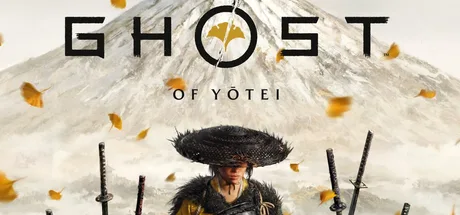
Ghost of Yōtei sets its clock to 1603 in Ezo — present-day Hokkaido — around Mount Yōtei, 329 years after the events of Ghost of Tsushima. This page does not retell the story level by level. It pins down the coordinates first: the year, the place, the distance from the previous game, the massacre sixteen years ago, and why Atsu exists as an “Onryō” at all. Once those coordinates are fixed, the Yōtei Six stop being six names in an arbitrary order.
The revenge line starts under a ginkgo tree. Sixteen years ago Atsu’s family was slaughtered and she herself was pinned to a burning ginkgo tree with her father’s blade; since then she has hunted the Yōtei Six as a ronin and mercenary carrying the Onryō identity. Onryō here is not a job title — it is the identity Atsu built for her revenge, and it is also why this section splits the story pages from the character pages: one tracks who she is hunting, the other who she is and who stands with her.
One rule needs setting first. This page only carries story content backed by the fact card; anything from legacy drafts, pre-launch previews, or single-source retellings is pulled out into the final section, “Legacy drafts and multi-account notes,” and never folded into the body as established fact. The Chinese-site character names are direct translations with unverified official equivalents, and the same holds for two place names — each caveat is stated once where it applies and not repeated.
Time coordinates: Ezo in 1603, 329 years after Tsushima#
| Coordinate | This game’s setting | Relation to the previous game | Source nature |
|---|---|---|---|
| Year | 1603 | 329 years after the previous game’s events | Encyclopedia mirror |
| Place | Ezo, present-day Hokkaido | No longer Tsushima | Encyclopedia mirror |
| Core stage | Around Mount Yōtei | The mountain replaces the island as landmark | Encyclopedia mirror |
| Protagonist identity | Ronin, mercenary | Different from the previous game’s samurai | Encyclopedia mirror |
| Revenge motive | Family slaughtered sixteen years ago | Standalone sequel, no returning character lines | Encyclopedia mirror |
| Self-identity | Onryō | The identity Atsu carries while hunting the Six | Encyclopedia mirror |
The year 1603 separates Atsu completely from Ghost of Tsushima. The two games sit 329 years apart, the stage moves from Tsushima to Mount Yōtei in Ezo, and the protagonist shifts from samurai to ronin and mercenary. This is a standalone sequel, not a continuation of the same cast; the easiest mistake for readers carrying memories of the first game is to treat both revenge stories as one line, and the distance on the fact card exists precisely to cut that association.
Ezo is the period name, corresponding to today’s Hokkaido; the section writes “Ezo (present-day Hokkaido)” once and uses Ezo after that. Mount Yōtei is not a backdrop: the dynamic weather draws on its real climate, with snow, rain, aurora, blizzards and dense fog all landing on the same mountain range; Teshio Ridge in the north and the Oshima Coast in the south are the two biomes split around it. The story pages and the world pages therefore share one set of place names.
Writing “329 years” into a table instead of vaguely saying “many years later” is because the figure comes from an encyclopedia mirror consistent across two sources and is tied to the standalone-sequel framing. It can be stated — unlike the frame rates, levels, and health values this section deliberately leaves blank: one is narrative fact, the other needs official data or hands-on testing, and this page does not blend the two.
Sixteen years ago is the other timeline. It is not a release date or a patch date but the moment of Atsu’s personal trauma: family slaughtered, herself pinned to a burning ginkgo tree with her father’s blade. The main story happens in 1603, the trauma sixteen years earlier, and the revenge spans the gap between them; the story pages list the two separately so readers understand why clue cards and home memories keep switching between “past” and “present.”
The ginkgo tree origin: the massacre and the Onryō#
| Story element | Fact card content | Role in the revenge line |
|---|---|---|
| Victims | Atsu’s family | The motive for revenge |
| Weapon | Her father’s blade | Binds family and trauma together |
| Scene | A burning ginkgo tree | Atsu pinned to the tree |
| Survivor | Atsu herself | Becomes the hunter |
| Point in time | Sixteen years ago | The gap from the main story |
| Identity | Onryō | The self-identity of the revenge |
The fact card describes the tragedy with restraint: sixteen years ago Atsu’s family was slaughtered and she was pinned to a burning ginkgo tree with her father’s blade. Three images — the family, the father’s blade, the burning ginkgo — nail a private trauma into one concrete picture rather than a vague “tragic backstory.” Anywhere in this section that mentions Atsu’s past points back here; no details of the attack or the survival are invented beyond it.
“Onryō” is the identity this trauma produced. Atsu does not take revenge as a daughter, a sister, or a samurai’s survivor — she stands as an Onryō; that explains why she works alone and why the clue cards and interrogations read as tracking rather than questioning. The character pages fill in her dual voice actors, the Wolf Pack allies and her twin brother; this page only explains where the identity comes from and where it leads.
The ginkgo tree also ties into the home memories system. Atsu can return to her childhood home at any time to relive fragments of memory, some tied to main-story clues or character backgrounds; separate reports describe an ability to switch between past and present. This page files that line under a “memory layer” set beside the 1603 “present layer,” with the home memories page expanding it — so memory fragments are never written as main-story events that already happened.
One boundary needs drawing: the fact card gives neither the full course of the attack, nor each member’s part in it, nor how Atsu was saved. This page therefore never writes “who swung the blade” or “who set the fire” — only the four points two sources support: the family, the father’s blade, the burning ginkgo tree, sixteen years ago. Keeping the blanks blank is what stops the story from being stretched out of shape by speculation.
The Yōtei Six roster at a glance#
| Name on this site | Original | Position in the Six | Note |
|---|---|---|---|
| Lord Saito | Lord Saito | Leader | Father of Spider and Dragon |
| Snake | Snake | Lord Saito’s subordinate | Name translated directly |
| Oni | Oni | Lord Saito’s subordinate | Name translated directly |
| Kitsune | Kitsune | Lord Saito’s subordinate | Tied to northern Teshio Ridge |
| Spider | Spider | Lord Saito’s son | Name translated directly |
| Dragon | Dragon | Lord Saito’s son | Name translated directly |
The Six are structured as one leader plus five subordinates — three underlings and two sons. Lord Saito sits at the top, with Snake, Oni and Kitsune beneath him and Spider and Dragon as his sons; Atsu’s Onryō identity exists to hunt these six. The father-son ties are written into the notes column because they shape how clues interlock on the hunt-order page, not to pad the list to six.
Snake, Oni, Kitsune, Spider and Dragon, plus Lord Saito, are direct translations or Chinese-media renderings; official Chinese names are unverified, and the section’s hub carries the name table once, so this page does not annotate each name again. The “Original” column keeps the source spelling for reference only and never enters the prose — the same fixed handling of mixed-language text used across the section, where English stays out of Chinese sentences.
Kitsune’s row carries one extra note because the fact card ties northern Teshio Ridge to Kitsune and a nine-tails ninja clan, while the southern Oshima Coast is held by Lord Saito’s forces — the best-equipped, mostly firearms-wielding army. In other words the Six are not six icons spaced evenly on a map: at least Kitsune and Lord Saito’s army are bound to specific territory; the regions page picks up that thread, and this page only flags the link.
It is just as important to note what is not written. The fact card gives none of the Six’s movesets, health values, appearance order, or individual levels, so the roster has no “how to fight” or “difficulty” columns. Readers who want the order to tackle them in belong on the hunt-order page; the roster here answers only who is on the list, how they relate, and how the names are standardized — not one row more.
Nonlinear revenge: the hunt order you choose#
| Decision point | Confirmed conclusion | What this section does not state |
|---|---|---|
| List presentation | All six are hunt targets at once | List unlock level |
| Order | Players choose their own order | A recommended optimal order |
| Clue pull | Target cards from interrogations track the list | Clue count per member |
| Regional ties | Some members are bound to Ezo regions | Region count or area figures |
| Difficulty | Enemy archetypes vary by biome | Enemy health or damage |
| Pacing | Slower late story is media consensus | Level length figures |
The fact card states the story is nonlinear and players choose the order they challenge the Six. There is no fixed main line stringing the six names into a sequence; wherever the clue cards lead and whichever name a player moves on first, that is where the revenge line opens. This belongs on the story page rather than the beginners page because it is narrative structure, not opening-hour operation.
Free order pulls the clue cards along with it. Target cards from interrogations track the revenge list — pick someone first and that person’s card becomes the route; the clue-cards page and the hunt-order page are therefore two sides of one system, one explaining where the cards come from, the other what order they form. This page delivers the structural conclusion only: it will not rank “Snake or Oni first,” and it invents no one’s level difficulty.
One piece of media consensus concerns pacing: the story slows in its later stretch, part of the press found the open-world structure dated, and most reviews frame the game as a refinement of its predecessor rather than a reinvention. That is critical opinion, not story fact; this page keeps it in a table marked as media consensus, never mixed into the Six roster. The versions and scores page handles it alongside the review scores.
Regional ties also shape how the order feels. Cold in northern Teshio Ridge lowers Atsu’s maximum health, and Lord Saito’s forces on the southern Oshima Coast mostly carry firearms; choosing who to hunt first is choosing which climate and enemy archetypes to walk into first. These are qualitative environmental differences — total region counts, areas, enemy health and damage all went unverified this round, so the table’s right column stays empty by design.
Home memories and the past/present switch#
| Memory mechanic | Fact card description | Relation to the revenge line |
|---|---|---|
| Childhood home | Returnable at any time | Relive childhood memory fragments |
| Memory fragments | Some tie to main-story clues | Fill in character background |
| Past switch | Described in reports | Set against the present layer |
| Ginkgo tree | The trauma scene, sixteen years ago | Anchor of the memory layer |
| Clue cards | Point to hidden landmarks and shrines | The present layer’s way forward |
| Onryō identity | The self-identity born of trauma | Spans both layers |
The fact card offers two memory-related statements: Atsu can return to her childhood home at any time to relive memory fragments, some tied to main-story clues or character backgrounds; and separate reports describe an ability to switch between past and present. This section keeps the first as a mechanic and the second as “described in reports,” side by side — the switch is never written as a verified system rule, and no trigger conditions are invented for it.
The section sits on the story page because the memory layer and the present layer together form the revenge line. The present layer is 1603 Ezo’s clue cards, interrogations and hunts; the memory layer is the ginkgo tree, the family and the childhood home; the Onryō identity spans both — the result of the trauma and the engine of the present layer. The home memories page expands return, replay and switching one by one; this page only explains why they count as story.
Putting the ginkgo tree and the clue cards in one table is meant to draw a contrast: one points backward, the other points to the next step. Clue cards lead to hidden landmarks, side stories or secret shrines — Atsu’s tools for moving forward; the ginkgo tree and the home pull her back. The game does not weld the two together in long cutscenes; it lets players connect them across camping, tracking and remembering — the same nonlinearity, extended into time.
The boundary holds here too. The number of memory fragments, how often the home can be revisited, the unlock conditions for switching — the fact card gives none of them, and this page invents nothing. Readers meeting home memories elsewhere will find the same blanks; the section would rather ship a page that reads as a mechanic explainer than fill its tables with made-up numbers.
Legacy drafts and multi-account notes#
| Item | Legacy-draft or single-source account | This section’s handling |
|---|---|---|
| Multiplayer timing | Pre-launch drafts used future tense for a free update | Flagged as pre-launch draft, never cited forward |
| PC port | Preview expected it later | Flagged as pre-launch preview, since changed |
| Wolf revival | One preview claimed one revival per region | Filed as unverified, not stated as fact |
| Weapon categories | Preview claimed seven including rifle | Flagged as an account difference; five melee types kept |
| Console bundles | Preview listed two bundle SKUs | Flagged as pre-launch speculation |
| Complete Edition date | Three accounts across aggregator, mirror, roundup | Listed side by side, no date pinned |
| Base-game score | 86 and 87 both in circulation | Listed side by side, never blended |
| Sales | 3.3 million and 5 million both in circulation | Listed side by side; the latter single-source |
This section is the story page’s pressure valve. The fact card’s fourth block lists a run of pre-launch previews and single-source retellings — some since overturned, some mutually contradictory; rather than squeezing them into the revenge narrative, this page collects them in one place and labels each. Check here and you know which statements the section treats as fact and which are merely registered.
The one closest to the story is the timing of the Legends multiplayer mode. Multiple sources put it in March 2026, with March 10 also cited, yet some 2025 drafts still read “coming in 2026 as a free update” in future tense; this section treats it as a shipped update and flags the old drafts as pre-launch. The multiplayer page covers its two-player story and four-player survival separately, never blended into Atsu’s single-player revenge.
The weapon and wolf items are preview-level differences. Previews wrote seven weapon categories including rifles, and a wolf reviving Atsu once per region; this section follows the encyclopedia mirror — consistent across two sources — of five melee types plus bow and matchlock-class ranged, flags “seven categories with rifle” as an account difference, and files the wolf revival as unverified. They do not change the Six roster, but they shape how readers read Atsu’s capability and companions, so they surface here once and are fenced off.
Date, score and sales are not story, yet keep getting cited as background, so they close the table. The Complete Edition’s release date has three accounts, the base-game score has 86 and 87, and sales have 3.3 million and 5 million — the latter a single-source retelling; this section lists them all side by side and picks none. The versions and scores page carries the full comparison; this page only marks them clearly and draws no conclusion.
Related Reading#
- Ghost of Yōtei Character Relationships — Atsu & the Wolf Pack: her dual voice actors, Wolf Pack allies and twin brother — the Onryō identity continued.
- Ghost of Yōtei The Yōtei Six Hunt Order: with the list freely chosen, this page covers how the order is arranged and how clues interlock.
- Ghost of Yōtei Home Memories & Past/Present Switch: the memory layer where the ginkgo tree and childhood home live, expanded on its own page.
- Ghost of Yōtei Versions, Platforms, Sales & Awards: the multi-account conflicts flagged on this page, compared in full there.