Silent Hill 2 Remake Lore and World#

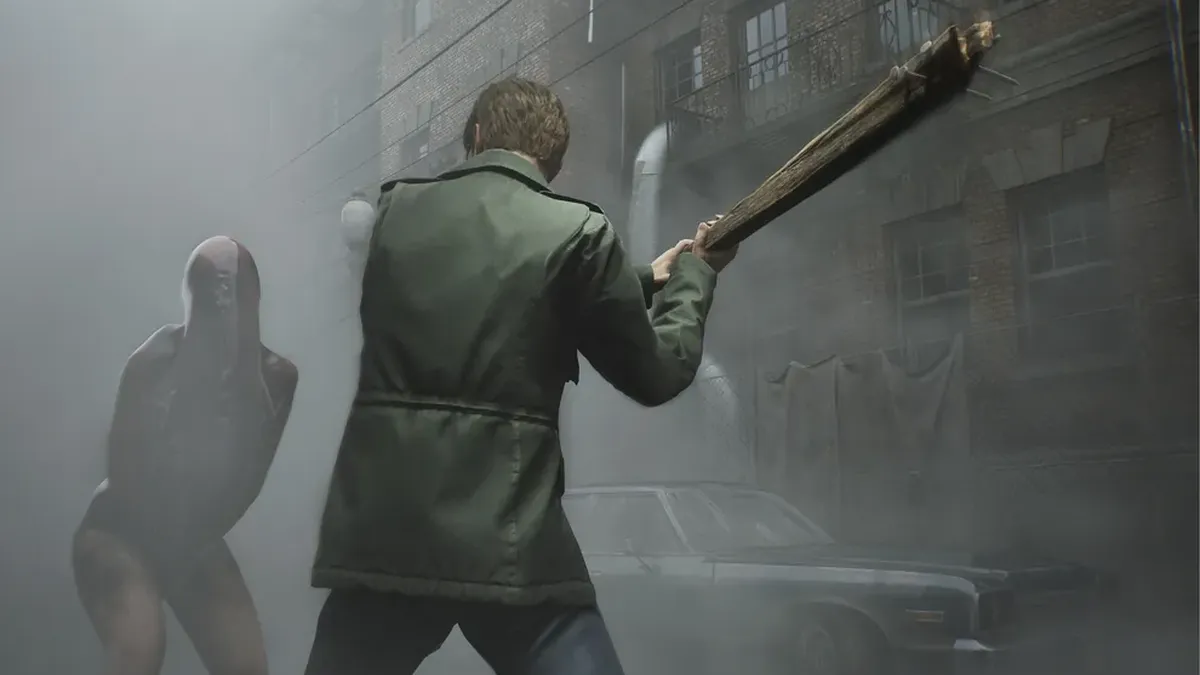
Silent Hill 2 Remake is not a game that scares you with monsters — it is psychological horror that takes the word “guilt” apart and kneads it into every inch of the town’s fog. To read this page, first accept one premise: the monsters, buildings and streets of Silent Hill are essentially projections of James’s own confusion and guilt. From “why the town is like this” onward, this page unpacks the monster symbolism, the characters’ psychology, and what each ending is really saying.
What Silent Hill Is: A Town Summoned by Guilt#
Silent Hill is not an ordinary abandoned town. Its horror runs on one core rule: this city reflects the inner world of everyone who enters it. The deeper the guilt and desire someone refuses to face, the more twisted its manifestations become — as monsters, as the Otherworld, and as the fog that never lifts. Different people walking into Silent Hill see entirely different things.
| Rule | What it looks like | Evidence |
|---|---|---|
| Guilt summons | The guiltier the heart, the more terrifying and persistent the monsters | James’s Pyramid Head and Angela’s Abstract Daddy are each born from their own minds |
| The innocent are immune | A pure heart is barely touched by monsters or fear | Laura moves through the town unharmed — she carries no guilt |
| Memory is the map | The ruined buildings are characters’ memories made concrete | The hospital and the hotel both mirror James and Mary’s past |
| Desire made flesh | Powerful obsessions condense into visible beings | Maria embodies James’s fantasy “if Mary had never gotten sick” |
| The Otherworld descends | The rusted, cage-filled world where pressure spikes | Shifted via specific rooms — mirrors and viewing devices |
A practical reading habit: when a location strikes you as unreasonably twisted, ask whose memory it is rendering. The answer is usually not about the place — it is about the past a character refuses to admit.
Key Locations and What They Mean#
| Location | Narrative role | Inner projection |
|---|---|---|
| Toluca Lake | Where James enters the town; the lakeside park is a story node | Mary’s wish to vacation here with James |
| Rosewater Park | The transition scene where James first meets Maria and Angela | The shoreline as the border of memory and farewell |
| Blue Creek and Wood Side Apartments | The main exploration area of the first half, dense with letters and diaries | Where James’s avoidance and self-interrogation begin |
| Brookhaven Hospital | Multi-floor levels and the first major Otherworld shifts | Where Mary was hospitalized and died — the densest concentration of guilt |
| Silent Hill Historical Society | The entrance down to the prison and the Labyrinth | The passage from surface to depths, where the truth starts to show |
| Toluca Prison and the Labyrinth | The densest enemy encounters; the twin Pyramid Heads | The climax of James’s desire for self-punishment |
| Lakeview Hotel | The ending’s convergence point; the videotape and final truth | Mary’s last stop in life — where the ending is decided |
One exploration note: surface-to-Otherworld shifts have physical triggers, often a mirror or a viewing device in a specific room. When walls start weeping rust and corridors seal behind grating, the Otherworld has pressed in — and enemy density rises with it.
Monsters as Metaphors, One by One#
Every monster in Silent Hill 2 is deliberately designed; each carries a specific psychological weight — James’s, or another character’s. Understanding this changes both how you fight and how you feel about fighting.
| Monster | Symbolism | Where it appears | How to handle it |
|---|---|---|---|
| Pyramid Head | James’s punitive urge and self-judgment | First seen in the apartments; chases in the hospital; the Labyrinth and the finale — twins at the end | Keep mid-distance and circle pillars; never trade blows head-on |
| Mannequin | James’s repressed desire; headless fused figures | Common in the apartments and hospital; slow-moving | Watch the leg kicks — sidestep and punish |
| Nurse | The distortion of Mary’s hospitalization; faceless | Dense in hospital areas, in groups | Headshots deal far more damage; isolate and finish one at a time |
| Abstract Daddy | The embodiment of Angela’s father’s abuse | Within Angela’s storyline | A narrative encounter — follow its rhythm |
The self-test: if you can vaguely guess which past each monster embodies, you have already grasped the design language of Silent Hill. It is not trying to make you fight harder — it is trying to make you understand more.
The Characters: Everyone Is Fleeing Their Own Guilt#
James Sunderland#
James is the game’s central puzzle. He says he has come for his late wife Mary, but layer by layer the story reveals that he caused her death. The game runs him through the full chain of denial → anger → bargaining → depression → acceptance, and every choice the player makes decides whether James faces the truth or flees it.
| Stage | What it looks like | In the game |
|---|---|---|
| Denial | Refusing to accept Mary is dead; insisting “she wrote to me” | The opening search for a living Mary |
| Anger | Rage at the illness, the hospital, fate | The hostility of the hospital scenes |
| Bargaining | Seeking some redemption in the ending | Collecting items, pursuing different endings |
| Depression | Crushed by environment and memory | The rot and self-doubt of the town’s depths |
| Acceptance | Facing the crime he committed | The choice after the videotape’s truth |
Maria and Mary: Two Possibilities of One Face#
| Dimension | Mary | Maria |
|---|---|---|
| Personality | Gentle, considerate, touched by sorrow | Lively, alluring, flirtatious |
| Toward James | Deep love mixed with pain | Proactive, seductive, compliant |
| Dressing | Plain home clothes | Revealing outfits |
| Fate | Died of illness in the hospital | Killed by Pyramid Head |
| Symbolism | Reality and responsibility | Fantasy and desire |
Angela Orosco and Eddie Dombrowski#
Angela and Eddie are James’s mirror set: both walk into the town carrying their own guilt and wounds, and both end differently. Angela carries her father’s violence and her mother’s weakness, and walks into the flames; Eddie, bullied for years, discovers the pleasure of violence after killing and finally faces James in the Labyrinth.
| Character | Source of guilt | Manifestation | Ending |
|---|---|---|---|
| Angela | Her father’s violence and mother’s weakness | Abstract Daddy | Walks into the fire — self-destruction implied |
| Eddie | Long suppression and humiliation | His own monstrousness | Killed by James in the Labyrinth |
Laura: The Only Innocent#
Laura is the only character the town cannot touch. She met Mary during her hospitalization and came looking for her; because she carries no guilt, the town’s horrors barely register to her — the most direct evidence that the town’s rules run on guilt, and the clean-hearted can walk through unharmed.
The Endings: Can James Accept the Truth#
The endings are not a good/bad binary — they are different answers to the truth. Each ending reflects a way of handling the fact that James killed Mary:
| Ending | Tendency | Meaning |
|---|---|---|
| Leave | Face the truth and forgive himself | James is released from guilt |
| In Water | Still unable to forgive himself | James follows Mary into the water |
| Maria | Drowning in fantasy rather than truth | James escapes into illusion with Maria |
| Rebirth | Refusing reality, trying to resurrect Mary through ritual | James rejects the truth entirely |
| Dog | Special gag conditions | The developers’ joke against the heaviness |
| UFO | Special gag conditions | Another humorous hidden ending |
Full unlock conditions are in the endings guide, and the scene-by-scene breakdown is in the story analysis. One warning: endings depend heavily on accumulated behavior, so plan a run’s route deliberately rather than improvising.
The Town’s Rules, Summarized#
| Rule | Consequence for the player |
|---|---|
| Guilt summons manifestations | Your opponent’s shape tells you whose story you are in |
| Innocence grants immunity | Laura’s safety is the rule’s proof, not a plot hole |
| Memory builds the spaces | Every landmark is someone’s past rendered explorable |
| Desire condenses into people | Maria exists because James’s wish does |
| The Otherworld descends on shifts | Rust and seepage are your cue to slow down and re-map |
These five rules explain every set piece in the game. When a scene confuses you, one of them is usually the missing key — check which rule the scene is exercising, and the confusion typically resolves into design.
How the Remake Retells the Lore#
The remake’s presentation choices sharpen the original’s storytelling, and they matter to reading the world:
- The over-the-shoulder camera makes the town a body-level experience. The original’s fixed frames observed James from a distance; the remake puts you inside his blind spots, so the town’s hostility is felt at shoulder height — the symbolism plays out in the space around you rather than on a stage in front of you.
- Voice performance adds a layer the original lacked. Full English and Japanese voicing gives the characters’ denial and grief a literal register — Mary’s letter, Maria’s teasing, Eddie’s escalating menace all land through delivery, not just text.
- Expanded exploration deepens the environmental storytelling. Rooms that the original rendered as backdrops are now searchable spaces whose contents — a letter, a photograph, an arrangement of furniture — carry the same lore the documents spell out.
- The fog and lighting remain the core language. Visibility is still the town’s primary tool for hiding and revealing: what the fog conceals is always less important than what it implies.
None of this changes the lore’s substance — the 2001 story survives intact. What it changes is where your attention lands: the remake trusts you to read a room’s meaning from its contents, not from a narrator’s summary.
A Comprehension Checklist#
Use these five questions to test whether the town’s logic has truly clicked:
- Can you name the psychological metaphor behind Pyramid Head, the Mannequins and the Nurses?
- Can you explain why Laura is never attacked?
- Can you say whose memories Brookhaven Hospital and the Lakeview Hotel each mirror?
- Can you point out the visual signals and triggers of a surface/Otherworld shift?
- Can you state what attitude toward guilt Leave, In Water and Maria each represent?
If you can answer all five, you have moved from “being scared” to “understanding” — which is exactly what separates this work from ordinary horror games.
For how the town’s locations play out as levels, see the area guide; for the world’s exploration mechanics in practice, see the world guide.
One closing note on reading the town: the fog is honest. It hides exactly as much as it hides, and it never lies about what it shows. The monsters are honest too — each one is a fact about a psyche, standing in a corridor. The town’s cruelty is in what it refuses to say outright, not in what it misrepresents, which is why the five questions above are answerable at all. Everything the town knows, it shows; the only thing it withholds is the interpretation — and that withholding is the story.