Palworld Combat System Guide#
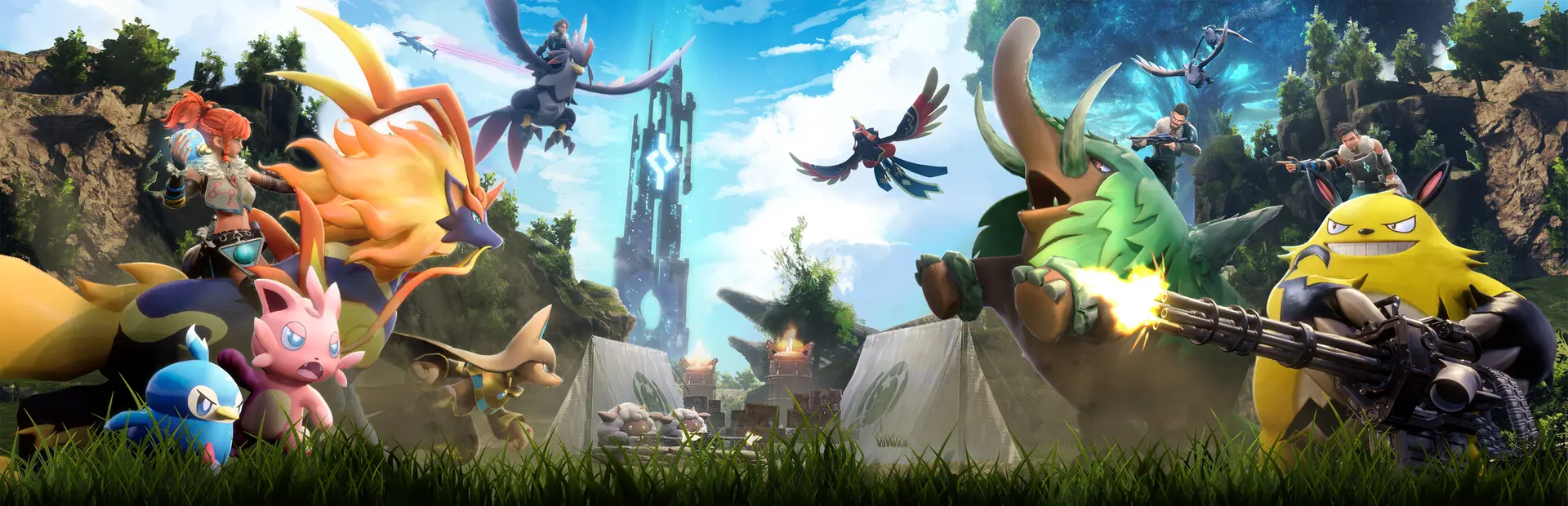
Palworld launched in Early Access on January 19, 2024 and shipped its 1.0 full version on July 10, 2026. Combat is the system 1.0 changed most directly: the roll-dodge that had run for two and a half years was replaced by the Dash, players can order Pals to attack specific targets for the first time, tower boss fights were cut to half duration, and nearly every active Pal skill was rebalanced. This page walks the 1.0 combat rules in order: operation rework, command system, Pal AI and skills, stats and allocation, weapons and mobility, tower rules, the type counter ring, and the arena.
One classification error to clear up first: the Awakening system and the mutation mechanic added in 1.0 are growth-line systems — they change Pal stat ceilings and passive pools, not combat rules themselves. Both are covered on the Awakening and Mutation pages; this page mentions them only in loadout context.
The 1.0 Operation Rework#
The 1.0 combat rework is not a number pass — it is an operating-logic swap. The official patch notes condense it into five items: dash replaces roll-dodge, you can attack while dashing, reload during dodges, melee handling improved, and overall movement responsiveness raised. Item by item:
| Aspect | Early Access | 1.0 |
|---|---|---|
| Core dodge | Roll — an instant burst of displacement | Dash — sustained acceleration |
| Attacking while moving | Impossible mid-roll | Fully possible mid-dash |
| Ranged weapon loop | Reload needed a standing window | Reload inside the dodge |
| Melee feel | Notable lock between swings | Improved melee handling |
| Overall response | Sticky stops and turns | Better movement responsiveness |
The roll-era rhythm was “burst, roll out, re-enter” — damage windows and movement were mutually exclusive. The dash merges them into one operation stream: shooting while repositioning is the new default stance, and moving no longer means standing down.
What the New Rhythm Means in Practice#
- Ranged loops never stop: reloads hide inside movement, so gun and bow output becomes a continuous curve instead of “stand — dodge — stand”. Against dash-in bosses, your reload window is no longer a fixed tell.
- Melee dares to hug: improved melee chains lower the punishment for point-blank play, and dash-reposition-reenter footsies make melee weapons stronger than in Early Access.
- Movement is output: with the dash replacing the roll, repositioning is no longer a one-shot gamble on invincibility frames but a continuously adjustable state. Against wide-area skills, short dash corrections are easier to keep on the safe edge than one whole-roll commitment.
Direct Orders: Command Pals onto Specific Targets#
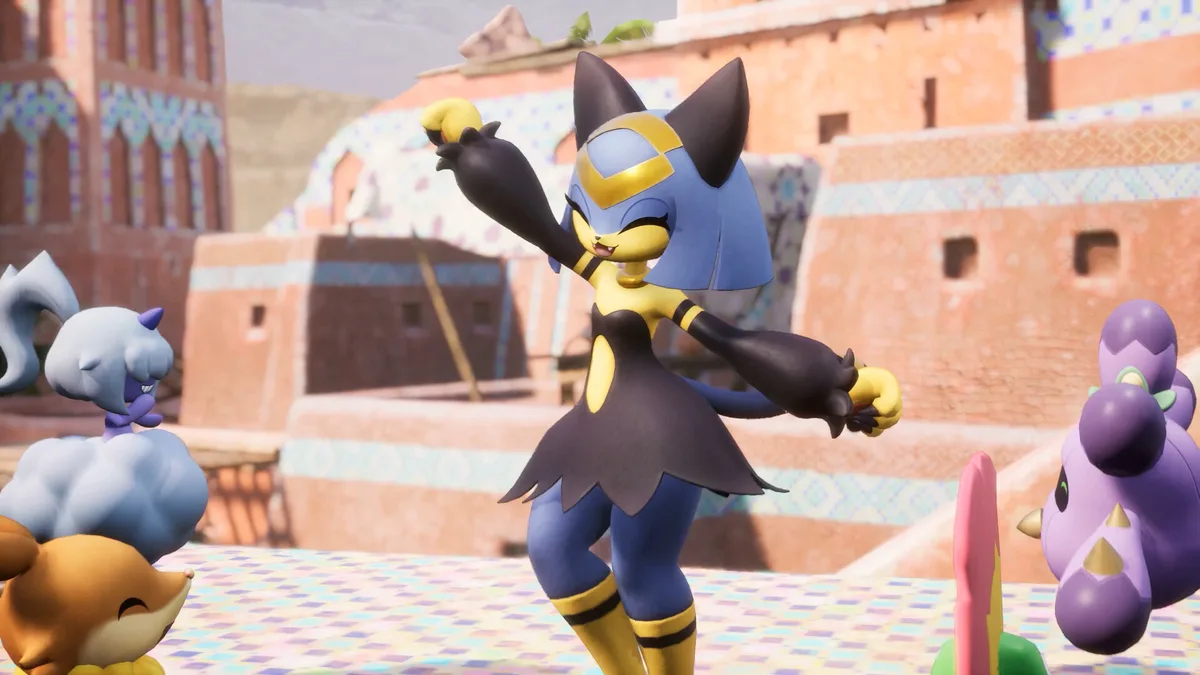
1.0 added the ability to order a Pal to attack a chosen enemy — the step that moves combat from “semi-auto” to “commanded”. In Early Access, Pal targeting was autonomous and you influenced it only by your own positioning; now you can point your Pal at the exact threat.
The tactical value lands on three levels:
| Scenario | Without orders | With direct orders |
|---|---|---|
| Boss with summons | Pal chases the boss while adds swarm you | Point the Pal at the adds, handle the boss yourself, then swap |
| Multi-target fights | Pal targeting ignores type counters | Assign by counter: send the counter element at the matching weakness |
| Nuisance units | Healers and ranged pests go untouched forever | Dedicate a Pal to suppressing them while you hold the front |
It combos with Pal switching: assign focus order first, then rotate Pals by type counter — your team’s damage distribution goes from random to planned.
Pal AI and Skill Rebalance#
1.0 touched Pal combat behavior on two layers, both from the official notes:
Wild pack AI improved. Wild Pals in groups choose attacks and position smarter, and animal-type Pals gained new behavior patterns. Wild encounters no longer look like “two statues trading hits” — packs flank and rotate, and low-level players should lean on terrain to disengage when surrounded.
Party Pal damage raised significantly. The notes state the direction explicitly: party Pals’ output is up overall, their share of total damage is higher than in Early Access, and the game shifts from “solo carry with a pet” toward genuine two-unit synergy.
Active skills almost fully rebalanced. High-tier skills buffed overall; some generic nukes nerfed — Holy Burst (in-game localization naming applies) is named in the notes’ nerf list. The old “one spam skill clears everything” team building is dead; 1.0 teams return to type counters and skill roles. Skill combinations live on the skills page.
Player and Pal Stats#
Player characters have six stats with freely allocatable points on level-up. 1.0 raised the level cap from 65 to 80, increasing total points and making allocation matter more than ever.
| Stat | Effect | Allocation direction |
|---|---|---|
| HP | Player health, +100 per point | Official recommendation first — HP underwrites every dodge and mistake |
| Stamina | Resource for dashing, swings, gliding | Worth some points for mobility builds |
| Attack | Player’s own damage, +1 per point | Officially recommended after your weapon is set |
| Defense | Reduces incoming damage | Fill as needed |
| Work Speed | Handcrafting and related actions | Officially not recommended — base work belongs to Pals |
| Max Weight | Total carry capacity | Invest when running long expeditions |
Three expansions:
- +1 Attack per point looks tiny, but it multiplies into weapon damage. As weapon tiers climb, the same +1 scales to much larger absolute values late — that is why the official line is “weapon first, then Attack”.
- Work Speed is the classic Pal-replaceable stat. Base Pals can cover all crafting and hauling; points here trade away combat value, and the official recommendation explicitly steers away.
- Level 80 changes loadout math: the tech tree extends with the cap, with 13 new weapons spread through mid-late tiers; spare points enable extreme builds; and the Sunreach and World Tree endgame bosses are tuned to the new 80 ceiling.
Weapons and Gear: 13 New Weapons and the Unlock Curve#
1.0 added 13 weapons, 44 accessories, plus new armor, new resources and blueprints. This page does not transcribe lists and stats — the focus is unlock pacing and loadout logic; item entries live on the items page and loadout combos on the builds page:
- The tech tree now reaches level 80: new weapons distribute through mid-late tiers, late-tier gear needs 1.0’s new resources to craft, and the equipment endgame moved wholesale past the Early Access 65 ceiling.
- New resources gate late gear: the new ore Soralite requires special equipment to mine — mining methods and regions on the resources page; it feeds both late gear crafting and base upgrade lines.
- 44 accessories widen loadouts: the combinatorial space grew from “weapon + armor + shield” to accessory modifiers — the same weapon set can lean offensive, defensive or utility depending on accessories.
The prime directive of gear choice has not changed: weapons set your damage ceiling, armor and shields set your error budget, accessories set your function coverage. What changed is the pool’s depth — which makes route planning worth more than before.
The Wing Pack: Flight Without a Mount#
The Wing Pack is 1.0’s key new equipment: fly without riding a Pal. Its combat impact is two-fold:
- A new movement axis: vertical disengagement joins the dash as an answer to ground AoE, and opening positions expand from a plane into a volume.
- The Pal slot is freed: flight no longer consumes a ride slot, so your Pal can focus on damage or work while you handle movement — a “human flies, beast fights” structure.
For travel, the Wing Pack plus Watchtower fast travel pulls exploration of the new regions (Sunreach’s floating islands, the seven isles, new settlements) up a full tier — air-drop to a Watchtower to unlock the waypoint, then loop back to clear the bosses along the route.
Tower Bosses: 5-Minute Timers and Redesigned Towers#
By official count there are 7 tower bosses: the Hillside, Forest, Desert, Volcano and Astral towers plus the Sakura Island tower all arrived during Early Access, and the seventh joined with 1.0 in the floating Sunreach region. Per-boss mechanics and prep gates live on the bosses page; this page covers the rules layer:
| Rule | Early Access | 1.0 |
|---|---|---|
| Tower boss count | 6 | 7 |
| Time limit per fight | 10 minutes | 5 minutes |
| Arena design | Early generic layouts | Every tower has a unique tower body |
| Combat mechanics | Early configurations | New mechanics per tower |
| Hard mode | Regular re-clears | Progression adjusted; beating 6 bosses maps to a dedicated achievement |
The 5-minute timer is the change you feel most: error budget halved, and dragging into attrition now costs supplies and Pal state instead of just time. Prep therefore moves earlier — gear tier, Pal levels and focus plans must be set before you enter; in-tower improvisation is nearly gone. One sequence note: the World Tree endgame boss Astralym does not use tower timer rules — it is a separate track outside the seven towers.
The Type Counter Ring#
Type counters are the foundation of team building and focus orders — direct orders made “who attacks whom” a plannable decision, which raises the memory value of the ring. The nine types:
| Type | Super effective against | Takes super effective from |
|---|---|---|
| Fire | Grass, Ice | Water |
| Water | Fire | Electric, Grass |
| Grass | Electric, Water | Fire |
| Electric | Water | Grass |
| Ice | Dragon | Fire |
| Dragon | Dark | Ice |
| Dark | Nothing | Dragon, Light |
| Light | Dark | — |
| Neutral | — (no offensive bonus) | Dark |
Two corners worth memorizing separately: Light has no predator in the ring and always counters Dark — a stable plug against endgame Dark bosses; and Neutral attacks trigger no counter bonus at all — don’t expect neutral damage to ride any multiplier. The standard flow combining orders with counters: read the enemy lineup on entry, point Pals at targets whose type they counter, and personally cover the gaps.
Arena and PvP#
The arena is the official PvP stage. 1.0 added the Legend rank and cut match length to 2 minutes. The shorter format amplifies openings and burst value: the first 30 seconds of trades usually set the result, and turtling builds have less room than ever. The top rank’s achievement, Arena Legend, is the rarest in the list — Steam stats put ownership at 0.4% to 0.5%. The full achievement list lives on the achievements page.
Combat Checklist#
Condensing the system changes into one combat checklist:
| # | Point | Basis |
|---|---|---|
| 1 | Replace roll memory with dash rhythm; merge movement and damage into one stream | 1.0 operation rework |
| 2 | Hide reloads inside movement; delete standing-reload windows | Reload during dodges |
| 3 | Assign Pal focus targets on entry; clear adds and nuisances first | Direct orders |
| 4 | Order Pal swaps by type counter, not by level | Counter ring + orders |
| 5 | Re-audit generic-skill teams; high-tier skills are generally stronger in 1.0 | Skill rebalance |
| 6 | Move tower prep forward: gear tier, supplies and focus plans set before entering | 5-minute timer |
| 7 | In the shorter arena format, opening burst and first trades matter more | Legend rank, 2-minute matches |
| 8 | Fight with the Wing Pack equipped; keep your Pal’s slot free to attack | Flight without riding |
1.0’s overall direction fits in one sentence: the player’s skill ceiling rose, and the Pal’s combat weight rose — both at once. Practicing only your own hands, or only stacking Pals while you stand still, both lose under the new rules. Training orders, counters and movement into muscle memory is the final class before Sunreach and the World Tree.