GTA 6 Map: Leonida — Vice City to Mount Kalaga#
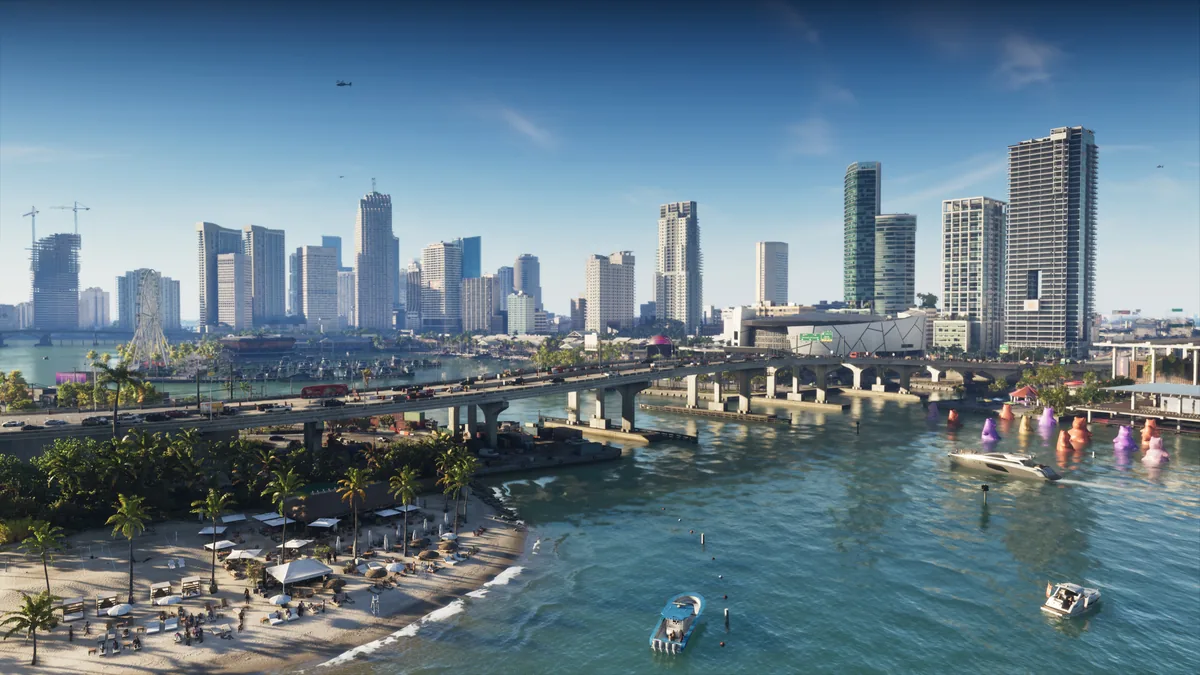
Grand Theft Auto 6 moves the stage back to the sun-soaked state veterans have dreamed about — except this time it is not a single city but an entire virtual state modeled on Florida, spanning multiple terrains: a coastal metropolis, tropical islands, inland wetlands, an industrial port city and a mountainous hinterland. Nearly every signature landscape of the American Southeast has a place on this map. This page starts with overall scale, then walks through each region’s terrain and ecology, so you can burn the outline of Leonida into memory before you drive it.
Note: the console version launched on November 19, 2026. All region descriptions here are compiled from official public material, the two trailers and media inference — exact boundaries and details should be checked against the shipped game.
1. Overall Scale: A Step Up from San Andreas#
Where the size estimate comes from#
Rockstar has never published Leonida’s official dimensions, but map-size discussion has run continuously since the first trailer. Synthesizing estimates from multiple outlets and third-party analysts — based on trailer shots, known region proportions and aircraft demonstrations — Leonida’s total area lands roughly 1.7 to 2 times the San Andreas map of Grand Theft Auto V.
| Comparison | GTA 5 San Andreas | GTA 6 Leonida (estimated) |
|---|---|---|
| Map scale | Baseline (~1x) | ~1.7x to 2x |
| Core city | Los Santos alone | Vice City as the absolute core, plus satellite cities like Port Gellhorn |
| Terrain types | Urban, mountain, desert, rural | Urban, islands, wetlands, mountains, ports, industrial towns |
| Ecology span | Mostly arid inland | Humid coast, inland swamps and northern forests coexist |
| Transport | Roads and flight mainly | Denser waterways and land-sea intermodal travel |
If the estimate holds, Leonida will be the largest open world Rockstar has ever built. The most direct consequence of more area: cross-region travel and aircraft matter far more — driving from Vice City to Mount Kalaga is no longer a single foot-full-of-throttle hop but a route-planning, possibly resupply-stopping long trip.
“Bigger” and “Denser” Are Two Different Things#
One caution: the “1.7 to 2x” figure describes explorable physical area, not a simple doubling of content. What Rockstar stressed repeatedly in the second trailer is open-world density, not raw size — streets packed with pedestrians, small events erupting at any corner, shops and facilities you can interact with along the way. Those are what give a map a soul. Leonida is most likely a map that “looks big and feels fuller when you walk it,” not a big empty shell.
What the Map Says About Mission Design#
Map scale directly shapes mission structure. By series tradition, Rockstar likes cross-region long-haul missions to show how big the map is, and dense regional clusters to show how alive it is. Leonida has both waterway chases across the Keys and the wetlands and alley standoffs in Vice City blocks — this “one map, two tempos” design is a key differentiator from past entries.
2. Vice City: Capital of Sunshine and Greed#
City identity and overall vibe#
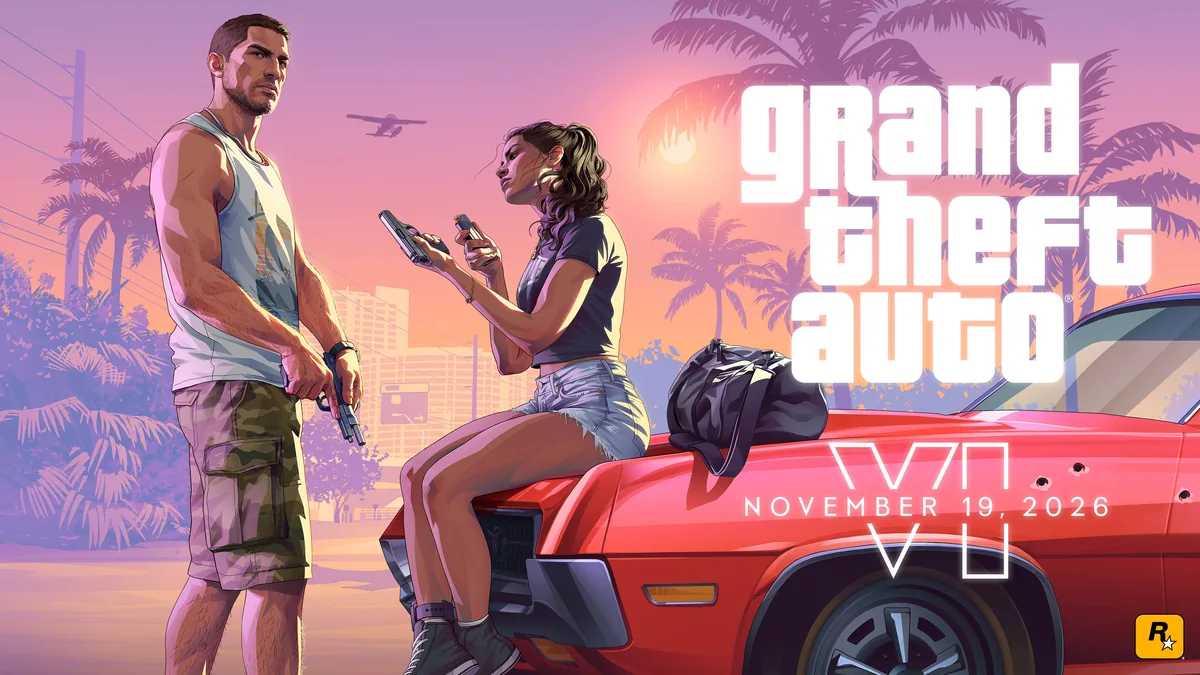
Vice City is the name Grand Theft Auto: Vice City veterans know best, and it returns as “the American sun-soaked, fun-soaked capital.” Per the official description, it is still one city concentrating all of America’s gloss and greed — only the era has moved from the 1980s to today. Neon, palms, pastel architecture and an ever-present resort atmosphere form the first impression; under the bright sun sits an equally thick trade in gangs, drugs and corruption.
| Vice City core districts | Character | Real-world reference |
|---|---|---|
| Ocean Beach | Beach resort, pastel hotels, white sand | Miami South Beach |
| Little Cuba | Latin flavor, street life, bakeries and shops | Miami’s Little Havana |
| VC Port | “Cruise capital of the world,” port industry | PortMiami |
| Tisha-Wocka Flea Market | Flea market, knockoff goods, street bustle | Miami street markets |
Ocean Beach#
Ocean Beach is Vice City’s signature waterfront and the opening scene of the trailers. Pastel art-deco hotels and beach houses, white sand and blue water make a postcard in every frame. For players it is both a sightseeing spot and the natural stage for missions like “chase-and-evade along the boulevard in a sports car” or “infiltrate a target on a rooftop penthouse.” By day it is crowded and languid; at night, neon on and clubs open, it becomes a different face entirely.
Little Cuba#
Little Cuba is Vice City’s most lived-in neighborhood. Bakery smells, Latin-flavored storefronts, music that might start on any corner — it has the texture of everyday life. From the trailers, its streets are narrow and dense, suited to close-quarters alley fights and chases, and to showing the city’s immigrant-community diversity. For mission design, a neighborhood this alive is where surveillance, dead drops and small conflicts happen most.
VC Port and the Tisha-Wocka Market#
VC Port bills itself as the “cruise capital of the world” — giant liners, container terminals and industrial facilities make it the hub of port and logistics missions. It is the natural scene for cargo crime and smuggling, and the starting point of waterway pursuits. The Tisha-Wocka flea market, famous for knockoff-brand goods, is thick with street bustle — ideal for shopping, wandering and opportunistic missions. The two areas, one “big” and industrial, one “small” and street-level, hold up the city’s variety together.
3. The Leonida Keys: Southernmost Resort Paradise#
Identity and atmosphere#
The Leonida Keys are modeled on the Florida Keys, a long tropical island chain at the state’s southern tip. The official pitch is telling: the dress code is relaxed, the bars are always full, life moves easy — until you round a corner into the most beautiful and most dangerous waters in America. In other words: paradise for vacationers, playground for smugglers.
| Keys traits | Manifestation |
|---|---|
| Scenery | Narrow island chain, oversea highways, tropical vegetation, coral reefs |
| Life | Bars, motels, recreational fishing, slow pace |
| Hidden risks | Smuggling, maritime crime, hurricanes and dangerous waters |
| Transport | Oversea bridge connections, constant boats and watercraft |
The protagonist’s life in the Keys#
In GTA 6’s character setup, Jason lives out in the Leonida Keys, running errands for local drug boss Brian Heder to get by. That makes the Keys not just a tourist spot but one of the protagonist’s main daily stages. Players will get to feel a mission atmosphere completely different from Vice City in this slow island chain — less urban noise, more island-drifter casualness and danger.
Oversea highways and water transport#
The islands are strung together by oversea highways, confirmed by the many “driving across the sea” shots in the trailers. For players the Keys are the best place to use watercraft: speedboats, jet skis, fishing boats and hovercraft all find a role. The oversea roads themselves are classic chase-and-escape terrain — narrow lanes with ocean on both sides, where one mistake sends you into the water.
4. Grassrivers: Wetlands of Alligators and Airboats#
An Everglades-style ecological spectacle#
Grassrivers corresponds to the Florida Everglades and is one of Leonida’s most distinctive terrains. Unlike the sunny coast, this is classic inland wetland: dense grass, slow waterways, tangled roots — and alligators that can surface at any moment. The trailers delivered the signature imagery here: airboats skimming the water, gators rising slowly, making the region instantly recognizable.
| Wetland traits | Manifestation |
|---|---|
| Terrain | Shallow marsh, grass channels, thick forest |
| Ecology | Alligators, birds, snakes and other wildlife |
| Vehicles | Airboats, off-roaders, watercraft |
| Typical play | Swamp chases, smuggling caches, hunter encounters |
The airboat: wetland-exclusive vehicle#
The airboat is Grassrivers’ signature vehicle — flat-bottomed, pushed by a giant propeller, able to run fast over extremely shallow water, the first choice for crossing the marsh. Trailer shots of the protagonists riding airboats through the swamp suggest these craft will play key mission roles — whether chasing smugglers or escaping pursuit, an airboat drives nothing like a city sports car.
Hunters and smugglers in one underground world#
The wetlands are no man’s land. Deep in Grassrivers hide smuggler caches, hunter shacks, and every kind of fringe figure avoiding government attention. Missions here feel wilder and more primal, a sharp contrast to Vice City’s urban crime. For explorers, finding hidden compounds deep in the marsh and cracking smuggling networks will be a major map reward.
5. Port Gellhorn: The Industrial Port City#
A gray keynote opposite Vice City#
Port Gellhorn is the state’s port-industry city, modeled on real Florida harbor cities. If Vice City is sunshine and neon, Port Gellhorn is gray and steel. Industrial waterfront, stacked container terminals and worn-down blocks make the atmosphere far heavier than the resort city. It is a working town where laborers, docks, freight and gang interests intersect.
| Port-city traits | Manifestation |
|---|---|
| Scenery | Container terminals, industrial plants, old blocks |
| Economy | Port logistics, manufacturing, gray trade |
| Atmosphere | Gray, gritty, street-level |
| Typical play | Cargo crime, dock infiltration, gang conflict |
The criminal network behind the logistics#
A busy port means enormous freight flow, and freight flow hides smuggling and corruption. In Port Gellhorn players will most likely meet missions built around container cargo: hijacking shipments, infiltrating docks, dealing with corrupt longshoremen or gangs. The geography — piers, warehouses, loading zones — gives infiltration and gunfights naturally complex stages, making it one of Leonida’s densest industrial mission areas.
A city that “works”#
Compared with tourist-crowded Vice City, Port Gellhorn is a doer’s town. Its residents are mostly workers and small merchants, with plainer daily texture. Rockstar deliberately widened the contrast so that traveling between regions delivers a clear shift of regional character — the switch from resort paradise to industrial port is itself a visual and atmospheric long trip.
6. Ambrosia: Industrial Town and Biker Gang#
Town identity and character#
Ambrosia is an industrial town in Leonida’s interior. The official description is loaded: American industry and old-school values still reign supreme here — at any cost. The implication is a town holding to the old order through changing times, where industry is the lifeline and old values the baseline — and the cost is paid by the people and forces the era left behind.
| Town traits | Manifestation |
|---|---|
| Economy | The Alred Crystal Sugar factory and other industry provides jobs |
| Society | Old-school values, local gang presence |
| Atmosphere | Somewhat closed, plain but with undercurrents |
| Typical play | Factory missions, gang warfare, town exploration |
The Alred Crystal Sugar factory#
Ambrosia’s signature landmark is the Alred Crystal Sugar factory. It provides most of the town’s jobs and anchors the local economy. For players, industrial facilities like this are classic mission ground — infiltration, hijacking or clearing hostiles inside, with a complex mechanical interior that plays nothing like a city stage.
The local biker gang#
The official blurb notes that “the local biker gang provides just about everything else.” The subtext: where legitimate industry cannot meet every need, gray powers fill the gap. The gang runs many “other” affairs in Ambrosia, which means the region will be full of gang-linked missions — motorcycle runs across the countryside, turf wars with rivals, settling internal scores. For players who like bikes and rural driving, Ambrosia will be Leonida’s most satisfying stop.
The other face of the small town#
From a map-ecology view, Ambrosia represents Leonida’s “inland rural” class — between industrial city and wilderness. Its value is keeping the map from a simple city-versus-nature binary by adding an inhabited, industrial, lived-in middle ground that deepens the map’s layering.
7. Mount Kalaga: Northern Forest Secrets#
Mountain identity and ecology#
Mount Kalaga sits in northern Leonida, modeled on Florida’s Apalachicola region. Unlike the water-bound regions, this is the map’s highest and wildest place: dense hills, winding off-road trails, quiet far from cities. The official blurb promises first-rate hunting, fishing and off-road trails — and deep in the wooded hills, mystics and paranoid militants living far from government attention.
| Mountain traits | Manifestation |
|---|---|
| Terrain | Hills, dense forest, streams and lakes |
| Activities | Hunting, fishing, off-road driving |
| Residents | Mystics, paranoid militants, recluses |
| Atmosphere | Quiet, primal, with a hidden layer of mystery |
From tropics to mountains in one map#
Mount Kalaga stretches Leonida’s ecological span to the limit. From the humid tropical Keys in the south to northern forest secrets, players can experience “islands,” “wetlands,” “port city,” “industrial town” and “mountains” — five completely different environments — on one map. That span is the strongest proof that Leonida is a whole state rather than a city.
Hunting, fishing and off-roading#
The official material explicitly names three activities on Mount Kalaga: hunting, fishing and off-roading. The mountains are not a lookout but a concentration of wilderness play — hunting for weapons and survival, fishing for leisure and collecting, off-roading for high-difficulty driving. For players who want “nature beyond the map,” Kalaga offers a long-line pleasure distinct from urban crime.
The mysterious residents of the deep hills#
“Mystics and paranoid militants far from government attention” plants plenty of mission and story seeds. Such figures usually play special roles in main or side missions: hermits with clues, hostile militants, or a chain of secrets to uncover step by step. The mountain’s quiet and its hidden residents make Kalaga Leonida’s most rewarding corner to explore deeply.
8. Transport and Terrain at a Glance#
A land-sea-air transport web#
Leonida spans city, islands, wetlands, mountains and ports, so transport must diversify accordingly: roads and sports cars in the city, bridges and watercraft in the Keys and marsh, off-roaders and 4x4s in the hills. Add the statewide highway net plus helipads and docks, and Leonida is building a three-dimensional land-sea-air network.
| Region | Recommended transport | Main terrain | Ecological character |
|---|---|---|---|
| Vice City | Sports car, motorcycle, helicopter | Urban coast | Sunshine, neon, bustle |
| Leonida Keys | Boats, jet skis, cars | Tropical islands | Resort, slow, dangerous |
| Grassrivers | Airboat, off-roader | Wetland marsh | Primal, wild |
| Port Gellhorn | Trucks, cars, dock facilities | Industrial port | Gray, gritty |
| Ambrosia | Motorcycle, pickup | Industrial town and countryside | Plain, undercurrents |
| Mount Kalaga | Off-roader, hiking, 4x4 | Mountain forest | Quiet, mysterious |
How dynamic weather reshapes the terrain#
Rockstar showed hurricanes rolling through and streets underwater in the trailers, and dynamic weather hits each terrain differently. The wetlands and Keys turn more dangerous and muddy in storms, the port feels heavier in wind and swell, and mountain fog cuts visibility hard. Dynamic weather is not a backdrop — it changes handling, sightlines and mission difficulty, making one map look different in every forecast.
One map, multiple play tempos#
Overall, Leonida’s design thesis is “one big map holding multiple play tempos”: chase-pursuit thrill on Vice City’s neon boulevards, resort leisure in the slow Keys, wild flight through the marsh, quiet nature exploration on Mount Kalaga. That variety is exactly why it beats a single-city map.
9. Summary: The Imagination of a State-Scale Map#
Leonida is the largest open-world stage Rockstar has ever conceived. At roughly 1.7-2x San Andreas, it integrates six terrain classes — coastal metropolis, tropical islands, inland wetlands, industrial port, industrial town and mountain wilderness — into one map, stitched into an organic whole by dynamic weather and a multi-dimensional transport web.
For long-waiting players, the map’s greatest charm is the word “span” — not simply making one city bigger, but compressing a whole state’s diversity together so every cross-region trip becomes a trip through a different character. From Vice City’s neon to the Keys’ languor, the wetlands’ wildness and the mountains’ quiet, Leonida already sketched a criminal map far vaster than “one city” during the marketing phase.
How these regions ultimately render in density and detail is now open for exploration — the game launched on November 19, 2026. Vice City’s sunshine, the oversea bridges, the swamp channels and the deep hills of Mount Kalaga are waiting for you to drive in.
This page was last updated on November 18, 2026, based on officially published information and reasonable inference.