Armored Core VI Lightweight Builds: Mobility First#
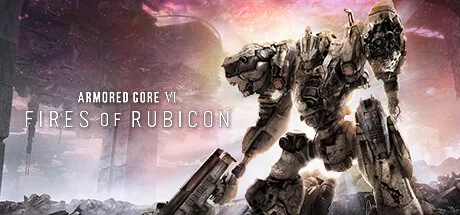
Armored Core VI: Fires of Rubicon builds have no single right answer, but one approach keeps proving itself: trade light parts for mobility. In describing the build system’s two hard constraints, the fact cards state it plainly — lightweight parts buy mobility, while going full tank buys high firepower and high HP at the cost of boost quality. Lightweight play is the mobility end of that spectrum.
Choosing light is not “worse equipment” — it is an active tactical orientation. In a game whose large missions give mobility real room, an AC that enters faster, disengages faster and flanks faster usually controls the fight’s rhythm better than a sluggish firepower platform.
But light is not “anything goes”. The total load and EN load constraints treat light builds exactly the same — exceed either and the AC cannot deploy. This page explains where mobility-first actually wins, and what you give up for it. Qualitative mechanism description throughout; no specific numbers.
One: The Core of Light — Protection for Mobility#
In the build system, “light” means leaning toward low-weight part choices. The trade is direct:
| Direction | Gain | Lose |
|---|---|---|
| Lightweight parts | Higher mobility | Protection and HP usually behind full tank |
| Full tank | High firepower, high HP | Poor boosting, limited movement |
Read the table and you have the lightweight identity. It does not ask you to give up damage — it moves resources from “soaking hits” to “staying hard to hit”. In combat this fast and omni-directional, damage you dodged never needed armor.
Light builds also pay off in mission adaptability. The fact cards note that large missions give mobility room and that every mission accepts a different AC strategy. A nimble frame exploits that space best: snap laterally on the ground, change altitude mid-air to re-anchor — instead of charging in a straight line.
For how leg types shape movement, see the frame and legs guide.
Two: The Dual Constraints Still Gate You — Light Is Not a Free Pass#
A common new-pilot misreading equates “light” with “can never overload”. The two hard constraints apply equally:
- Total load: overload the AC’s cumulative mass and deployment is blocked.
- EN load: overload the energy budget and deployment is equally blocked.
Being light just gives you a bigger margin under the same constraints — it does not remove them. Put differently: the headroom light parts free up should be consciously reinvested into mobility-related parts, not casually stuffed with weapons.
| Checkpoint | The lightweight attitude |
|---|---|
| Total load | Keep headroom for boost-related parts |
| EN load | Reserve headroom for energy weapons and chips — do not spend it early |
| Weapon slots | Pick weapons matching mobile play that do not eat the load |
| Internal parts | Booster and FCS are where a mobility build invests |
A practical order: assemble the mobility skeleton (legs, booster, generator) first, confirm headroom remains, then fill the weapon slots. Doing the reverse — weapons first, trim later — usually mutates a light build into an overweight hybrid. For the overall assembly framework, see the parts and assembly page.
Three: Boosters and Aerial Movement — Cashing in the Light Advantage#
A light frame’s mobility does not become battlefield advantage by itself — boosters and aerial movement cash it in. The fact cards state combat is fast and omni-directional across ground and air, with the booster among the internal parts.
Two angles connect light frames to boost performance:
- Less weight, more thrust: the lighter the AC, the better its boost performs — the full-tank build’s poor boosting is the counterexample.
- Aerial movement adds a dimension: once the AC changes altitude freely, combat stops being a flat plane — suppress from above or climb out of an encirclement.
| Movement tool | Fit with light builds | Tactical gain |
|---|---|---|
| Fast ground repositioning | Light legs support high mobility | Open lateral distance, swing to flanks |
| Aerial movement | Booster and weight jointly decide performance | Change altitude, escape ground pockets |
| Assault boost | The rapid-approach tool | Enter or exit engagement range in seconds |
The assault boost acts here as a “displacement amplifier”: it lets a light frame cross engagement ranges in a heartbeat, land a pass, and be gone. That “hit and run” rhythm is exactly what light builds do best. For more on boosters and aerial combat, see the assault boost page.
Four: Weapon Choice — Keep Weapons from Eating the Build#
The fact cards are explicit: weapons are the usual overload culprit. For light builds the warning doubles — your headroom is already thin, and one heavy weapon set erases the mobility edge instantly.
A weapon-selection order for light builds:
- Slot fit first: the four slots are right/left hand and both shoulders, and melee cannot go on the left hand.
- Load pressure second: weapon types run from laser guns, laser blade, drill, flamethrower, pulse gun to machine guns, each pressing the load differently.
- Range fit third: light builds roam close-to-mid range; long-distance parking lots rarely fit.
- Dual-constraint check last: after arming, re-verify both total load and EN load.
| Weapon traits light builds favor | Why |
|---|---|
| Match close-to-mid roaming | Mobile play rarely parks at long range |
| Do not overspend load headroom | Preserve the booster and FCS budget |
| Compatible with missile-lock play | Keeps pressure on mobile targets |
No specific models are recommended here — the fact cards carry no per-weapon load values. Compare in the Training mode using the order “playstyle, then load, then model”; Training unlocks with story progress and grants some weapons and parts for trial at the end. For the full weapon-type map, see the weapons guide.
Five: Fitting Opponents and Tactics — Mobile Bosses and Missile Lock#
Light builds shine brightest against highly mobile opponents. The fact cards’ logic: against highly mobile enemies, choose an FCS with strong missile lock so you can hold the target and stagger it.
Light builds pair with this play naturally:
- Light frames are mobile enough to keep pace with mobile opponents instead of being left behind.
- A strong missile-lock FCS raises capture rate, letting missiles actually bite.
- Accumulated hits stagger the opponent, breaking rhythm and opening the damage window.
- Assault boost plus light mobility closes in inside the window and exits before the counter.
| Opponent type | The lightweight answer |
|---|---|
| Fast, frequently relocating bosses | Missile-lock FCS plus light mobility — catch up and hold the lock |
| Predictable bosses | Mid-close tracking output; no missile-lock over-investment |
| Wide-area suppression types | Mobility to skirt frontal fire, output from flanks and rear |
One reminder from the fact cards: choosing the chip still requires minding the load. With thin headroom, a missile-lock-heavy FCS must be paid for elsewhere — the classic lightweight dilemma: lock steadily without losing mobility. For the FCS’s four lock bands in full, see the FCS and targeting page.
Six: Core Expansion Choice and the Final Audit#
Core Expansions are the AC’s trump cards; the fact cards list four types — Assault Armor, Pulse Protection, Pulse Armor, Terminal Armor. For light builds the keyword is “never interrupt the mobility rhythm”.
| Core Expansion | Qualitative effect | Fit with light builds |
|---|---|---|
| Assault Armor | Core pulsing blast; blocks missiles, wide-area damage and impact | Works for close-in assault light builds — self-defense plus suppression |
| Pulse Protection | Pulsing shield screens barrage until durability or timeout | Emergency answer under barrage pressure |
| Pulse Armor | Follow-type shield, big defense boost on durability/timer | When a brief tank is unavoidable |
| Terminal Armor | Auto-triggers a pulsing shield at the HP threshold | Survival-leaning — suits light builds’ thin margins |
After assembling a light build, run this final audit:
- Does the AC satisfy both total load and EN load constraints, neither exceeded.
- Did the headroom freed by light parts actually flow into mobility-related parts.
- Are weapons still the overload culprit — do they need trimming.
- Does the FCS lock band match this opponent type.
- Can the Core Expansion fire without interrupting the mobility rhythm.
- When live results diverge from expectation, did you account for version drift and defer to the game.
For the four Core Expansions’ full mechanics, see the OS tuning page.