Armored Core VI Heavyweight Builds: Firepower and Protection#
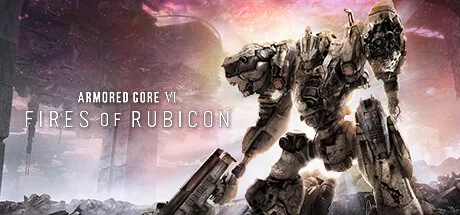
Armored Core VI: Fires of Rubicon’s build spectrum has two ends: light frames trade for mobility, heavy frames trade for firepower and protection. The fact cards state the trade plainly — going full tank buys high firepower and high HP, and the price is poor boost quality. Heavyweight builds pursue exactly that gain.
Choosing heavy means accepting “slow” in exchange for “tough” and “painful”. An AC stacked with armor and heavy weapons holds its ground in frontal firefights and crushes the opponent’s rhythm with one volley. In a game that emphasizes boss fights and tests ranged/melee tactics, this “stillness beats motion” thinking has a real place.
Heavy builds cannot escape the two hard constraints either: total load and EN load — exceed either and there is no deployment. The bigger the weight budget, the tighter the accounting. This page gives qualitative trade-offs only, no invented damage, HP or load numbers; player-measured results may shift with patches, so the in-game behavior rules.
One: Full Tank — The Extreme of Firepower and Protection#
Full tank is the purest form of the heavyweight idea. Its gains and costs flow from one decision — pressing all resources into armor and firepower.
| Dimension | Full-tank profile | Result |
|---|---|---|
| Firepower | High | Heavy per-volley pressure |
| HP | High | Soaks more damage, higher fault tolerance |
| Boost quality | Poor | Limited repositioning; pursuit is hard |
| Protection | High | Strong frontal soak |
This table is the heavyweight’s core tension: you traded mobility for the ability to hold ground. In a game whose large missions reward mobility, the trade means actively choosing engagement distance and position — not chasing the opponent across the map.
Heavy does not mean “cannot move”. The fact cards’ “poor boosting” is qualitative, relative to light builds — not immobility. The key: spend movement on critical repositioning, never on out-sprinting a light frame. For leg types’ relative traits, see the frame and legs guide.
Two: Heavy Trade-offs Under the Dual Constraints#
The heavyweight’s most easily missed risk is “half-built, cannot deploy”. The two hard constraints — total load and EN load — bite hardest here, because heavy parts and heavy weapons squeeze both lines at once.
Follow this judgment order for heavy builds:
- Skeleton first: legs, generator and booster set the weight and energy baseline — the reference for both constraints.
- Main weapons second: weapons are the usual overload culprit, heavy weapons doubly so — confirm they fit before anything else.
- Internals third: FCS and generator within the remaining headroom; never max load for lock-on.
- Dual-constraint check last: exceed either bar and there is no deployment — trim and retry.
| Part class | Load trait in heavy builds | Trade advice |
|---|---|---|
| Legs and frame | One of the biggest weight items | Choose by terrain and protection needs, minding total load |
| Shoulder heavy weapons | High overload risk | Guarantee they fit before counting how many |
| FCS | Counts toward load | “Enough” lock band beats maxed specs |
| Generator | Sets energy headroom | Budget with overall load — don’t rob one line for the other |
The heavyweight rule of thumb: treat “can deploy” as the hard gate, then maximize firepower inside the gate. A heavy AC that cannot deploy has meaningless on-paper firepower. For the overall assembly framework, see the parts and assembly page.
Three: Heavy Weapon Slots — Shoulder Cannons and Missiles#
Armored Core VI’s four weapon slots run right/left hand and both shoulders. For heavy builds the shoulder slots matter most — the fact cards’ shoulder weapons list includes missiles, cannons, homing missiles and laser drones, and these are exactly where heavy firepower lives.
| Shoulder weapon (per fact cards) | Role in heavy builds | Lock/load relation |
|---|---|---|
| Missiles | Volley suppression; pressure on mobile targets | Relies on missile lock; counts toward load |
| Cannons | Heavy single-shot output | Heavy weight and load — top overload risk |
| Homing missiles | Tracking fire | Pairs well with missile lock |
| Laser drones | Shoulder support | Occupies a shoulder slot; budget with overall load |
Principles for slot allocation in heavy builds:
- Shoulders carry the burst; hands cover mid-close output or utility.
- Melee cannot go on the left hand — melee ideas need another slot, planned in advance.
- The weapon list also runs laser guns, laser blade, drill, flamethrower, pulse gun and machine guns; heavy builds may mix freely, but every pick passes the load check.
The fact cards provide no per-weapon weight or load values, so no “strongest combo” is recommended — only the decision order “slots, then load, then model”. For the full weapon-type map, see the weapons guide; for the energy-vs-ballistic mechanism difference, see the energy vs ballistic page.
Four: Core Expansions — Defensive Types and Assault Armor#
Core Expansions are the AC’s trump cards; the fact cards list four — Assault Armor, Pulse Protection, Pulse Armor, Terminal Armor. For heavy builds the selection core is “amplify the HP advantage, or patch the mobility hole”.
| Core Expansion | Qualitative effect | Fit with heavy builds |
|---|---|---|
| Assault Armor | Core pulsing blast; blocks missiles, wide-area damage and impact | Gives heavy close-ins counterplay and suppression — assault-heavy builds |
| Pulse Protection | Pulsing shield screens barrage until durability or timeout | Hold the line, protect the stationary output window |
| Pulse Armor | Follow-type shield, big defense boost on durability/timer | Best match for the heavy identity — soaks even harder |
| Terminal Armor | Auto-triggers a pulsing shield at the HP threshold | Passive survival net for low-margin heavy play |
On a pure stationary-defense line, Pulse Armor and Pulse Protection fit the heavy identity most directly; if the heavy AC should also close in, Assault Armor’s missile screening and wide impact pay better; Terminal Armor is the passive backstop.
No type is strictly superior — the criterion is whether your heavy build is a “ranged turret” or a “heavy assault”. The Arena’s OS chips upgrade the AC with damage reduction, damage up and Core Expansion unlocks; stronger opponents drop more chips, which gates which expansions you can access.
Five: Heavy Builds in Boss Fights and PvP#
Armored Core VI emphasizes boss fights testing ranged/melee tactics, and also includes online PvP. Heavy builds trade differently in the two scenes.
In boss fights:
- High HP and protection raise fault tolerance — a fit against bosses with predictable output rhythms and frequent frontal openings.
- Shoulder cannon and missile volleys cash in during the boss’s hard-stagger (stagger) windows for dense damage.
- Poor boosting demands positional prediction: take the output position early rather than moving after the opponent does.
In PvP:
- Heavy builds hold ground, but the mobility gap gets amplified by nimble opponents — easy to flank or kite.
- Once a fixed gameplan is read, the lack of cover options shows.
- Core Expansion timing grows sharper — PvP moves fast, and defensive skills wasted early are gone.
| Scene | Heavy strength | Heavy weakness |
|---|---|---|
| Boss fights | High tolerance, strong frontal output | Slow repositioning; must pre-position |
| PvP | Brutal stationary firepower, soaks damage | Kited at a mobility loss; gameplans easily read |
PvP balance may shift with patches — the notes above are qualitative mechanism judgments, not fixed strength claims; in-game behavior rules. For combat mechanics as a whole, see the combat mechanics page.
Six: The Heavy Pre-Deployment Checklist#
Before rolling out, audit the heavyweight build’s key points:
- Does the AC satisfy both total load and EN load constraints, neither exceeded.
- Are the main weapons — especially shoulder cannons and missiles — inside the load allowance.
- Does the slot layout follow the four-slot rules, with no melee on the left hand.
- Does the FCS lock band match main-weapon range and opponent type.
- Does the Core Expansion reinforce the identity: stationary defense or heavy assault, pick one.
- Is there an answer to poor boosting — pre-positioning or assault-boost tools.
- When live results diverge, did you account for version drift and defer to the game.
The checklist carries no numbers by design. The heavyweight’s value is the trade-off discipline — deliver “tough” and “painful”, while owning and managing the risks of “slow”.