Armored Core VI FAQ and Glossary#
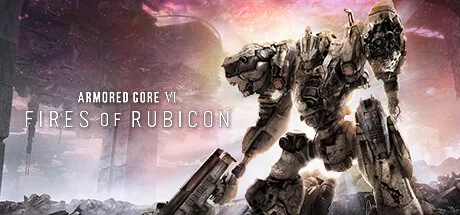
Armored Core VI: Fires of Rubicon’s guidance spreads across builds, flow, endings and the Arena, and readers often comb the whole section for one specific answer. This page concentrates the highest-frequency questions in one place, with a glossary alongside for quick reference while reading the other pages.
The Q&A here uses only fact-card-supported information: how many completions the endings take, how Decision missions pick, why builds overload, when the Arena’s last three opponents must be fought, what the expansion includes — direct answers to each. Specific numbers the fact cards do not cover are simply not written; mechanism-level qualitative notes only.
Two caveats first: player-measured results may shift with patches, so the in-game behavior rules; and sales and player-count figures are third-party model estimates or point-in-time snapshots, not official numbers — their source nature must be cited alongside. Questions first, then the glossary, then the data-usage notes.
One: Endings and Playthroughs FAQ#
This group meets almost every new player; the answers come straight from the fact cards.
| Question | Short answer | Basis |
|---|---|---|
| How many completions for all three endings | Three — each playthrough locks exactly one ending | Fact cards state three full completions |
| When can the third ending be earned | Third run (New Game++) exclusive | Alea iacta Est is third-run exclusive |
| What happens after clearing the first run | The game rolls into New Game+ automatically | Automatic after the first clear |
| What are the three endings called | The Fires of Raven, Liberator of Rubicon, Alea iacta Est | First, second and third endings |
| Who is each ending’s final opponent | Ending one: Ayre’s AC; ending two: Walter; ending three: the two-phase final opponent | Different per ending |
On the final opponents: ending two’s final opponent is Handler Walter — match the name to the game’s usage. For route details, see the three endings guide.
Two: Decision Missions and Flow FAQ#
Decision Missions decide which ending each run can reach. Their rules and handling:
- How to spot one: the mission carries a special icon and a Decision tag in its description.
- What picking does: choosing one locks the other for the rest of that playthrough, reopening next run.
- Across runs: top options in the first run, the opposite options in NG+, the new missions in the third run.
- The three routes’ lists: The Fires of Raven — M21, M31, M37; Liberator of Rubicon — M22 (Ch.3), M32 (Ch.4), M38 (Ch.5); Alea iacta Est — M26-B, M33-B.
- The Chapter 1 fork: in M06, after destroying the second generator, REFUSE and ACCEPT lead to different routes — the key early branch.
| Run | Decision tendency | Endings reachable |
|---|---|---|
| First run | Top options | The Fires of Raven / Liberator of Rubicon |
| Second run | Opposite options | Liberator of Rubicon / the other route |
| Third run | New missions | Alea iacta Est |
Two replay-flow questions answered together: replays must run through the full mission selection under the sortie list — quick replay does not save choices; and the second and third runs auto-skip the first mission. Full rules in the Decision missions guide.
Three: Builds and Performance FAQ#
This group covers “why won’t it equip” and “why does it stutter”.
Why does my build overload? Armored Core VI has two hard constraints — total load and EN load — and exceeding either blocks deployment. Weapons are the usual culprit: shoulder cannons and missiles, plus energy weapons, squeeze the weight and energy budgets together. Lightweight parts buy mobility but thinner protection; full tank buys firepower and HP at the cost of boost quality.
Can the left hand take melee? No. The fact cards state it outright: melee weapons cannot be equipped on the left hand. The four weapon slots are right hand, left hand, left shoulder, right shoulder.
What about crashes and frame drops? These are the negative-feedback clusters. Official requirements live on the game’s store page on its distribution platform — no invented numbers here; adjust graphics qualitatively one item at a time; the Steam Deck is marked Playable.
| Question | Qualitative answer | Next step |
|---|---|---|
| Why overload | Total load or EN load exceeded | Trim weapons, especially heavy shoulder gear |
| Melee on the left hand | No | Place melee in another slot |
| Why frame drops | Render pressure beyond device capacity | Check store-page requirements; adjust settings item by item |
| Handheld playable? | Steam Deck marked Playable | Frames first; lower resolution and effects as needed |
For the dual constraints in full, see the parts and assembly page; for systematic performance triage, see the PC performance page.
Four: Arena and Expansion FAQ#
When do I fight the Arena’s last three opponents? The easiest thing to miss. The Arena ranks opponents F to S — higher ranks pay more money and OS chips; the last opponent unlocks after Chapter 3’s M29 “Underground Probe 2”, and once the third run is cleared the final three Arena bosses can never be fought again. All Arena content must be finished before the third run’s credits.
What does the expansion include? The game carries the Vault 5 expansion adding parts, ACs and missions. Its existence is evidenced by the Expansion Collector achievement’s unlock rate. To be clear: no item-level mission or part lists were verified — in-game data rules and this page invents nothing. Console inclusion is also unverified.
| Question | Conclusion | Watch for |
|---|---|---|
| When to fight the last three Arena bosses | Before the third run’s clear | Gone forever after the credits |
| When the last Arena opponent unlocks | After M29 | Requires story progress to that mission |
| Arena ranking | F to S — higher pays more | Bigger payouts and more OS chips |
| What the expansion adds | Parts, ACs and missions | Item lists per in-game data |
For the Arena in full, see the Arena guide.
Five: Glossary (1) — AC and Builds#
Terms recur across the section; the original appears once here, and pages use the English term consistently after.
| Term | Original / abbreviation | Meaning |
|---|---|---|
| Armored Core | AC | The customizable mech the player pilots |
| EN Load | EN Load | One of the two hard build constraints; over the cap, no deployment |
| Load | Load | The other hard constraint — total weight; over the cap, no deployment |
| Fire Control System | FCS | Internal part setting the four lock bands: close, mid-close, long and missile |
| Core Expansion | Core Expansion | The AC’s trump cards; four types — Assault Armor, Pulse Protection, Pulse Armor, Terminal Armor |
| OS Chip | OS Chip | Arena reward; upgrades the AC with damage reduction, damage up, Core Expansion unlocks |
What this group shares: all serve builds. Understanding Load and EN Load is the precondition for every build page; understanding the FCS and Core Expansions unlocks the lock-on and burst discussions.
Six: Glossary (2) — Combat and Flow#
| Term | Original / abbreviation | Meaning |
|---|---|---|
| Stagger | stagger | The off-balance state that breaks a target’s rhythm; often manufactured with a strong missile-lock FCS |
| Assault Boost | assault boost | Rapid approach or disengagement across engagement ranges |
| Arena | arena | F-to-S ranked opponents; source of weapons, parts and OS Chips |
| Decision Mission | Decision Mission | Special-icon mission with pick-one-forget-one; decides the ending route |
| Sortie mission list | Sortie | Replays must use its full selection; quick replay does not save choices |
| NG+ / NG++ | New Game+ / New Game++ | Subsequent playthroughs after a clear; the third ending is NG++ exclusive |
This group serves combat and flow. Stagger and assault boost dominate tactics talk; Decision missions and the sortie list are the keys to walking the routes and collecting endings. For any term’s full treatment, jump to its dedicated page via the links below.
Seven: Data Sources and How to Cite Them#
Finally, the nature of every number type on this page, so none gets read as official.
- Sales are third-party estimates: third-party models estimate sales from review counts, including an estimate around 3.08 million units — model-based, moderate confidence, not official. Cite the nature alongside the number.
- Player counts are point-in-time snapshots: ~156K all-time peak (launch window), recent daily peaks near a thousand; different trackers sample at different times and must not be read as one moment — use range phrasing.
- Unlock rates are snapshot data: achievement rates come from third-party global snapshots — cite the source; not official live data.
- Player-measured results drift with patches: tactics and strength conclusions defer to the game.
- Expansion details stay blank: no item-level lists verified — in-game data rules; console behavior unverified.
| Data type | Nature | Citation practice |
|---|---|---|
| Sales | Third-party model estimates | Cite multiple estimates side by side, flag non-official |
| Player counts | Point-in-time snapshots | Range phrasing; never merge into one moment |
| Achievement rates | Third-party snapshot | Note the snapshot source |
| Specs and frame rates | No concrete numbers collected | Store page and in-game data rule |
| Console behavior | Unverified | Strictly omitted |
Clear sourcing is part of the guide’s usability: it tells you which conclusions you can follow directly and which to re-verify in-game or on the store page.