Armored Core VI Combat Mechanics: Omni-Directional Movement and Ranged/Melee Tactics#
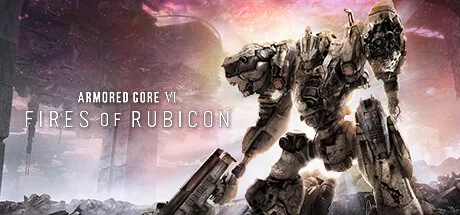
Combat in Armored Core VI: Fires of Rubicon is built on two pillars: speed and omni-directionality. Our fact cards describe it as fast, omni-directional combat with free movement on the ground and in the air. This page breaks down how the system works from three angles: movement, mission space, and boss fights.
Building an AC in Armored Core VI is never theory-crafting detached from combat: part choices decide not only how you attack but how the AC moves and fights. Lightweight parts buy mobility; going full tank buys high firepower and high HP at the cost of poor boosting. Combat mechanics and build-craft are two faces of one system — you cannot talk about one without the other.
This page focuses on combat itself: how movement unfolds, how ranged and melee play combine, where Core Expansions sit in attack and defense, and how the mobility-versus-firepower trade-off shapes actual tactics. It sticks to mechanics and relative relationships supported by the fact cards, without unverified damage or HP numbers.
The Shape of Fast, Omni-Directional Combat#
Combat in Armored Core VI is noticeably faster than traditional mecha titles, and it emphasizes omni-directional play. That term covers both the freedom to switch between ground and air, and the variety of engagement ranges and angles.
| Dimension | What it looks like | What it demands from you |
|---|---|---|
| Movement direction | Ground movement and aerial mobility coexist | Position on the ground and use altitude differences |
| Engagement range | From close-quarters melee to long-range bombardment | Switch tools as the range shifts |
| Combat tempo | Fast advances, fast firefights | Reactions and decisions must both keep up |
| Mission scale | Large-scale missions provide ample space | Work the terrain instead of standing still |
The picture these rows sketch: you are not trading shots on a flat plane, but constantly maneuvering through a space with height and depth, using different tools at different ranges. Only with that in mind does it make sense that mobility matters as much as firepower in this game.
Ground Movement and Aerial Movement#
Ground and aerial movement are the two pillars of omni-directional combat. They are not substitutes but complementary tools to be switched between as the situation demands.
- Ground movement suits stable output and positioning; it is usually easier to control your firing rhythm with wheels (so to speak) on the ground.
- Aerial movement brings altitude advantages, lets you bypass ground obstacles, and makes it quick to change the engagement angle.
- In large missions, vertical space often hides flanking routes or escape lanes; using altitude differences well creates attacking windows.
- Aerial movement is tied tightly to EN management — booster drain competes with the energy weapons’ budget, so you cannot hover forever.
A common practical pattern is “build up on the ground, reposition in the air”: hold your output while grounded, take a short hop to adjust position, then drop back into the firefight. That way you collect the angular advantages of altitude without burning the whole EN pool on hovering.
Large Missions and Room to Maneuver#
Our fact cards point out that large-scale missions give mobility room to breathe, and that every mission can be completed with a different AC strategy. Mission scale is itself part of the combat design.
- Large arenas give fast ACs room to open distance and swing around for flanking runs instead of being forced into close-quarters slugfests.
- The same mission supports different routes: some favor long-range suppression, others favor closing in and rushing.
- AC strategy should match the terrain — open ground favors mobile frames, tight corridors may reward protection and melee.
- Because every mission can be cleared with different strategies, you are not locked into one “universal build” and can tune the AC per mission.
This carries strong replay value: change the AC, change the route, and the same mission plays out noticeably differently. It also makes “one mission, one strategy” a defining trait that separates Armored Core VI from linear shooters.
Boss Fights: The Proving Ground for Ranged/Melee Tactics#
The fact cards stress that Armored Core VI puts particular weight on boss fights, testing the player’s ranged and melee tactics. Boss fights are where the combat system shows its full depth.
| Range | Available tools | Attack/defense focus |
|---|---|---|
| Close range | Melee weapons, handheld guns | Punish openings up close; watch for counterattacks |
| Mid range | Laser guns, machine guns, etc. | Keep the rhythm, balancing movement and suppression |
| Long range | Shoulder missiles, cannons, etc. | Hold a safe distance and work the arena |
| Defensive window | Core Expansions | Trigger protection or counterplay during high-pressure phases |
The key to ranged/melee play is switching: chip away from long range with shoulder weapons, sustain pressure at mid range with handheld weapons, then close in with melee when an opening appears. A single-range gameplan is easy for a boss to punish.
Where Core Expansions Fit in Attack and Defense#
Core Expansions are the special resource of Armored Core VI’s attack-defense system. The four types each carry a clear orientation and can swing a fight at the critical moment.
| Core Expansion | Effect | Orientation |
|---|---|---|
| Assault Armor | A pulsing blast from the AC’s core that blocks missiles and deals wide-area damage and impact | Hybrid — close-range burst |
| Pulse Protection | Deploys a pulsing shield that screens against barrage until its durability runs out or it expires | Defensive — tanking concentrated fire |
| Pulse Armor | A follow-type pulsing shield that greatly raises defense while durability and the timer last | Defensive — sustained protection |
| Terminal Armor | Automatically triggers a pulsing shield when HP reaches the critical threshold | Passive defense — last-resort survival |
The offensive Assault Armor fits close-range burst play while deflecting missiles; the three defensive types carry you through a boss’s high-pressure phases. Choosing which Core Expansion to equip is itself part of combat strategy.
The Mobility-Versus-Firepower Trade-off#
Armored Core VI’s combat ultimately comes down to one core tension: mobility and firepower are hard to have at once. Lightweight for speed, heavy for firepower — that spectrum runs through both build-craft and actual combat.
| Orientation | Combat profile | Fits |
|---|---|---|
| Mobility-first | High-speed positioning, aerial repositioning, hard to lock on | Large missions, highly mobile opponents |
| Firepower-first | Shoulder-heavy volleys, strong frontal suppression | Fixed positions, burst requirements |
| Balanced builds | Mid-range oriented, capable at both near and far | Most standard missions and boss fights |
No orientation is strictly better. Highly mobile bosses test your dodging and lock-on discipline; heavily armored opponents may demand frontal firepower and protection. Combining the mobility-firepower trade-off with the specific mission and opponent is the right way to engage this game’s combat. Specific performance values follow the in-game numbers; this page only gives relative relationships.
Armored Core VI OS Tuning and Chips: Core Expansions
Armored Core VI Frame and Legs Guide: Tetrapod, Bipedal and Reverse-Joint