Armored Core VI Assault Boost and Aerial Combat: Booster Play#
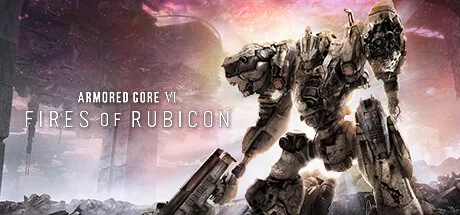
Armored Core VI: Fires of Rubicon lets players move freely on the ground and in the air, and omni-directional combat makes the booster the internal part that decides an AC’s mobility ceiling. Our fact cards list the booster among the internal parts, alongside the note that lightweight parts buy mobility while going full tank buys high firepower and high HP at the cost of poor boosting. This page is about putting the booster to work.
The assault boost is the main tool for closing distance fast — ideal for turning mid-to-long-range maneuvering into a point-blank engagement. Its natural partner is the Assault Armor Core Expansion: a pulsing blast from the AC’s core that both blocks missiles and deals wide-area damage and impact, making it an attack-defense hybrid for rushing in.
This page covers the booster’s role, the lightweight-vs-heavyweight difference in boosting, qualitative use of the assault boost, what Assault Armor does, and how aerial combat ties into EN management. Only fact-card-supported mechanics and relative relationships appear here; boost speed and drain figures are left to the game.
The Booster: The Internal Part That Sets Your Mobility Ceiling#
The booster is one of Armored Core VI’s internal parts, alongside the generator and the Fire Control System. It directly governs the AC’s propulsion on the ground and in the air, and it is the heart of mobility-oriented play.
| Internal part | Role | Relation to boosting |
|---|---|---|
| Booster | Determines movement and mobility | Directly drives ground and air propulsion |
| Generator | Internal part | Trades against the booster’s EN consumption |
| Fire Control System | Affects lock-on | No direct thrust, but shapes aerial firefight tracking |
Booster choice must be read together with the AC’s whole resource picture. Light boosters favor mobility but may sacrifice other performance; heavy frames hit hard and soak damage but boost poorly. Understanding where the booster sits among the internal parts is step one of optimizing movement.
The booster also sets the ceiling of your aerial game. Whether you can climb quickly to change the engagement angle, and whether you can reposition stably while airborne, both come down to booster performance. If your combat plan lives in the air, the booster is the first part to verify.
Lightweight Mobility vs Full-Tank Boosting#
The fact cards draw a clear contrast: lightweight parts trade for mobility, while going full tank trades for high firepower and high HP but poor boosting. That difference shows most plainly in booster use.
| Orientation | Boosting profile | Build traits |
|---|---|---|
| Lightweight mobility | Strong thrust, nimble repositioning | Light parts; low pressure on load and EN load |
| Full-tank heavyweight | Poor thrust, sluggish repositioning | High firepower and HP; loads near the cap |
| Middle-ground builds | Moderate thrust, acceptable mobility | Headroom reserved for both firepower and mobility |
Lightweight ACs can use the assault boost and aerial repositioning far more often, suiting high-mobility play; full-tank ACs can barely maneuver on boosters and lean on frontal firepower and armor instead. Which way you go depends on whether you want to solve problems with movement or with armor.
Assault Boost: Qualitative Use as a Gap-Closer#
The assault boost is Armored Core VI’s core tool for closing distance quickly. It compresses a gap that would otherwise take seconds of maneuvering into one motion, flipping the fight from ranged sparring to point-blank combat.
- The assault boost suits cutting in from mid-to-long range, catching the opponent off guard.
- It chains cleanly into melee: arrive with the boost and immediately unload with the right-hand melee weapon — the game’s signature melee opener.
- The assault boost consumes EN too; heavy use competes with energy weapons’ budget, so watch your rhythm.
- Against opponents who suppress from range, the assault boost is also an effective way to shrink the dangerous distance and counter up close.
Timing is the key to assault boost use: too early and the opponent sidesteps it, too late and the window is gone. It pairs best with the lock-on and stagger systems — force the stagger first, then rush in to cash the melee payout.
Assault Armor: Attack and Defense in One Charge#
Assault Armor, one of the Core Expansions, is the natural partner of assault-boost tactics. It produces a pulsing explosion from the AC’s core that both blocks missiles and deals wide-area damage and impact.
- Assault Armor is one of the four Core Expansion types, oriented as a hybrid close-range burst.
- Trigger it right after closing in: the pulsing blast sweeps away point-blank missiles and shocks surrounding opponents.
- It fits the “close fast, hit hard up close” rhythm tightly, and is a common Core Expansion pick for melee builds.
- Specific trigger conditions and strength values follow the in-game numbers; this page stays qualitative.
Read together, assault boost plus Assault Armor forms one combo logic: close the gap, deflect the threats, make the impact, then deal melee damage. That attack-defense hybridity is a signature of Armored Core VI’s combat design.
Aerial Combat and EN Management#
Aerial combat is a core component of omni-directional movement, and the booster plus EN management are its two preconditions. Climbing, repositioning, hovering firefights — every step consumes resources.
| Aerial scenario | Booster use | EN management point |
|---|---|---|
| Climbing to reposition | Use thrust to change altitude and angle quickly | Short bursts; avoid needless hovering |
| Hovering firefight | Hold the altitude advantage to suppress | Watch EN competition between energy weapons and thrust |
| Fast disengage | Use thrust to open distance and exit melee | Reserve EN so the escape completes |
The core of aerial combat is not “stay airborne” — it is treating thrust as a short-burst resource you can reuse. Lightweight ACs enjoy looser EN headroom and can climb and reposition freely; heavyweight ACs must budget carefully, saving EN for crucial thrusts and defenses.
If you also want to fire laser-type energy weapons while airborne, the EN competition sharpens: thrust and firing drain the same pool, and one starves the other. Either reduce energy weapons and go ballistic, or shorten hover time — treat climbing as a repositioning tool, not an output platform.
Booster Play in the Context of the Whole Build#
However strong the booster, it must be judged inside the whole build. Exceeding either total load or EN load blocks deployment, and the cleverest mobility plan dies in the hangar.
- Mobility builds: secure the booster and EN headroom first; keep weapons from becoming the overload culprit; stay fast.
- Heavyweight builds: accept poor boosting and compensate with firepower and protection.
- Balanced builds: a mid-tier booster with headroom for both firepower and mobility, fitting most missions.
- Leg choice directly shapes ground movement too, and together with the booster decides the AC’s handling.
Assault boost and aerial combat, then, are not isolated techniques — they are outcomes of the whole build. To fly and to rush in, first give the AC enough boosting headroom while staying load-compliant. Specific thrust and drain values follow the in-game numbers; this page gives relative relationships only.
Armored Core VI Frame and Legs Guide: Tetrapod, Bipedal and Reverse-Joint