Story Analysis#
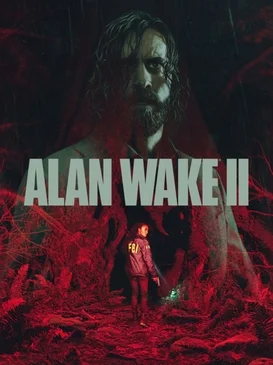
Alan Wake 2 continues the story of Remedy’s original Alan Wake. Unlike the single-protagonist original, this game advances Saga Anderson’s story and Alan Wake’s story in alternation. Understanding that dual-line structure is the way into the whole plot: Saga’s line is about “a murder case happening in the real world right now”, while Alan’s line is about “an escape story that is being written”. The two converge at specific nodes such as Cauldron Lake and jointly uncover the truth of the dark force.
Story Background#
The time and space of this game pick directly up from the ending of the original:
| Item | Details |
|---|---|
| Timeline | Roughly 13 years after the events of the original |
| Main locations | Bright Falls, Watery, Coffee World, Valhalla Nursing Home, Cauldron Lake and the Dark Place |
| Main characters | Saga Anderson, Alan Wake, Alex Casey, Alice Wake, Tor and Odin |
| Core conflict | The dark force from the bottom of Cauldron Lake trying to seep into the real world |
The Dual-Reality System#
The central premise here is that two spaces run in parallel: “the real world” and “the Dark Place”. Each story line runs inside one of these realities, and they only meet at specific nodes.
| Reality | Protagonist | How It Runs |
|---|---|---|
| The real world | Saga Anderson | Bright Falls and its surroundings; time advances linearly and follows physical cause and effect |
| The Dark Place | Alan Wake | A twisted New York; time is non-linear and the structure of the world gets rewritten by the script |
| The Overlap | Where the two meet | The two realities briefly overlap at the key nodes where crossing becomes possible |
How to tell which line a piece of dialogue belongs to: anything set around Bright Falls that advances through gathering evidence and profiling belongs to Saga’s line; anything set in twisted New York that proceeds by rewriting scenes belongs to Alan’s line. The characters and locations of the two lines never mix, so identifying the stage is enough to keep them apart.
Chapter Structure: Return and Initiation#
The two story lines use two separate naming schemes for their chapters, and that is the key to understanding the order in which the story advances: Saga’s line uses the “Return” series, while Alan’s uses the “Initiation” series.
| Chapter Series | Protagonist | Core Task of the Chapters |
|---|---|---|
| Prologue | Saga | Arriving around Bright Falls, discovering the murder and taking in the case as a whole |
| The “Return” chapters | Saga | Chapter by chapter, gathering evidence, pinning clues to the Case Board and closing in on the truth through profiling |
| The “Initiation” chapters | Alan | Surviving inside the Dark Place by rewriting scene structure and plotting an escape |
| The finale pairing | Both | Converging at the nodes tied to Cauldron Lake, drawing out how the ending plays |
Saga’s Line: The “Return” Chapters#
Saga Anderson is an FBI agent who travels with her partner Alex Casey to Bright Falls to investigate a series of murders. The way she pushes forward is evidence-chain deduction: on reaching each new region she circles the outer edge, sweeping enterable interiors and forks to pick up evidence, character and location clues, then returns to the Mind Place to pin those clues to the Case Board and attempt profiling. When profiling refuses to advance, it usually means some evidence has not been fully collected, and the fix is simply to go back out and complete it.
Alan’s Line: The “Initiation” Chapters#
Alan Wake is the writer who fell into Cauldron Lake in the first game, and here he is trapped in the Dark Place. His method of progress is scene rewriting: before approaching a mechanism, look around to check whether there is a rewritable stage light, door or billboard, because those rewritable objects are usually the entry point to the puzzle. If there is no solution for the moment, push the story to gain a new rewrite phrase and then come back to the mechanism.
The Major Story Twists#
Below are the twists with the largest impact on how the whole story plays out. They are spread across both lines and grouped here by the stage at which they appear:
| Twist | Stage | Details |
|---|---|---|
| Alan is still alive | Prologue | After falling into the lake at the end of the first game, Alan did not vanish but became trapped in the Dark Place |
| Saga’s daughter | Return chapters | Logan is Saga’s strongest motive for chasing the case and the focus of the final choice |
| Scratch’s identity | Running through the whole game | Scratch is not an independent third party but the embodiment of Alan’s own dark side |
| Tor’s relationship to Saga | Return chapters | Tor is Saga’s biological father, and the origin of Old Gods of Asgard is revealed along with it |
| The truth about the cult | Return chapters | The so-called cult are not pure evildoers but locals trying to control the dark force |
| Writing coming true | Initiation chapters | Alan discovers that his script really does rewrite reality rather than merely recording it |
| The loop | Finale | The events have already repeated inside a loop, and breaking it becomes the central question of the whole story |
| Mr. Door | Throughout | A cross-dimensional being able to move between multiple realities, whose motives remain a mystery |
How the Endings Play Out#
The ending here is not singular. It depends on how the finale goes and is also shaped by your New Game Plus progress. The summary below groups them by ending type and the differences between them:
Saga’s Ending#
Saga’s ending comes down to her relationship with her daughter Logan and to how she faces the proposition of “sacrificing to protect her family”. Whether Saga can return safely to reality together with her daughter depends on the truth she accepts and the choice she makes in the finale.
Alan’s Ending#
Alan’s ending comes down to the possibility of “breaking the loop”. Whether Alan’s writing can genuinely rewrite the rules of the Dark Place decides whether he escapes his fate of being trapped again and again, and Saga’s anchoring in reality is what determines whether that possibility holds.
The Final Draft#
“The Final Draft” is the mode added on a second playthrough, and it is not simply New Game Plus. It adds extra story information to the protagonists’ tale so that some foreshadowing and the background of the loop receive a fuller explanation. If you have already finished one run, playing through again in this mode shows the whole shape of events much more clearly.
Key Characters and Motives#
What characters want drives the plot forward, so the table below gives you a reference for judging where each line is heading:
| Character | Line | Core Motive |
|---|---|---|
| Saga Anderson | Saga’s line | Getting to the truth of the murders while protecting her daughter Logan |
| Alan Wake | Alan’s line | Escaping the Dark Place and finding out what became of Alice |
| Alex Casey | Saga’s line | Assisting the investigation as her partner, in a form that closely overlaps the fictional detective from Alan’s novels |
| Tor and Odin | Saga’s line | Covering up the past of Old Gods of Asgard while revealing the family truth to Saga |
| Alice Wake | Alan’s line | The source of the core motive behind Alan’s struggle in the Dark Place |
| Scratch | Alan’s line | The embodiment of Alan’s dark side, whose actions always circle back around Alan |
Ties to the Remedy Universe#
Alan Wake 2 stands alone only in the sense of being one entry in a shared worldview with Remedy’s other works. The table below lists the related works already covered on this site and their connection points:
| Work | Connection to This Game |
|---|---|
| Alan Wake (the first game) | A direct sequel continuing the story of Alan trapped in the Dark Place |
| Control | The Federal Bureau of Control appears here, the “AWE” incident from the original is documented, and Jesse Faden is mentioned |
| Alan Wake’s American Nightmare | The “Scratch” concept introduced there is deepened here |
| The Control DLC “AWE” | Foreshadowed how these events would play out ahead of time |
| Night Springs and The Lake House | This game’s two story expansions, each extending the worldview on its own stage |
To read more about the Easter eggs and shared lore between these works, see the Related Content page on this site.
How the Themes Land on the Gameplay#
The themes here are not slogans shouted into the void; they are implemented directly as mechanics you can operate. Understanding which theme maps onto which piece of gameplay helps you settle in faster every time you switch between the two lines:
| Theme | How It Lands on the Gameplay |
|---|---|
| Light and dark | The flashlight armour-breaking mechanic: burn away the dark armour with light first, then shoot once the enemy staggers for full damage |
| Reality and fiction | Saga’s Case Board links clues into cause and effect while Alan’s rewrites link plot beats into narrative, mirroring each other |
| The power of the author | Alan’s scene rewriting changes the environment outright, gamifying the idea that writing creates reality |
| Trauma and healing | Through profiling, Saga keeps questioning her own fears for Logan, until she finally faces them head-on in the choice |
Closing Thoughts#
To follow Alan Wake 2, the key is first to keep the two realities the “Return” and “Initiation” lines each run in separate in your head, and then to accept premises like “writing comes true” and “the loop repeats”. Once you sort out each protagonist’s motives, you will not lose your bearings in the interleaved chapters. For a more concrete order of progression, read this alongside the Saga Campaign Guide and the Story Analysis on this site.